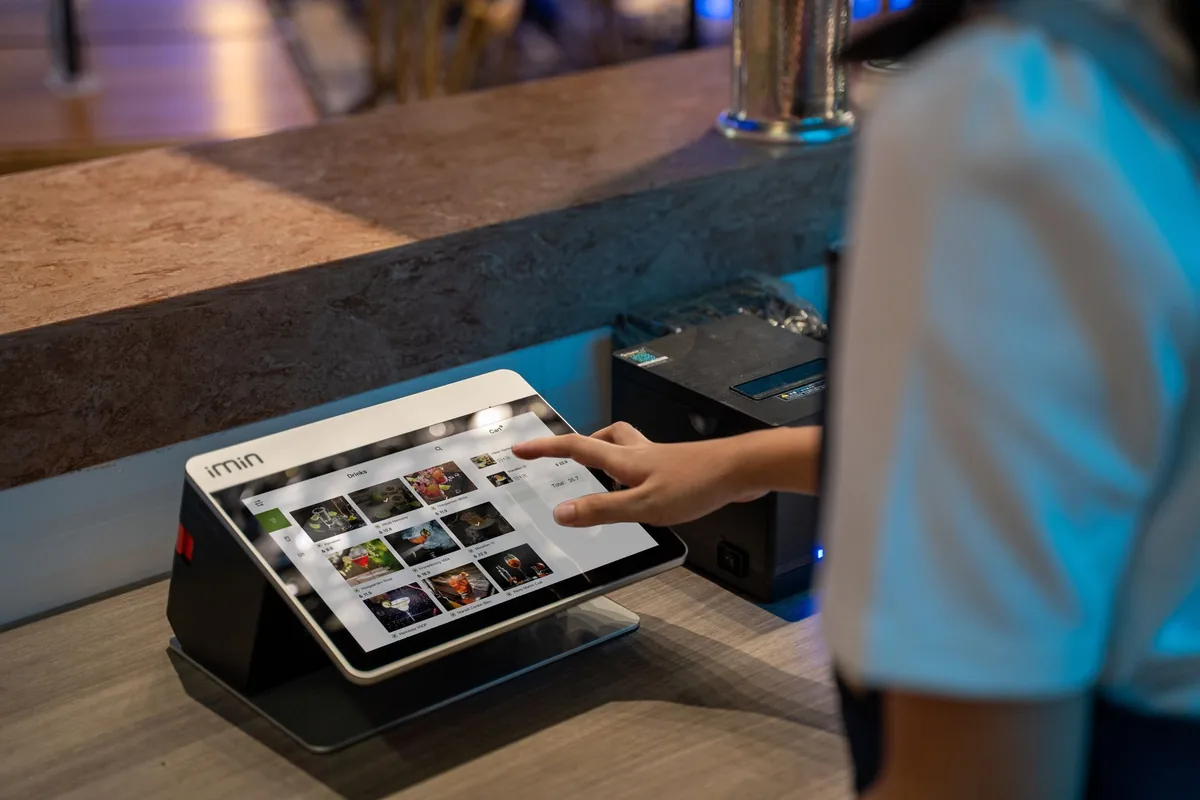
Hospitality technology news covering property management systems, AI adoption, booking platforms, guest-facing tech, and hotel cybersecurity.
📊
Technology — Market Analysis
587 stories
Global hospitality technology accelerates AI adoption for direct bookings, operational automation, and corporate workflows while cyber threats target hotel networks.
📈
Platform Mergers·Booking Holdings consolidates Agoda, Booking.com, and Priceline B2B operations into Booking Partner Services under Agoda CEO Omri Morgenshtern.
↑
💻
Corporate AI·Amex GBT introduces its Egencia AI connector for Anthropic Claude, enabling policy-compliant corporate hotel and air bookings in enterprise platforms.
↑
⚠️
Cyber Warnings·Microsoft warns business travelers of Russian-linked 'CaptiveCrunch' attacks using compromised hotel Wi-Fi networks to deploy malware and capture credentials.
◉
📊
Property Automation·Minor Hotels transitions 106 properties across 59 countries to Oracle OPERA Cloud PMS to centralize guest operational data.
↑
Outlook
Watch for consumer backlash as 89% of travelers cross-check AI suggestions and demand human approval before finalizing spend.
Latest Stories
587 stories
technologySkift··1 min·For: Owner, Revenue, Marketing, IT
Google has officially started testing an agentic hotel booking tool for a small percentage of US traffic, partnering with major players like Booking Holdings. The tool aims to streamline flight and hotel reservations directly through Google's AI interface.
Key Takeaways
1Google launched a limited test for agentic hotel and flight bookings in the US.
2Booking Holdings confirmed it is among the first partners participating in the trial.
3The shift moves Google's AI travel vision from concept to live product testing.
Booking Holdings is consolidating the B2B operations of Agoda, Booking.com, and Priceline into a single platform named Booking Partner Services. Led by Agoda CEO Omri Morgenshtern, the full tech migration and partner transition could extend into 2027.
Key Takeaways
1New unified B2B platform named Booking Partner Services.
2Agoda CEO Omri Morgenshtern is leading the consolidated B2B unit.
3Partner API migrations are underway and may last into 2027.
Airbnb reported a 10% increase in Q2 bookings, outpacing rivals Booking Holdings and Expedia. CEO Brian Chesky attributed the accelerated growth and faster product rollouts to the rapid integration of artificial intelligence.
Key Takeaways
1Q2 nights and seats booked grew 10%, beating Expedia (6%) and Booking Holdings (5%).
2AI development cut new feature rollout times from nine months down to six weeks.
3Airbnb is leveraging AI efficiency to expand into hotels, experiences, and new services.
Microsoft has issued a warning regarding a global hacking campaign that uses compromised hotel Wi-Fi networks to steal guest credentials and install malware. The attack targets business travelers by deploying fake login prompts and AI-assisted tools on hospitality networks.
Key Takeaways
1Russian-linked campaign 'CaptiveCrunch' has targeted hotel Wi-Fi since May.
2Attackers deploy fake sign-in pages and install the 'CornFlake' remote-access trojan.
3Microsoft advises guests to use mobile hotspots instead of public hotel networks.
A new Travelport study reveals that U.S. travelers crave price transparency and simpler choices, with many abandoning overly complex booking channels. While consumers rely on AI for travel research, high anxiety over booking errors keeps most from using it to complete reservations.
Key Takeaways
146% of consumers abandoned a travel booking because the process was too complex or time-consuming.
2Only 8% of travelers use AI to complete bookings, despite 32% using it for price research.
332% of respondents cited hidden add-ons and fees as the most frustrating part of booking.
Microsoft has issued a warning regarding 'CaptiveCrunch,' a Russian-linked cyber campaign targeting hotel Wi-Fi networks to steal guest credentials and install malware. Attackers use compromised hotel Wi-Fi gateways to display fake login pages and software updates to business travelers.
Key Takeaways
1Campaign uses compromised Wi-Fi gateways to bypass MFA via fake device-code login prompts.
2Attackers can deploy 'CornFlake' malware to track keystrokes, steal files, and monitor audio/video.
3Microsoft advises guests to use mobile hotspots instead of hotel Wi-Fi for sensitive work.
To successfully integrate AI and operational technology, hotel leaders must focus on augmenting staff capabilities and reducing daily administrative burdens rather than aiming for full automation.
Key Takeaways
165% of hotels report staffing shortages, making tech that reduces cognitive burden essential.
2Leadership must decide between full automation, AI augmentation, and purely human service touchpoints.
3Successful tech deployment requires listening to frontline staff to streamline existing workflows.
Travel insurance startup Faye has secured $50 million in Series C funding to expand its AI-driven claims technology and grow partnerships across the travel sector. The company automates claim approvals to process payments in minutes while leaving denials to human agents.
Key Takeaways
1Series C round led by Madrona Ventures brings total funding to $100 million at a $500M valuation
2Funds will scale embedded insurance partnerships with hotels, airlines, and OTAs
3AI technology automates claim approvals to issue payouts within minutes
A new Amadeus report reveals that 74% of U.S. travelers use AI to plan trips and select hotels, though most still demand human oversight before making final bookings. Hotel operators should leverage AI for personalized recommendations while ensuring transparent, simple booking processes.
Key Takeaways
174% of U.S. travelers use AI for trip planning, while 85% say it saves time and offers better personalization.
2Only 20% trust AI to spend money on their behalf, with 89% cross-checking AI recommendations on other sites before booking.
3Travelers prefer human support over AI when issues arise, with 51% desiring a hybrid combination of AI and human expertise.
Vancouver-based TravelAI has acquired the bankrupt Sonder brand and intellectual property to relaunch Sonder.com as an AI-powered urban stay guide. TravelAI will leverage Sonder's strong brand equity and historical marketing investments without acquiring or operating any physical real estate.
Key Takeaways
1TravelAI acquired Sonder's brand and IP to capitalize on residual web traffic and brand recognition.
2Sonder.com now operates as an AI travel guide using personalized 'memory infrastructure' tech.
3TravelAI targets $100 million in gross booking value through the brand over the next 12 months.
Minor Hotels has transitioned 106 properties across 59 countries to Oracle OPERA Cloud PMS and OPERA Cloud Central to unify guest data and streamline operations. The cloud migration eliminates on-premise servers and paves the way for further regional rollouts in Australia and New Zealand.
Key Takeaways
1Minor Hotels deployed Oracle OPERA Cloud across 106 hotels, resorts, and residences in 59 countries.
2The cloud-native PMS eliminates property-level server maintenance and enables unified operational data across brands.
3Next deployment phase will expand the cloud system to properties across Australia and New Zealand.
Radisson Hotel Group has partnered with Accenture to launch a ChatGPT app allowing travelers to search, compare, and book over 1,000 properties globally using natural conversation. The app integrates live inventory and rates, serving as a new direct booking channel for the group.
Key Takeaways
1Users can search over 1,000 properties across 100+ countries with live inventory and rates via ChatGPT.
2Accenture built the app using its AI Merchant Center to connect real-time hotel data directly to the AI interface.
3Future updates will add personalization, loyalty recognition, in-chat booking, and AI concierge features.
A practical five-phase audit framework helps hoteliers assess their data foundation, run shadow-mode pilots, and scale AI effectively. Success requires fixing legacy PMS integrations and managing change with staff rather than attempting simultaneous deployments.
Key Takeaways
1Core requirement: Cloud-native PMS, API system integrations, and standardized data are prerequisites.
2Pilot strategy: Start with a single operational bottleneck and run the AI in shadow mode for one week.
3Change management: Operational leaders, not IT, must drive adoption by framing AI as an administrative co-pilot.
Hotel Communication Network and Artography have partnered to bring over 200,000 digital artworks to HCN in-room tablets at four- and five-star North American hotels. Guests can browse and buy artwork for home delivery, creating an operational-free ancillary revenue stream for hotel owners.
Key Takeaways
1Partnership turns HCN in-room tablets into interactive art galleries with buying options.
2Provides luxury and lifestyle properties a new ancillary revenue opportunity with no extra labor.
3Capitalizes on cultural tourism trends where nearly 30% of US international visitors seek art experiences.
Corporate travel platforms like Amex GBT and Kayak for Business are advancing AI booking capabilities faster than consumer sites by leveraging existing travel policies and compliance rules. These tools allow seamless booking within enterprise workflows while maintaining strict corporate oversight.
Key Takeaways
1Amex GBT integrated AI technology into Anthropic's Claude, with Google Chat and Teams expansions planned.
2Kayak for Business launched a conversational AI portal and an agent-to-agent connector for corporate partners.
3Built-in approval rules allow corporate AI agents to complete bookings, unlike consumer tools stuck in planning phases.
A new framework mapping the travel value chain highlights control over traveler preferences as the next major battleground for startups and incumbents. As AI agents evolve, owning a complete and portable record of customer preferences will define competitive advantage.
Key Takeaways
1No single player currently controls a complete, portable memory of traveler preferences.
2AI agents will intensify competition over discovery, booking, and customer records.
3Startups must target specific structural power struggles rather than building generic travel tech.
Expedia Group has acquired Berlin-based AI trip-planning startup Layla to accelerate its deployment of specialized AI agents. Layla will continue operating independently while its team works across Expedia's brand portfolio.
Key Takeaways
1Expedia acquired Berlin-based AI trip-planner Layla for an undisclosed amount.
2Layla had previously raised $5.7 million from investors including First Minute Capital and M13.
3The startup will continue operating while its tech talent collaborates with Expedia, Hotels.com, and Vrbo.
Airlines are exploring verified digital identity solutions to streamline the direct booking process and reduce friction for travelers. Implementing secure identity verification could significantly decrease fraud while improving conversion rates on direct channels.
Key Takeaways
1Digital identity verification reduces booking friction on direct channels.
2Enhanced security measures help mitigate fraudulent transactions.
3Streamlined check-out processes boost conversion rates for travel providers.
Airbnb is preparing to expand its ecosystem beyond home rentals by integrating event ticketing and a proprietary digital wallet. The move aims to capture more guest spend across the entire travel journey.
Key Takeaways
1Airbnb plans to introduce ticket sales for local events and experiences.
2A new digital wallet feature will facilitate seamless in-app transactions.
3The strategy targets broader guest engagement throughout their trips.
The shift toward AI travel assistants risks creating powerful new gatekeepers that could drive up hotel distribution and tech integration costs. Industry leaders must prepare for complex digital ecosystems and new forms of algorithmic commission fees.
Key Takeaways
1AI travel platforms could replace OTAs by selecting choices directly for consumers.
2Distribution costs may shift to tech fees, API connectivity charges, and data access costs.
3Hotels face hidden expenses in data cleaning, cybersecurity, and system integrations.
Google has begun monetizing AI search answers, partnering exclusively with IHG for initial hotel placements. Meanwhile, global regulators and technology platforms continue to reshape distribution models for OTAs and GDS systems.
Key Takeaways
1Google confirmed paid advertising slots within AI answers, offering IHG the first hotel placement.
2China fined Trip.com 5.2 billion yuan and forced refunding of withheld hotel deposits while banning exclusive deal mandates.
3Sabre connected two million hotels to AI agents, relying heavily on loaded room descriptions and media.
Travel planning and booking platform TravelAI has officially acquired the Sonder brand, including its trademarks and domain names. The acquisition marks a significant shift in IP ownership within the alternative accommodation and hospitality tech space.
Key Takeaways
1TravelAI acquires Sonder's core intellectual property, trademarks, and web domains.
2The move integrates a major hospitality brand name into TravelAI's digital ecosystem.
3Deal details reflect ongoing consolidation and restructuring in tech-driven lodging.
Radisson Hotel Group has launched a direct booking app natively in ChatGPT, allowing travelers to discover and book over 1,000 properties globally via natural conversation. Built using Accenture's Model Context Protocol, the tool exposes real-time CRS data directly to conversational AI agents.
Key Takeaways
1Enables natural-language hotel discovery and live rate access inside ChatGPT.
2Built on Model Context Protocol (MCP) to connect CRS inventory directly to LLMs.
3Preserves direct booking margins by routing reservations to Radisson's web channels.
Google is leveraging high-intent travel data to demonstrate its AI search, advertising, and cloud transaction capabilities to investors. Partners like IHG, Booking Holdings, and Expedia are testing Google's Direct Offers pilot and in-conversation booking tools inside AI interfaces.
Key Takeaways
1Google is using rich travel search signals like dates and budgets to train and monetize its Gemini AI tools.
2IHG Hotels & Resorts has joined Google's Direct Offers pilot to show dynamic promotions during AI-assisted trip planning.
3Hotel brands are distributing inventory across multiple platforms simultaneously, including Google AI Mode and ChatGPT.
IHG has introduced natural-language AI search on its U.S. website and app, allowing guest queries using flexible payment methods like points and cash directly in chat. The rollout is supported by cloud infrastructure upgrades and a planned content platform for franchisees.
Key Takeaways
1IHG beta tests conversational search featuring live pricing, map integrations, and points-plus-cash booking in chat.
2A new AI-optimized content platform will require franchisees to upload updated media, floor plans, and property details.
3Major hotel chains continue to lag behind retail giants by withholding AI engagement and booking conversion metrics.
Agilysys has debuted its Intelligent Guest Profile, a real-time shared record that uses AI to surface guest insights and sentiment throughout hotel systems.
Key Takeaways
1Centralize guest data across PMS, POS, and amenities to ensure real-time preference synchronization.
2Utilize AI Guest Insights to deliver role-specific guidance to staff at different touchpoints like spa or dining.
3Monitor AI Guest Pulse to classify guests by sentiment, allowing teams to prioritize service recovery for detractors.
Hospitality Net and its partners are emphasizing data privacy through updated cookie consent mechanisms to enhance user experience and regulatory compliance.
Key Takeaways
1Verify current cookie consent and data privacy tools to ensure compliance with regional regulations.
2Monitor industry shifts toward transparent data usage to maintain guest trust and improve digital maturity.
3Review site analytics strategies as the industry pivots away from third-party tracking toward first-party data collection.
Recent data from Hotel Tech Report identifies Mews, Cloudbeds, and HOTELTIME as the leading alternatives for large hotels seeking to replace Oracle's legacy systems. The report focuses on cloud-native solutions that offer better integration and user experience.
Key Takeaways
1Evaluate Mews, Cloudbeds, and HOTELTIME as the primary cloud-based alternatives to Oracle Opera.
2Prioritize vendors that offer robust API connectivity to reduce the technical debt often associated with legacy systems.
3Select PMS platforms based on specific property size and complexity requirements to ensure operational efficiency.
The rise of AI-driven hotel searches is shifting the cost of inquiry traffic from OTAs to hotel direct websites, creating significant infrastructure expenses. Hotels must now manage massive increases in bot-driven queries that drastically inflate look-to-book ratios.
Key Takeaways
1Evaluate the hardware and cloud infrastructure costs associated with high-frequency AI bot queries on direct booking engines.
2Implement advanced bot detection and rate-limiting to differentiate between valuable AI agents and detrimental scraping traffic.
3Refine API strategies to ensure high look-to-book ratios don't compromise system performance or increase operational overhead.
Leonardo Hotels Central Europe has successfully implemented the Proposales cloud quotation tool across its portfolio, resulting in a 50% reduction in sales processing time.
Key Takeaways
1Leverage digital quotation tools to reduce offer processing time, as demonstrated by Leonardo Hotels' 50% efficiency gain.
2Focus on conversion rates by implementing modern sales interfaces, which contributed to a 12% increase in booking rates.
3Standardize sales processes across multiple properties to ensure brand consistency and faster response times for event planners.
+Which B2B operations is Booking Holdings consolidating into Booking Partner Services?
Booking Holdings is consolidating the B2B operations of Agoda, Booking.com, and Priceline into a single platform named Booking Partner Services. Led by Agoda CEO Omri Morgenshtern, the full technology migration and partner transition extends into 2027. The consolidation unifies B2B operations across all three brands under one centralized platform.
+How many properties is Minor Hotels moving to Oracle OPERA Cloud?
Minor Hotels has transitioned 106 properties across 59 countries to Oracle OPERA Cloud PMS and OPERA Cloud Central. The cloud migration eliminates on-premise servers to unify guest data across international locations. This deployment prepares the hotel group for subsequent regional rollouts in Australia and New Zealand.
+What proportion of US travelers rely on AI for trip planning?
An Amadeus study reveals that 74% of U.S. travelers use AI for trip planning and hotel selection. However, 89% of consumers cross-check AI suggestions, and high anxiety regarding booking errors prevents most travelers from allowing automated spending without human intervention and final approval.
+What cyber attack is targeting hotel Wi-Fi networks according to Microsoft?
Microsoft issued a security warning regarding 'CaptiveCrunch,' a Russian-linked cyber campaign targeting hotel Wi-Fi gateways. The attackers deploy fake login prompts, malicious software updates, and AI-assisted tools over compromised hotel Wi-Fi networks to steal credentials from business travelers and install malware.
The Hospitality Newsletter
The morning brief for hotel professionals
10–12 stories that matter, summarised and scored every morning. Free, and you can unsubscribe in one click.
Analytics cookies.
We count visits either way — anonymously, with no IP stored. Accepting also lets
Google Analytics measure how the site is used. No advertising cookies, ever.
Privacy policy.