OTA Rate and Data Restrictions Tighten Grip on Hotels
Antitrust claims, search bidding, and withheld phone numbers restrict hotel pricing, direct traffic, and guest messaging.
The short answer
Online travel agencies and uncontracted intermediaries are restricting hotel rate freedom, intercepting branded search queries, and cutting off guest phone numbers. Properties face pressure across pricing parity, distribution margins, and automated check-in workflows.
“A guest typing a hotel’s name into Google is one of the strongest signals of direct booking intent a hotel can get. Our research shows that, on average, nine sites can be waiting to intercept that guest before they reach the hotel’s website”

The short version
- Expedia controls nearly 80 percent of U.S. OTA bookings and faces litigation over alleged search penalties for off-platform discounting.
- North American hotels average 6.6 competing intermediary search ads per property targeting their brand names.
- Booking.com ceased sharing guest phone numbers with hotel property management systems on 28 September 2026.
Online travel agencies and uncontracted resellers are tightening controls around hotel rate parity, search intent, and guest communication [[1], [2], [3]]. According to Asian Hospitality, Expedia Group holds nearly 80 percent of the U.S. online travel agency booking market by dollar value, while competitor Booking.com holds about 18 percent [1]. Intermediaries take standard commissions of about 15 percent, climbing up to 25 percent to 30 percent for enhanced search placement [1]. As legal complaints, search-ad bidding campaigns, and operational data restrictions unfold, properties face mounting hurdles in setting rates independently, intercepting direct search demand, and delivering automated arrival workflows [[1], [2], [3]].
Search ranking penalties enforce room price parity
Third-party platforms preserve price parity through contractual terms linked directly to algorithmic search visibility [1]. Asian Hospitality reported that a class-action lawsuit filed on Oct. 2 in the U.S. District Court for the Western District of Washington accuses Expedia Group of penalizing properties that offer lower prices on direct websites or competing channels [1]. The legal complaint alleges that properties undercutting rates available on Expedia risk being demoted in search results on Expedia.com, Hotels.com, Travelocity, Orbitz, and CheapTickets [1].

Expedia rejected the lawsuit's claims, with a spokesperson telling The Seattle Times that the allegations are meritless and emphasizing that the company has offered competitive value since 1996 [1]. Plaintiffs argue that hotels maintain higher rates across all distribution channels to fund commissions rather than risk losing bookings from platform absence [1]. Similar parity rules have already faced regulatory intervention in Europe [1]. In September 2024, the Court of Justice of the European Union ruled that parity clauses cannot be treated as ancillary restraints outside competition law, prompting Booking.com to eliminate parity clauses across the European Economic Area to comply with the Digital Markets Act [1].
Intermediary bidding diverts direct branded searches
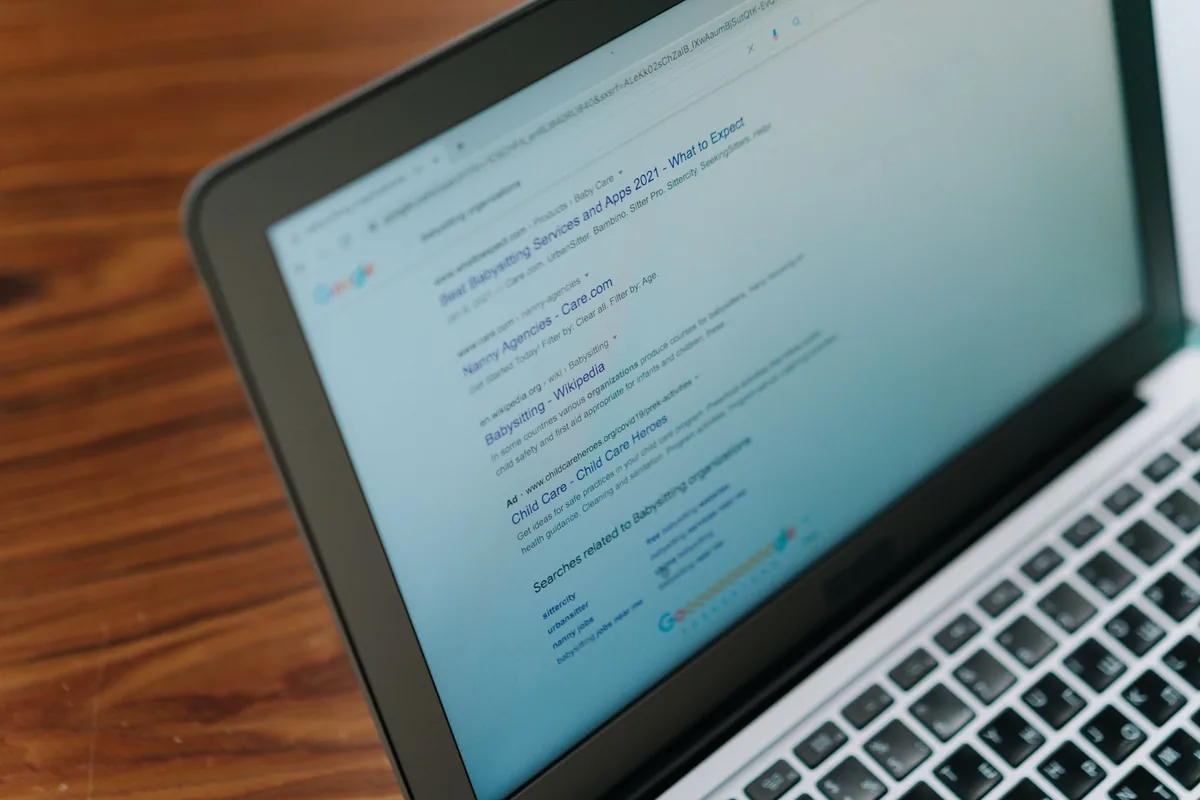
Channel control is also challenged before guests reach hotel websites [2]. Operto's "State of Predatory OTAs 2026" report showed that intermediary domains actively bid on hotel brand names to divert direct shoppers [2]. Asian Hospitality noted that North American hotels faced an average of 6.6 competing ads per property, compared with 3.9 globally [2].
These bidding sites capitalize on existing guest intent [2]. Operto tracked approximately 1.1 million ads targeting 204,000 hotels worldwide between May 22 and June 21, with 66,900 targeted properties located in the U.S. [2]. GuestReservations.com accounted for about 540,000 ads worldwide, ReservationDesk.com generated 240,000, and BookOnline.com accounted for 90,000 [2]. Operto's review of 232 Better Business Bureau complaints lodged against GuestReservations.com between July 2023 and May 2026 revealed that 38 percent of complainants believed they had booked directly, 46 percent cited deceptive cancellation policies, and 34 percent cited undisclosed fees [2]. Reuters reported on Oct. 7 that the Federal Trade Commission was preparing action involving Booking Holdings over allegedly deceptive hotel ads, with potential penalties topping $500 million [[1], [2]]. A San Francisco lawsuit separately alleges that Booking supplied inventory to GuestReservations.com through Priceline Partner Solutions [2].
Booking.com cuts off automated PMS phone data
Intermediaries are also narrowing communication channels after bookings are secured [3]. According to eHotelier, Booking.com stopped transmitting guest phone numbers to connected property management systems, channel managers, and guest messaging platforms on 28 September 2026 [3]. Booking.com stated the measure aims to protect guests from phishing attacks [3].
The data restriction applies to new reservations and modifications, while previously stored numbers, the extranet, and masked email relays continue to operate [3]. Properties relying on automated SMS or WhatsApp channels for door codes, online check-in links, and arrival notices face disrupted message delivery [3]. Without guest numbers flowing to the PMS, messages fail unless operational teams route messages through masked email fallbacks, deploy short contact-collection forms, or prompt arriving travelers to initiate messaging via QR codes [3].
Financial leakage from diverted brand traffic
To illustrate how brand diversion impacts property financials, Operto published a model for a hypothetical property with $5 million in annual room revenue [2]:

| Financial Step | Distribution Calculation | Projected Impact |
|---|---|---|
| 1. Diverted direct demand | Bookings captured by intermediaries | $500,000 |
| 2. Avoidable distribution cost | 15% intermediary commission | $75,000 |
| 3. Implied asset value loss | Capitalized at 8% cap rate | $938,000 |
A hypothetical hotel capturing $500,000 in diverted direct bookings incurs $75,000 in avoidable distribution fees at a 15 percent commission rate [2]. At an 8 percent capitalization rate, that leakage represents about $938,000 in implied asset value [2].
Visibility gaps blind operators to localized search ads
A recurring pitfall for operators is checking search engines from their own desks and assuming their direct channels are clear [2]. As Operto CEO Tim Major noted, a general manager searching locally sees normal listings, whereas remote travelers are shown competing ads [2]. SiteMinder's Changing Traveller Report 2026 revealed that while 26 percent of surveyed travelers plan to start hotel research on an OTA and 21 percent on a search engine, 18 percent of travelers starting on an OTA plan to book directly [2].
Reported by
This article was written from the following reporting. Follow the links for the original coverage.
- [1]Expedia Faces Antitrust Lawsuit Over Hotel Rate Rules— asianhospitality.com
- [2]Predatory OTA Brand Ads Threaten Hotel Direct Revenue— asianhospitality.com
- [3]Booking.com Stops Sharing Guest Phone Numbers With PMSs— eHotelier
Guide: Hotel email newsletters: what works, and what it is worth
Compare the systems named here
Frequently asked
+Why is Expedia facing an antitrust class-action lawsuit?
A federal lawsuit filed in Washington accuses Expedia of using search penalties and contract clauses to stop hotels from offering lower rates on their direct websites or competing platforms, alleging this artificially inflates room prices across the U.S. market.
+What market share do Expedia and Booking.com hold in the U.S.?
According to court filings cited by Asian Hospitality, Expedia brands represent nearly 80 percent of U.S. online travel agency hotel bookings by dollar value, while competitor Booking.com holds approximately 18 percent.
+How do predatory OTAs intercept hotel direct bookings?
Uncontracted domains bid on hotel brand names on search engines to capture travelers searching specifically for that property, using the hotel's photos and branding to divert bookings that would otherwise go through direct channels.
+What regulatory penalties could Booking Holdings face regarding search ads?
Reuters reported that the Federal Trade Commission was preparing action involving Booking Holdings over allegedly deceptive hotel advertising, which could carry financial penalties exceeding $500 million.
+Why did Booking.com stop passing phone numbers to hotel PMSs?
Booking.com discontinued sending guest phone numbers to PMSs, channel managers, and messaging tools on 28 September 2026 to curb phishing messages that exploit booking details, though numbers remain accessible via the extranet.
+How can hotel operators adapt to missing guest phone numbers?
Hotels can add masked email fallbacks to automated workflows, send short post-booking forms requesting phone contact details with consent, and place QR codes on-site encouraging guests to initiate WhatsApp conversations.
Keep reading
Our reporting

More in operations