Tamara Commits $62.5M to Reach 40 Hotels by 2030
Tamara Leisure Experiences outlines a 40-property roadmap spanning wildlife, spiritual, and corporate hospitality segments.
The short answer
Tamara Leisure Experiences has committed $62.5 million to reach a 40-hotel footprint by 2030 across six hospitality formats. The roadmap targets high-growth segments including pilgrimage hubs, luxury wellness retreats, and corporate business centers.
“Quiet luxury, spiritual travel and experiential stays are growing and our ambition is to respond to these needs through a balanced owned and asset-light model, supported by technology and AI-led guest intelligence.”
The short version
- Tamara Leisure Experiences committed $62.5 million to scale its operating footprint to 40 hotels by 2030.
- Faith tourism projects will help bridge an industry gap where pilgrimage sites account for 60% of domestic travel but only 6% of branded keys.
- Kufri will mark the operator's first asset-light management agreement, departing from its traditional owned-asset model.
Tamara Leisure Experiences has unveiled a $62.5 million development pipeline targeting 40 operational properties by 2030, Asian Hospitality reported [1]. The expansion balances company-owned assets with third-party management contracts across six distinct operational formats, positioning the group to capture demand across wildlife, pilgrimage, Ayurveda wellness, Himalayan leisure, and urban business markets [1].
Where will Tamara deploy its $62.5 million development capital?
Tamara Leisure Experiences (TLE) is directing funds toward destinations including Kaziranga, Bodh Gaya, and Kufri, alongside existing operational footprints, Asian Hospitality reported [1]. The investment focuses across six targeted formats: wildlife, faith, Ayurveda, Himalayan leisure, corporate business, and urban city travel [1].
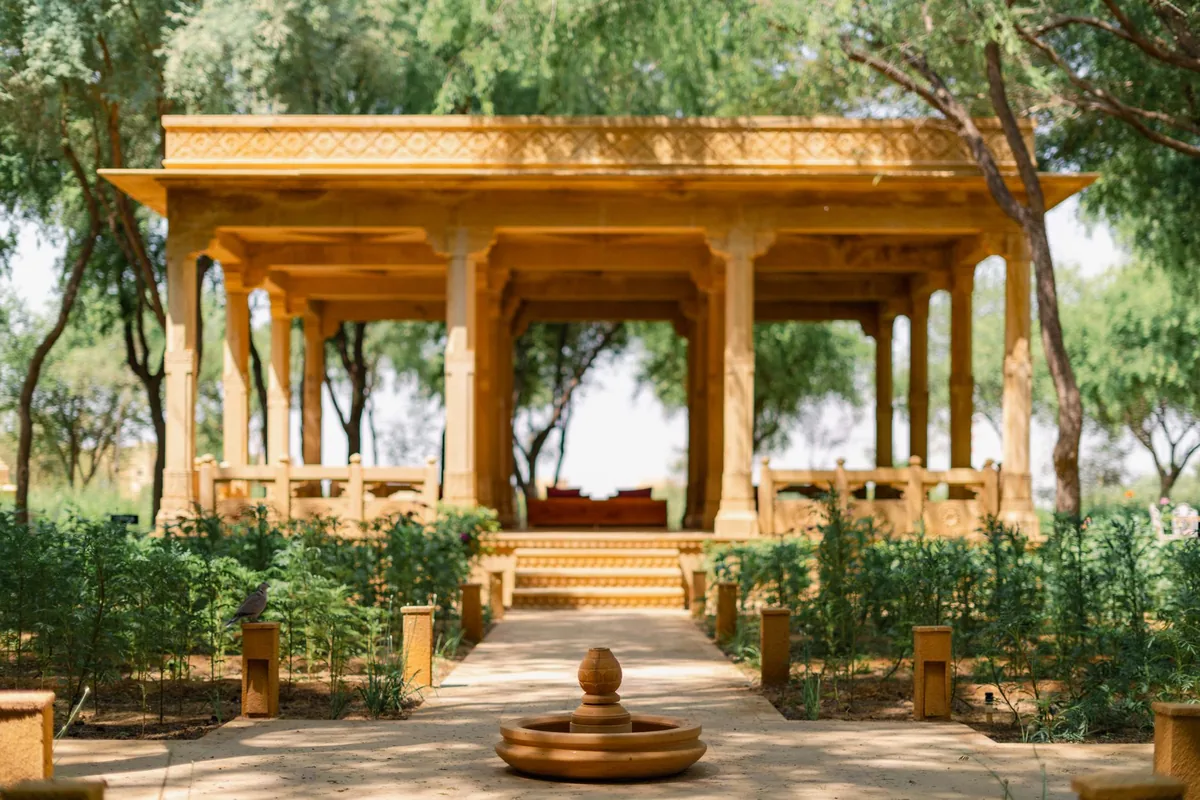
The group operates through a mixed structure of equity ownership and management agreements. For wildlife and experiential properties, TLE plans to retain direct ownership of its assets, including a planned resort in Kaziranga [1]. Conversely, Himalayan leisure assets will inaugurate third-party operations, with a development in Kufri serving as the group's first management-contract property following TLE's formal move into asset-light agreements in February [1].
Why is spiritual tourism central to the footprint expansion?
Faith tourism accounts for 60 percent of India's domestic travel volume, yet pilgrimage centers supply only 6 percent of the country's branded hotel keys, according to figures cited by Asian Hospitality [1]. This operational gap leaves demand underserved by formal hospitality operators [1].
TLE addresses this shortfall through its Rae by Tamara brand, which already operates in Guruvayoor and Kumbakonam [1]. The chain is developing an 80-key property in Velankanni and a 120-key hotel in Bodh Gaya [1]. Furthermore, asset-light management properties are planned in Tirupati, Tiruvannamalai, and Palani, while northern and western pilgrimage hubs including Varanasi, Amritsar, and Ajmer remain under active consideration [1].
How is the company expanding its wellness and leisure assets?
Ayurveda and wellness operations will center around Amal Tamara, TLE's NABH-accredited Ayurveda hospital and retreat situated in Alleppey [1]. TLE is expanding this discipline into a planned 24-houseboat luxury resort in Alleppey and a 50-key farm resort in Hosur [1]. The operator also plans to deploy its core Ayurveda operating model across its leisure resort properties [1].
| Brand / Segment | Destination / Market | Asset Model | Announced Capacity |
|---|---|---|---|
| Rae by Tamara (Faith) | Velankanni | Pipeline Project | 80 keys |
| Rae by Tamara (Faith) | Bodh Gaya | Pipeline Project | 120 keys |
| Amal Tamara (Wellness) | Alleppey | Luxury Houseboat Resort | 24 houseboats |
| Leisure / Wellness | Hosur | Farm Resort | 50 keys |
| O by Tamara (Business/MICE) | Whitefield, Bengaluru | Under Development | 200 keys |
| Lilac (Business) | Kannur (Site 1) | Pipeline Project | 125 keys |
| Lilac (Business) | Kannur (Site 2) | Pipeline Project | 60 keys |
| Experiential / Himalayan | Kufri | Management Contract | Not disclosed |
| Wildlife | Kaziranga | Owned Asset | Not disclosed |
What are the commercial drivers behind the business and MICE growth?
Corporate travel, events, and conference infrastructure drive the expansion of the O by Tamara and Lilac brands [1]. TLE is constructing a 200-key O by Tamara property in the IT hub of Whitefield, Bengaluru [1]. For the Lilac brand, developers have slated two properties in Kannur measuring 125 keys and 60 keys, paired with a dedicated wedding and events venue in Madurai [1]. Over the broader operational cycle, TLE plans to introduce O by Tamara and Lilac into more than 100 Indian cities [1].
Industry forecasts show strong macroeconomic tailwinds across these target categories. Grand View Research projects the domestic wellness tourism market will reach $116.3 billion by 2035, delivering an annual growth rate of 15.3 percent [1]. Concurrently, the luxury hospitality sector generated $79.7 billion in revenue in 2025 and is projected to expand to $179.7 billion by 2033 at an annual rate of 10.8 percent starting in 2026 [1]. India's MICE market is anticipated to climb from $49.4 billion in 2024 to $103.7 billion by 2030, marking an annual growth pace of 13.2 percent [1].
How will Tamara manage operational execution across these tiers?
TLE CEO Samir MC stated that domestic hospitality demand is diversifying beyond standard holiday corridors, requiring a combined asset approach [1]. “India’s hospitality opportunity is not concentrated in one kind of destination or traveller," Samir MC told Asian Hospitality [1]. "Quiet luxury, spiritual travel and experiential stays are growing and our ambition is to respond to these needs through a balanced owned and asset-light model, supported by technology and AI-led guest intelligence." [1]
Reported by
This article was written from the following reporting. Follow the links for the original coverage.
- [1]Tamara Unveils $62.5M Pipeline to Reach 40 Hotels by 2030— asianhospitality.com
Frequently asked
+What is the total investment committed by Tamara Leisure Experiences?
Tamara Leisure Experiences has committed $62.5 million in pipeline projects to expand its portfolio to 40 hotels by 2030.
+Which six hospitality formats does Tamara's expansion cover?
The group's pipeline spans wildlife, faith-based tourism, Ayurveda wellness, Himalayan leisure, corporate business, and urban city travel formats.
+Where is Tamara developing spiritual tourism hotels?
TLE operates Rae by Tamara properties in Guruvayoor and Kumbakonam, with confirmed projects in Velankanni, Bodh Gaya, Tirupati, Tiruvannamalai, and Palani, alongside prospective sites in Varanasi, Amritsar, and Ajmer.
+What is Tamara's first asset-light management contract?
Tamara announced in February that its planned resort project in Kufri will serve as its first property under a third-party management contract.
+What business and MICE properties are under development?
The portfolio includes an under-development 200-key O by Tamara in Whitefield, Bengaluru, two Lilac properties in Kannur (125 keys and 60 keys), and an event venue in Madurai.
Keep reading
Our reporting

More in finance