Radisson Expands Verified Net Zero Portfolio to Nine Hotels
Radisson Hotel Group adds four properties across Sweden to its verified emissions initiative, targeting older assets and convention venues.
The short answer
Radisson Hotel Group has enrolled four properties into its Verified Net Zero Hotels scheme, bringing the running portfolio total to nine assets. The expansion targets older assets from the 1980s and convention spaces in Sweden.

The short version
- Radisson expanded its Verified Net Zero portfolio to nine properties by adding four assets.
- Stockholm Waterfront Congress Centre and two 1980s-era hotels joined the initiative.
- Nordic renewable electricity grids remain the foundation for Radisson's current net-zero verification.
Radisson Hotel Group added four properties to its Verified Net Zero Hotels scheme, lifting its total net zero portfolio to nine assets [1]. Reported by both Skift and Hotel Owner, the rollout incorporates two properties built during the 1980s and moves the operator closer to 10% of its target of 100 net zero hotels by 2030 [[1], [2]].

Which hotels joined the Verified Net Zero initiative?
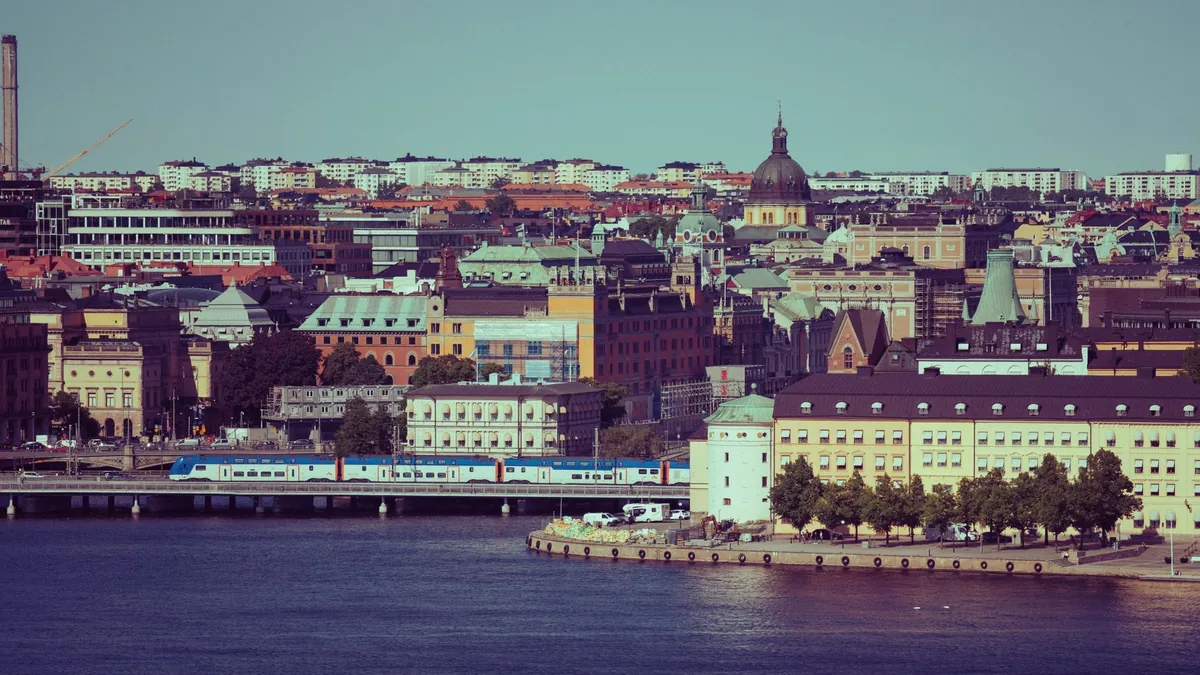
Three of the four newly inducted properties sit in Stockholm, Sweden, covering city-centre inventory, an airport location, and a large event venue [1]. As Skift reported, the Swedish additions include the Radisson Blu Waterfront Hotel—which features the Stockholm Waterfront Congress Centre—the Radisson Blu Royal Viking Hotel, and the Radisson Blu Arlandia Hotel [1]. Two of the added properties date back to the 1980s, testing whether older commercial building stock can cut operational emissions to baseline targets [1]. According to Hotel Owner, the programme requires participating hotels to commit to rigorous operational emission reductions [2].

| Property Name | Location | Property Characteristics | Decade Built |
|---|---|---|---|
| Radisson Blu Waterfront Hotel | Stockholm, Sweden | Includes Stockholm Waterfront Congress Centre | Not specified |
| Radisson Blu Royal Viking Hotel | Stockholm, Sweden | City hotel | 1980s |
| Radisson Blu Arlandia Hotel | Stockholm, Sweden | Airport hotel | 1980s |
| Undisclosed Fourth Hotel | Sweden / Nordics | Portfolio addition | Not specified |
Why is Radisson focusing on older assets and convention centres?
Radisson designed the scheme to prove that varied hotel formats, environments, and operating models can achieve net zero performance [1]. Enrolling convention space like the Stockholm Waterfront Congress Centre shows that high-volume meeting facilities can run under net-zero standards alongside standard rooms [1]. Skift noted that incorporating two hotels originally opened in the 1980s challenges the notion that only newly developed assets can meet net-zero criteria [1]. Demonstrating success across legacy infrastructure addresses asset age variations across owned, leased, and franchised portfolios [1].
How does the Nordic energy grid shape these transitions?
Clean electricity infrastructure serves as the primary operational backbone for the group's current transition milestones [1]. Skift reported that energy represents one of the largest hurdles to reducing operational footprints, because building electrification depends heavily on clean generation sources [1]. Radisson's existing net zero footprint remains concentrated across the Nordic countries, where regional power grids rely largely on renewable energy generation [1]. Operating inside these clean power markets allows hotel management to electrify heating and operations without carrying indirect emissions from fossil-fuel power grids [1].
Where does this leave Radisson's 2030 sustainability target?
The latest four additions increase Radisson’s verified portfolio from five to nine operational properties [1]. Skift highlighted that this step pushes the group close to 10% of its target of 100 net zero properties by 2030 [1]. While nine properties prove operational viability in green-grid regions, achieving 100 locations over the next few years requires scaling the model outside the Nordics into power markets with higher grid emissions [1].
Reported by
This article was written from the following reporting. Follow the links for the original coverage.
- [1]Radisson Expands Net Zero Portfolio with Older Hotels— Skift
- [2]Radisson Enrolls Four Properties in Verified Net Zero Scheme— hotelowner.co.uk
Frequently asked
+How many properties are now in Radisson's Verified Net Zero program?
Radisson Hotel Group now has nine properties enrolled in its Verified Net Zero Hotels scheme following the addition of four new assets, as reported by Skift.
+What is Radisson's target for net zero hotels by 2030?
The group is targeting 100 verified net zero hotels by 2030. The latest additions bring the brand close to 10% of that total target.
+Which specific hotels were named in the recent net zero expansion?
Named additions in Stockholm include the Radisson Blu Waterfront Hotel and Stockholm Waterfront Congress Centre, the Radisson Blu Royal Viking Hotel, and the Radisson Blu Arlandia Hotel.
+Why does Radisson's net zero portfolio concentrate in the Nordics?
Operational emissions reduction and electrification depend on clean energy. Radisson's portfolio is concentrated in the Nordics because the local grid primarily runs on renewable sources.
+Can older hotel buildings qualify for Radisson's Net Zero program?
Yes. Two of the newly added properties opened in the 1980s, proving that older building stock can achieve net zero operational standards alongside newer assets.
Keep reading
Our reporting

More in sustainability