Preventive Upkeep and Commercial Kitchen Tooling Protect F&B Margins
How structured maintenance routines and professional-grade culinary tools safeguard hotel F&B margins and avert costly operational outages.
The short answer
Equipment failures cost commercial kitchens upwards of $1,000 per day in lost revenue, while poor utensils erode margins through portion creep. Linking heavy maintenance schedules with professional-grade smallwares insulates hotel F&B operations from downtime.
The short version
- 50% of commercial kitchen equipment breakdowns trigger $1,000 or more per day in lost revenue.
- 33% of foodservice operators suffer unplanned equipment outages every week.
- EHL emphasizes that ladle sizing and knife tang construction are direct P&L drivers that determine yield and labor speed.
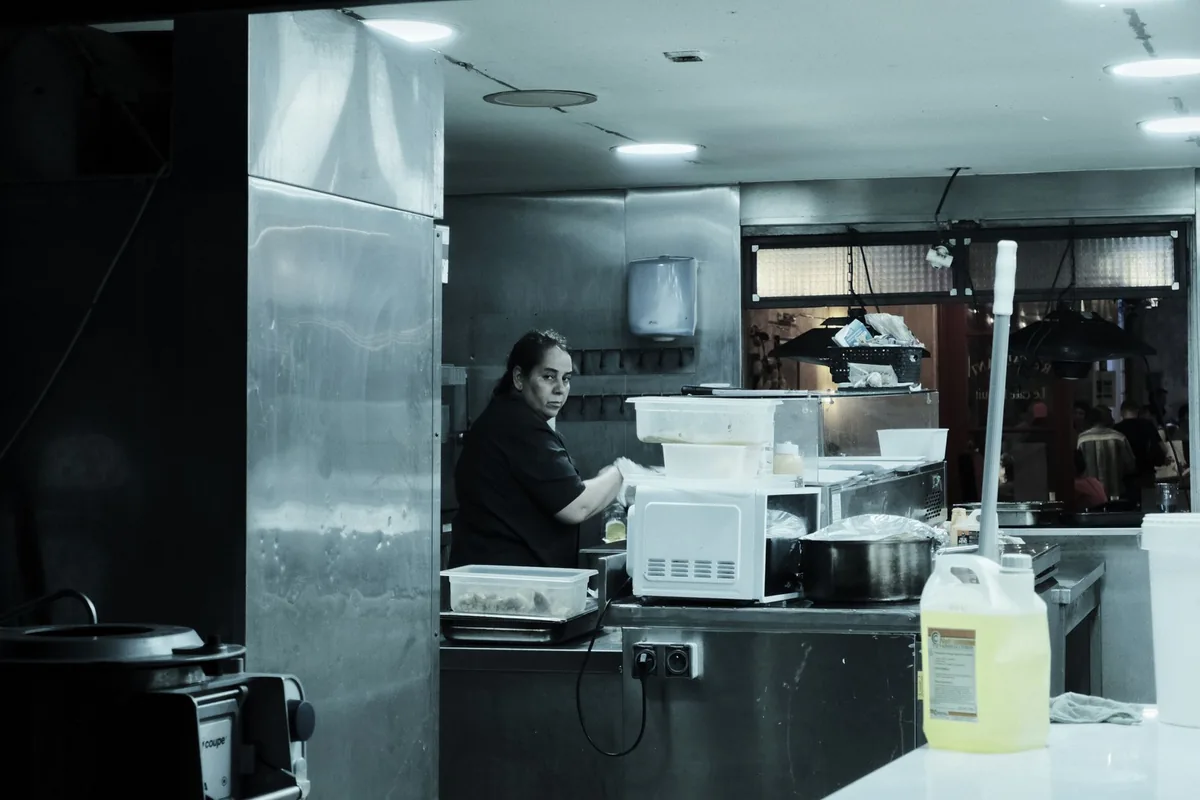
A kitchen line relies on heavy machinery to maintain safe storage temperatures while line cooks depend on handheld implements to control plate costs and portion yields.
While half of commercial kitchen breakdowns trigger $1,000 or more each day in lost revenue, a cheap chef's knife or imprecise ladle drains operating margins just as steadily through product shrinkage and repetitive strain [[1, 2]]. Two independent operational analyses reveal how hardware integrity governs commercial dining profitability [[1, 2]]. Lodging Magazine examined the systemic financial fallout of unserviced heavy refrigeration and cooking units, while insights from the culinary faculty at EHL addressed the micro-economics of professional utensils on the line [[1, 2]]. Together, these distinct perspectives establish that food and beverage margins depend on mechanical discipline across both asset tiers [[1, 2]].
Deferred equipment service causes daily financial hemorrhages
Commercial kitchen failures rarely surface during lull periods [2]. Unplanned outages regularly occur during high-volume banquets, sold-out weekends, and corporate dinners, shifting standard operations into emergency mode [2]. According to Lodging Magazine, one-third of foodservice operators report unplanned equipment outages every single week [2].
Beyond immediate meal tickets lost during a service outage, secondary financial costs mount quickly [2]. Unmaintained units waste expensive ingredients through thermal spoilage [2]. Overworked compressors and unsealed reach-ins run inefficiently, whereas well-maintained refrigeration systems consume 15% to 20% less energy than neglected systems [2]. Emergency technician call-outs and non-budgeted asset replacements quickly eclipse the cost of scheduled engineering checks [2].
| Operational Area | Standard Protocol / Specification | Direct Financial or Operational Consequence |
|---|---|---|
| Heavy Refrigeration | Gasket lubrication, coil checks, and genuine OEM parts [2] | 15% to 20% energy savings; prevents $1,000+ daily outage losses [2] |
| Chef’s Knives | High-carbon stainless steel with full tang construction [1] | Consistent yields; cuts slips and repetitive strain injuries [1] |
| Portion Ladles | Rigid stainless steel with interior volume markings [1] | Strict portion control; locks in raw plate margins across shifts [1] |
| Kitchen Shears | Fully disassembling surgical-grade stainless steel [1] | HACCP compliance; speeds up poultry breakdown and fish prep [1] |
Precision hand tools regulate plate margins and safety compliance
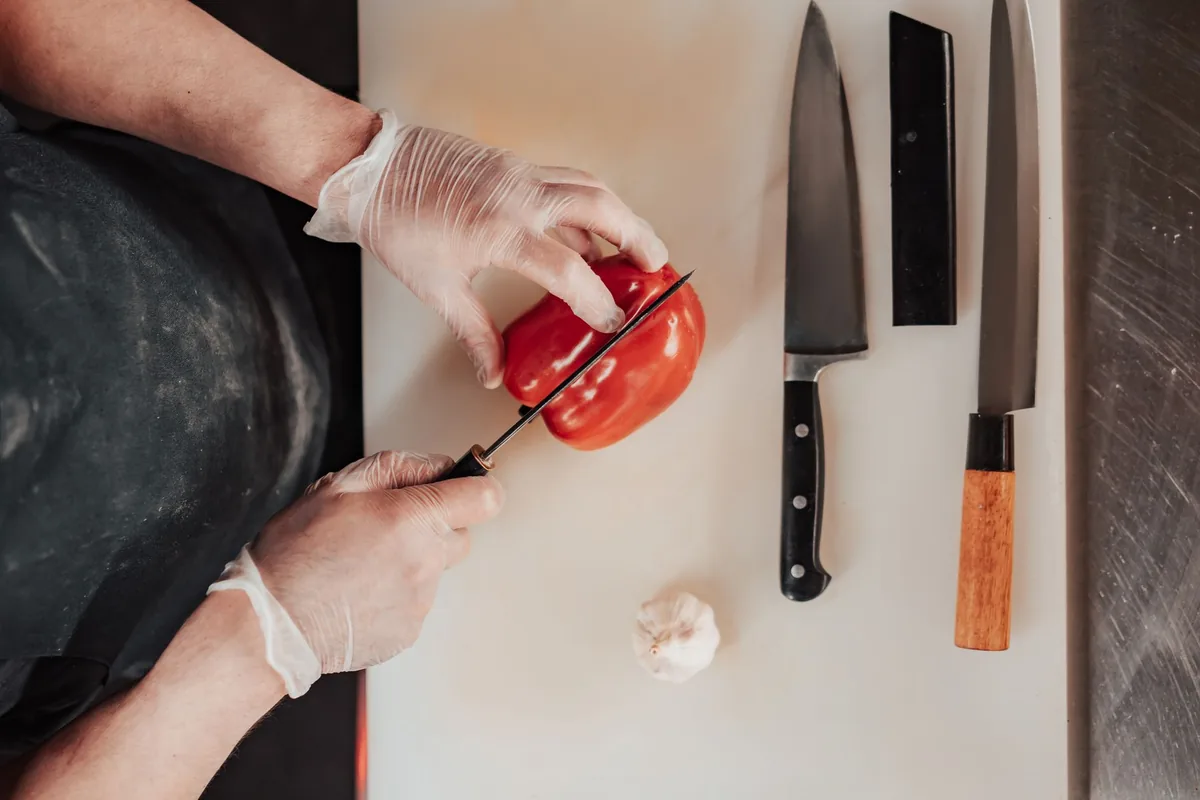
While facility teams track walk-in chillers, culinary brigades run a parallel balance sheet using hand tools [[1, 2]]. EHL highlighted that tool selection represents an operational return-on-investment choice rather than a personal culinary preference [1]. A worn or substandard utensil reduces kitchen throughput, degrades consistency, and invites sanitation breaches [1].
EHL chefs identified eight indispensable utensil classes for high-volume lines: chef's knives, precision kitchen shears, precision tongs, spatulas, microplanes, plating tweezers, whisks, and graduated ladles [1]. As insights from EHL noted, choosing a ladle is a P&L decision rather than a creative choice [1]. Stainless steel ladles stamped with interior volume markings eliminate kitchen guessing [1]. They ensure exact portions on thousands of banqueting plates, defending target food costs [1].
Hygiene rules mirror these requirements [1]. Standard household scissors flex under tension and harbor bacterial build-up in fixed pivot pins, creating HACCP liabilities [1]. Commercial kitchen shears must feature surgical-grade stainless steel that disassembles completely for chemical sanitation after processing raw poultry or fish fins [1].

Proactive maintenance schedules protect service continuity
Mechanical reliability on the cooking line requires formal alignment between food and beverage staff and facilities engineering [2]. Minor mechanical warnings—such as loose door latches, worn refrigeration gaskets, excessive condensation, or failing thermostats—frequently precede complete compressor dropouts [2].
Operator checklists should enforce scheduled filter replacements and daily internal temperature monitoring [2]. When components break down, sourcing genuine original equipment manufacturer (OEM) parts is critical [2]. According to Lodging Magazine, generic parts jeopardize manufacturer tolerances, increase repeat failure rates, and alter required cooking or holding temperatures [2]. On the preparation line, basic daily upkeep demands honing knife steels at the start of every shift to preserve blade geometry, saving full abrasive sharpening for scheduled monthly cycles [1].
The common mistake operators make with back-of-house assets
The costliest operational error hospitality managers commit is deferring maintenance and buying consumer-grade tools to save short-term capital [[1, 2]]. As EHL pointed out, a cheap tool that fails in one season costs substantially more than a professional tool engineered to last a decade [1]. Treating refrigeration as a self-sustaining asset and smallwares as disposable commodities leaves operators exposed to sudden closures, severe health code citations, and thousands of dollars in unrecoverable daily revenue [[1, 2]].
Reported by
This article was written from the following reporting. Follow the links for the original coverage.
- [1]EHL Outlines 8 Essential Kitchen Tools to Boost ROI and Safety— insights.ehl.edu
- [2]Kitchen Equipment Failures Cost Hotels $1,000 Daily in Lost Revenue— Lodging Magazine
Frequently asked
+What financial losses stem from kitchen equipment failures?
Commercial kitchen breakdowns create significant financial losses. According to Lodging Magazine, half of all kitchen breakdowns result in $1,000 or more per day in lost revenue. Unplanned outages also cause inventory spoilage, emergency repair charges, and lost covers during peak dining hours.
+How frequently do unplanned kitchen equipment outages occur?
Equipment outages are common in commercial hospitality operations. According to Lodging Magazine, one-third of foodservice operators experience unplanned equipment outages every week, disrupting daily service and threatening banquet events.
+How much energy does preventive refrigeration maintenance save?
Routine preventive maintenance significantly reduces power consumption. Industry figures reported by Lodging Magazine indicate that well-maintained commercial refrigeration units use 15% to 20% less energy compared to neglected systems with bad gaskets or dirty coils.
+Why does EHL consider ladle selection an operational P&L decision?
EHL notes that ladle sizing directly affects food cost control rather than culinary style. Using rigid stainless steel ladles with interior volume markings standardizes portion sizes across thousands of covers, eliminating over-portioning and stabilizing margins.
+Why should kitchens use genuine OEM replacement parts?
Lodging Magazine reported that genuine OEM parts preserve exact manufacturer specifications, equipment efficiency, and safety standards. Using OEM components reduces repeat breakdown risks and guarantees proper temperature holding for food safety.
+What is the maintenance difference between knife honing and sharpening?
According to EHL chefs, honing realigns the blade edge without removing metal and must occur at the start of every service. Sharpening grinds away blade steel to reform the cutting edge and should occur monthly or seasonally.
Keep reading
Our reporting


More in operations