India Room Deficit: How Chains Pace 210,000 Keys
Chains target secondary cities and wildlife destinations as India races to address a projected 210,000-key deficit by 2035.
The short answer
India must add 210,000 hotel rooms by 2035 to meet surging domestic travel and MICE demand. Operators are branching out into industrial hubs and nature retreats with platform backing.
The short version
- Upscale and midscale tiers account for 85,000 of the 210,000 additional rooms required across India by 2035.
- Real estate investment in Indian hospitality reached $905 million between 2024 and the first half of 2026, driven by platform transactions.
- Domestic travel grew at roughly 18 percent annually, reaching an estimated 3 billion trips across India in 2025.
210,000 additional rooms are required across India by 2035 to balance soaring travel demand with an inventory base that stood at just 450,000 organised rooms at the close of 2025 [4]. Despite an addition of 14,400 keys in 2025, branded penetration remains at a modest 138 rooms per million people, compared to upwards of 1,500 rooms per million in developed markets, according to Asian Hospitality reporting on CBRE data [4]. Instead of clustering exclusively in core metros where land is scarce, major operators and institutional capital are pacing supply into administrative capitals, industrial districts, and eco-retreat reserves [[1], [2], [3], [4]].
Mid-market segments command the bulk of future inventory needs
The projected 210,000-room shortfall is concentrated outside the ultra-luxury tier. Data compiled by CBRE reveals that upscale properties represent the largest individual category requirement at 43,000 rooms, closely trailed by midscale assets requiring 42,000 rooms [4]. Upper-midscale accounts for 32,000 rooms, economy demand stands at 30,000 rooms, luxury requires 29,000 rooms, and upper-upscale rounds out the tally at 23,000 rooms [4].
Metros currently account for roughly 35 percent of India's branded supply yet capture about 50 percent of total revenue, sustaining occupancy near 70 percent [4]. Performance metrics from 2025 demonstrate why capital is diversifying: Chennai led RevPAR growth at 20 to 25 percent, while Bengaluru and Jaipur recorded increases between 15 and 20 percent [4]. Kolkata notched 12 to 17 percent RevPAR gains [4]. In contrast, leisure-heavy Goa delivered occupancy of 75 to 80 percent, but saw RevPAR advance by only 5 to 10 percent, illustrating margin compression in saturated circuits [4].
Operators push into tier-two industrial hubs and administrative capitals
With domestic travel hitting an estimated 3 billion trips in 2025 and expanding at 18 percent annually, brand pipelines are systematically securing positions along expanding transport routes [4]. In Rajasthan, Lemon Tree Hotels Limited (LTHL) has initiated a Keys Lite property in Bhilwara, an industrial textile center near Bhilwara Railway Station and Maharana Pratap Airport [2]. The development, managed by Carnation Hotels, elevates LTHL's footprint in Rajasthan to 24 properties [2]. LTHL is separately executing the 52-key Keys Select in Bareilly, Uttar Pradesh [2].
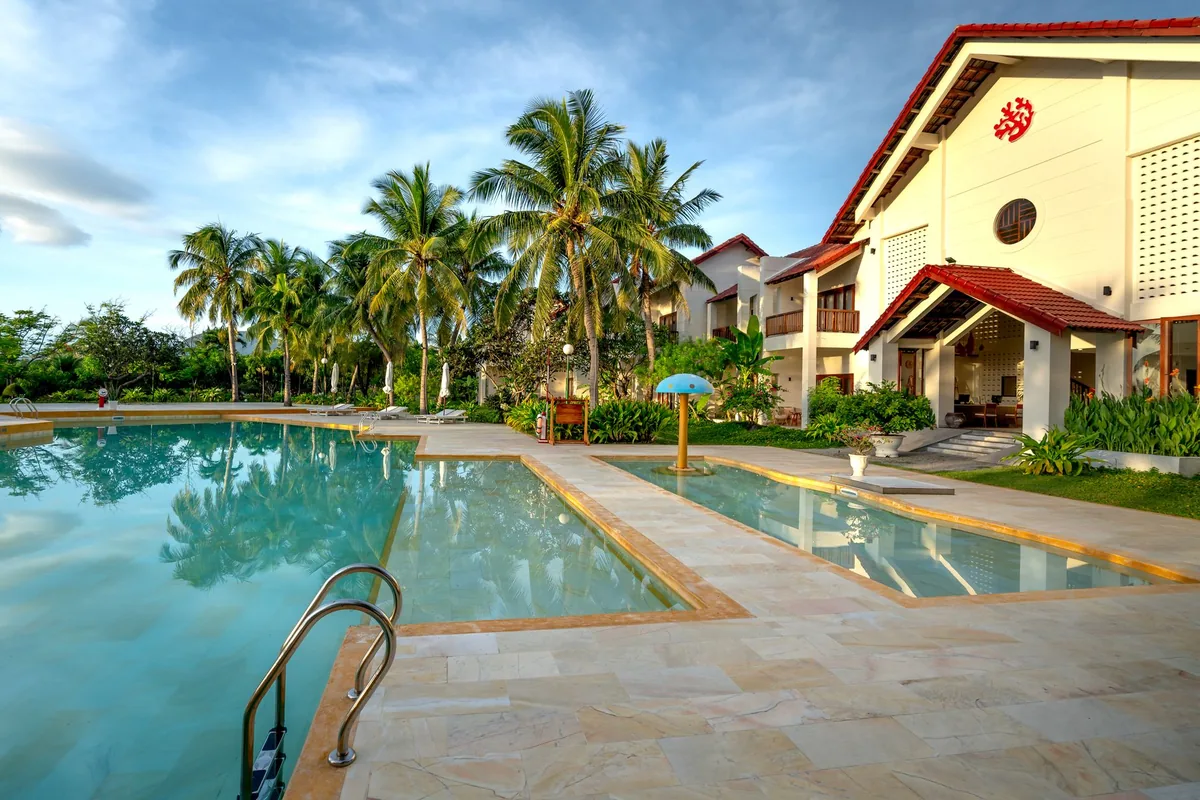
Farther east, IHG Hotels & Resorts has signed a Holiday Inn in Sector 24 of Naya Raipur, Chhattisgarh, planned to open in the first quarter of 2031 [1]. Developing in partnership with Entry Point Hotels, the property includes a 715-square-meter ballroom within a 942-square-meter event complex, positioned to serve Mantralaya, Vidhan Sabha, and Swami Vivekananda Airport [1]. IHG is also addressing regional pilgrimage corridors with Vrindam Developers via the 130-key voco Vrindavan in Uttar Pradesh [1].
Leisure footprints shift from traditional corridors to remote reserves
As business-oriented brands target industrial towns, leisure additions are moving toward low-density nature destinations. Asian Hospitality noted that Radisson Hotel Group (RHG) opened its first forest reserve property in India with the Jungle Home Resort in Village Kolara, District Chandrapur, near Nagpur [3]. Operating under the Radisson Individuals Retreats brand, the reserve provides 10 premium suites, eight suites with private jacuzzis, and two villas containing three cottages each, supported by guided safari access in Tadoba [3].
RHG accompanied this opening with 176 keys across Gujarat via the Radisson Resort & Spa Sasan Gir and Park Inn & Suites by Radisson Rajkot [3]. Such nature, wellness, and heritage developments routinely demand 5 to upwards of 20 acres of land, forcing investors to measure plot acquisition expenses directly against sustainable room rates [4].
Institutional equity consolidates platforms to absorb capital outlays
The hotel industry attracted approximately $905 million in real estate transactions between 2024 and the first half of 2026 [4]. Equity backing has shifted toward platform rollups and joint ventures that allow operators to scale room counts without carrying entire assets on balance sheets [4]. Warburg Pincus backed Fleur Hotels with $110 million, while Blackstone committed $100 million into the Taj Aravali Resort & Spa in Udaipur [4].
GIC deployed a $90 million commitment into the SAMHI Hotels platform in 2025 [4]. In other asset transactions, Indian Hotels Company Limited acquired Brij Hospitality for around $30 million, Ventive Hospitality directed $30 million to Western India Resort through Kelzai Eco Reserves, and ITC Hotels invested $20 million in GHK Hospitality [4]. This deployment of capital assumes MICE tourism expands at its projected 11.9 percent annual clip from 2026 through 2031, aided by approximately 100 planned airports by 2035 [4].
When this pacing thesis breaks down
This rollout schedule will falter if institutional funding retrenches below the $905 million recorded over the 2024 to mid-2026 window, or if annual branded deliveries drop beneath the 14,400 keys added in 2025 [4]. Furthermore, should domestic trip expansion fall significantly short of its 18 percent annual pace, or if the arrival of 100 planned airports faces structural delays past 2035, capital allocated to tier-two industrial nodes and remote retreats will confront suppressed yields [4].
Reported by
This article was written from the following reporting. Follow the links for the original coverage.
- [1]IHG Signs Holiday Inn in Chhattisgarh for 2031— asianhospitality.com
- [2]LTHL Expands in Rajasthan with New Keys Lite Hotel— asianhospitality.com
- [3]Radisson Debuts First Indian Forest Resort in Maharashtra— asianhospitality.com
- [4]India Needs 210,000 More Hotel Rooms by 2035— asianhospitality.com
Frequently asked
+How many hotel rooms does India need by 2035?
India requires up to 210,000 additional organised hotel rooms by 2035, according to CBRE estimates. At the end of 2025, the country maintained approximately 450,000 organised rooms after delivering 14,400 rooms that year.
+Which hotel segments have the largest projected room shortages?
Mid-tier and upscale properties represent the bulk of the deficit. Projections outline needs for 43,000 upscale rooms, 42,000 midscale rooms, 32,000 upper-midscale rooms, 30,000 economy rooms, 29,000 luxury rooms, and 23,000 upper-upscale rooms.
+How much institutional real estate capital entered Indian hospitality recently?
Between 2024 and the first half of 2026, the sector secured roughly $905 million in real estate investment, including outlays by Warburg Pincus, Blackstone, and GIC into platforms like Fleur Hotels and SAMHI.
+Where are hotel chains opening new properties outside metro areas?
Brands are entering industrial and cultural cities like Bhilwara with Lemon Tree's Keys Lite, Naya Raipur with an IHG Holiday Inn, and forest destinations such as Tadoba with Radisson's Jungle Home Resort.
+What infrastructure targets support this hotel capacity growth?
Development is supported by around 100 new airports expected by 2035, ongoing highway and metro expansions, an 18 percent annual increase in domestic travel, and 11.9 percent projected annual MICE growth through 2031.
Keep reading
Our reporting
More in finance