Hotel ESG Operations: Audited Standards Protect Asset Value
Third-party certifications and rigorous back-of-house upgrades replace self-declarations as hotels navigate stricter global verification standards.
The short answer
Hotel brands and owners are shifting from unverified eco-claims to independent, third-party operational standards like WTTC Basics and Green Key Global. Upgrading energy microgrids, kitchen waste tracking, and greywater recycling satisfies strict EU consumer regulations while boosting asset value.
“By strengthening the programme through independent certification, we are giving hotels a globally recognised framework that reflects evolving regulatory expectations while building greater trust and confidence in sustainability claims.”
The short version
- WTTC is elevating its Hotel Sustainability Basics program to independent third-party certification to comply with EU Directive 2024/825.
- Green Key Global established a 37-question core criteria assessment and partnered with Alō Index to tie environmental ratings to corporate RFP channels.
- Over 15,000 professional kitchens globally adhere to the Sustainable Restaurant Association's Food Made Good Standard to audit back-of-house operations.
Hotel owners and general managers protect asset value and capture corporate travel demand by transitioning from self-declared green initiatives to independent, third-party operational certifications. Driven by tightening regulatory mandates such as the European Union’s Directive 2024/825, verifiable environmental baselines across energy microgrids, kitchen operations, and water recovery systems insulate properties against compliance liabilities while securing verified visibility in corporate request-for-proposal channels.
Why are global bodies transitioning to independent verification?
Regulatory crackdowns on unsubstantiated green claims require properties to back operational practices with third-party audits. Travelindex reported that the World Travel & Tourism Council (WTTC) is transitioning its Hotel Sustainability Basics programme from an industry framework into an independent third-party certification scheme [4]. This move directly addresses the European Union Directive on Empowering Consumers for Green Transition (Directive (EU) 2024/825), which enforces stricter requirements for environmental claims [4].
The scheme aligns with the Global Sustainable Tourism Council (GSTC) Accreditation Framework, using verification partners such as SGS to audit compliance [4]. Since 2022, more than 8,000 properties across 85 countries adopted the 12-action baseline developed alongside Greenview [4]. Later this year, WTTC will introduce Basics Plus, developed with the World Sustainable Hospitality Alliance (WSHA) as part of the Pathway to Net Positive Hospitality [4].

How do regional certification programs streamline operational compliance?
Certification bodies are restructuring operational audits to reduce administrative friction for on-property teams. Green Key Global, operating across Canada and the United States, updated its Eco-Rating certification around 37 mandatory core questions alongside an expanded member toolkit to ease assessment efforts [6]. To translate operational standards into revenue, Green Key Global partnered with Alō Index, feeding verified sustainability credentials directly into corporate request-for-proposal (RFP) systems to capture business travel [6]. Green Key Global selected The Argonaut Hotel in San Francisco as its 2026 Property of the Year for meeting these operational benchmarks [6].
What operational systems deliver verifiable property decarbonization?
Standardized back-of-house engineering investments deliver measurable operational efficiency while cutting Scope 1 and Scope 2 emissions. Stewart Kiely of Cayuga Hospitality Consultants reported that properties are establishing on-site renewable microgrids featuring solar panels, wind turbines, and geothermal heating, with energy-positive assets routing surplus power into municipal grids [2]. In guestrooms, Internet of Things (IoT) occupancy sensors automate HVAC and lighting setbacks, while commercial kitchens deploy variable-speed exhaust hoods synced to real-time cooktop usage [2].
Plumbing operations are shifting toward closed-loop systems. Hotels now treat shower and laundry greywater on-site for toilet flushing and landscape irrigation, using smart sensors to detect micro-leaks before pipe networks suffer major losses [2]. Properties also divert organic waste from landfills using on-site aerobic digesters, converting kitchen scraps into greywater or organic soil inputs within 24 hours [2].
How are hotel kitchens standardizing sustainable food operations?
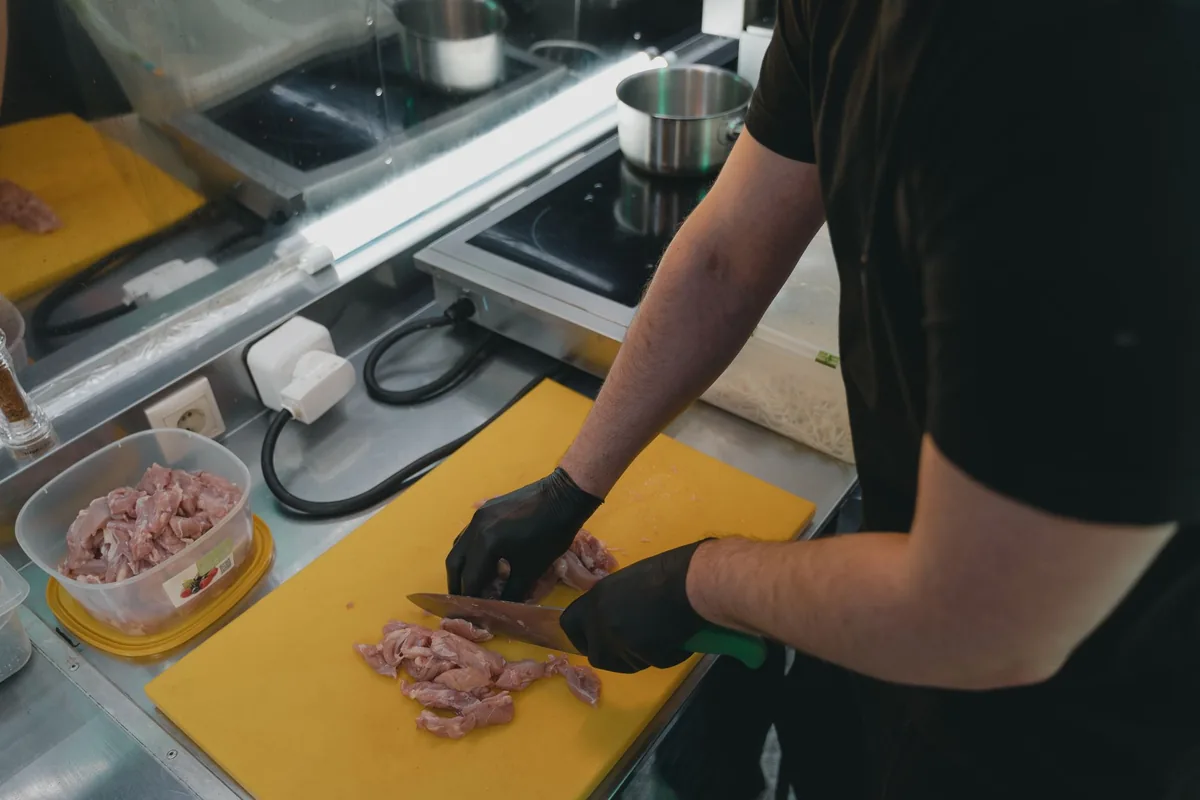
Food and beverage departments standardize procurement and scrap handling through dedicated operational frameworks. The Sustainable Restaurant Association (SRA) manages the Food Made Good Standard, a verified assessment applied across more than 15,000 commercial kitchens in 47 countries [5]. The standard benchmarks operations across plate, people, and planet [5].
Kitchens deploy artificial intelligence scales and cameras over waste bins to distinguish food preparation trimmings from guest plate waste, adjusting prep par levels and portion sizes in real time [2]. Engineering plant-forward menus that emphasize pulses and grains while reducing carbon-heavy proteins like beef cuts kitchen carbon emissions by 30% to 50% while protecting margins [2]. Operations also strip out hidden back-of-house plastics by replacing plastic cling wrap with reusable silicone covers and switching to compostable vacuum bags [2].

Which properties demonstrate certified ESG asset performance?
Institutional owners and luxury operators are proving that third-party accredited assets deliver commercial viability. Sustainability Magazine reported that real estate manager Brookfield Asset Management implemented electric guest boats on Lake Pichola and organic waste composters at The Leela Palace Udaipur, earning the SEEMS Platinum National Energy Management Award [3]. In Singapore, UOL Group’s Parkroyal Collection Marina Bay achieved BCA Green Mark Super Low Energy, GSTC, and Green Globe accreditations after installing a 13-metre-high green wall and over 2,400 plants during a 2020 refurbishment [3].
In Colorado, Urban Villages opened Populus Denver in 2024 as the first carbon-positive hotel in the United States, utilizing biophilic architecture, on-site biodigesters, and off-site forest planting [3]. In Hawaii, Starwood Hotels salvaged nearly 150 tons of furniture, fixtures, and equipment during the renovation of 1 Hotel Hanalei Bay, targeting Certified Carbon Neutral and TRUE zero-waste operational ratings [3].
| Property | Location / Owner | Certifications & Standards Held | Operational Measures |
|---|---|---|---|
| Scandic Spectrum | Copenhagen, Denmark / Scandic Hotels Group | Nordic Swan Ecolabel, DGNB Certification | Double-skin glass facade, two plant-filled atrium courtyards, sorted waste reduction [3] |
| Parkroyal Collection Marina Bay | Singapore / UOL Group | BCA Green Mark Super Low Energy, GSTC, Green Globe | 13-metre green wall, 2,400 plants, energy, food, and water monitoring [3] |
| ITC Grand Chola | Chennai, India / ITC | LEED Platinum, Zero Carbon, Zero Water, Five-Star GRIHA | Self-generated wind and solar power, irrigation water recycling, transplanted trees [3] |
| 1 Hotel Hanalei Bay | Kauai, Hawaii / Starwood Hotels | Targeting Certified Carbon Neutral, TRUE Zero-Waste | Salvaged 150 tons FF&E, green roofs filtering stormwater runoff [3] |
| Populus Denver | Denver, Colorado / Urban Villages | First U.S. Carbon-Positive Hotel Classification | On-site biodigester, biophilic design, one tree planted per guest night [3] |
How do regional destinations approach operational resilience?
Hospitality resilience extends beyond urban assets into vulnerable resort environments where basic resource access dictates operational continuity. Hotel News Resource reported that Caribbean destinations are structuring eco-innovations around climate adaptation and resource autonomy [1]. In Aruba, properties focus on renewable energy systems to reduce reliance on imported fossil fuels [1]. Belize integrates guest operations with active coral reef restoration, while the U.S. Virgin Islands leverages preserved coastal ecosystems and national park environments to build operational resilience against extreme weather [1].
Reported by
This article was written from the following reporting. Follow the links for the original coverage.
- [1]Caribbean Tourism Shift Focuses on Eco-Innovation— hotelnewsresource.com
- [2]Top Sustainable Innovations for Hotel Operations— hotelnewsresource.com
- [3]Top 10 Global Sustainable Hotels Leading Industry Decarboniz— sustainabilitymag.com
- [4]WTTC Sustainability Basics Transitions to Third-Party Certif— qatartourism.org
- [5]SRA Expands Food Made Good Sustainability Standard— thesra.org
- [6]Green Key Global Updates Standards and Partners with Alō Ind— greenkeyglobal.com
Frequently asked
+Why is the WTTC Hotel Sustainability Basics program changing?
WTTC is transforming the program into an independent third-party certification scheme aligned with GSTC and verified by partners such as SGS. The update responds to EU Directive 2024/825, which cracks down on unverified environmental advertising and requires verified proof for corporate claims.
+How does Green Key Global integrate with hotel corporate sales?
Green Key Global partnered with Alō Index to connect its Eco-Rating property certifications directly with corporate procurement tools. This allows corporate travel managers to filter verified sustainable hotels during the annual request-for-proposal process.
+What operational steps cut hotel kitchen carbon emissions fastest?
Commercial kitchens reduce carbon emissions by 30% to 50% by adopting plant-forward menus, tracking plate versus prep waste with AI cameras, installing on-site aerobic digesters that process food within 24 hours, and replacing back-of-house plastics with silicone covers.
+What certifications apply to heavy commercial hotel assets?
Hotels hold rigorous building and performance certifications including LEED Platinum, Zero Carbon, Zero Water, India's GRIHA rating, Denmark's Nordic Swan Ecolabel, Germany's DGNB, and Singapore's BCA Green Mark Super Low Energy certification.
+Do existing WTTC Hotel Sustainability Basics members need to reapply immediately?
No, participating hotels do not need to take immediate action. The WTTC and verification partners like SGS are rolling out transition guidance and preparing the release of Basics Plus with the World Sustainable Hospitality Alliance.
Keep reading
Our reporting

More in operations