Why Hospitality Executives Prioritise High-Touch Service Over AI
Hospitality leaders are positioning AI as a back-end utility while deploying staff to drive reputation, group sales, and guest retention.
The short answer
Hospitality operators are using AI as an administrative baseline while relying on frontline staff to drive guest review scores and group sales. Industry data shows staff mentions boost hotel Global Review Index ratings by up to 0.6 points.
“While AI can remember everything, only people and human-designed experiences can make you feel something, which no AI can copy. That’s what keeps us ahead.”
The short version
- Shiji benchmark figures show positive staff mentions increase hotel Global Review Index scores by up to 0.6 points.
- Pyramid Global Hospitality advises sales teams to use automation for the first 80 percent of RFP drafting and personalise the final 20 percent.
- Virgin Atlantic is increasing Upper Class and Premium seating by 30 percent while pairing digital concierges with human clubhouse service.
Hospitality leaders are prioritising high-touch service over artificial intelligence because interpersonal interactions drive review scores, group sales trust, and customer retention in ways automated algorithms cannot reproduce. Executives across lodging, sales, and travel sectors view technology as an operational starting point, reallocating staff hours away from repetitive administrative data tasks to focus on relationship-driven hospitality and reliable guest basics.
How Does Frontline Staff Performance Directly Impact Guest Review Scores?
Frontline staff interactions generate the positive sentiment that directly lifts property-level reputation and pricing power. In an analysis by eHotelier reviewing the Q3 2025 Shiji Guest Experience Benchmark, positive mentions of hotel staff emerged as the second strongest positive driver of the Global Review Index (GRI) for European properties, increasing scores by 0.6 points year over year [4]. Globally, the benchmark documented a 0.5-point GRI increase attributable directly to positive staff mentions [4].
Because online reputation correlates with higher rankings, booking velocity, and revenue per available room (RevPAR), properties that safeguard personal interactions retain a direct performance advantage over automated alternatives [4]. Review data demonstrates that specific human actions—including remembering a guest's favourite drink, offering a warm greeting at reception, or providing a thoughtful room upgrade—create emotional connections that prompt guests to share positive feedback [4].
Why Are Hotel Sales Teams Shifting Away From Automated Group RFP Processes?
Hotel sales leaders are discovering that automated proposal generation cannot substitute for personal confidence and relationship-building during high-value group negotiations. Evan Crawford, Vice President of Marketing for Pyramid Global Hospitality, noted in eHotelier that proposal tools will quickly assemble availability, meeting space, rates, and proposal documents in minutes, yet winning business depends on the human element [3]. Crawford argued that sales teams should treat AI-generated fulfillment merely as a baseline, allocating the saved administrative time to building authentic client relationships [3].
Meeting planners evaluate sales personnel to verify who will answer the phone and manage issues when disruptions occur [3]. Rather than subjecting corporate planners to lengthy digital RFP forms demanding extensive fields, Crawford recommended cutting friction to a simple prompt: "Have an RFP? Attach it here" [3]. When technology handles 80 percent of the mechanical work, sales professionals can spend the remaining 20 percent personalising outreach, prospecting, and connecting with past clients rather than assembling generic documents [3].
What Role Does Brand Identity Play as Search Becomes More Algorithmic?
A distinct brand proposition prevents properties from becoming generic options inside automated search engines and comparison platforms. Crawford explained that properties outperforming their competitive sets are not necessarily backed by bigger capital budgets or sharper technology, but rather possess a clear voice and know what they need to be for the guest [3]. Attempting to cater to all demographics—families, weddings, corporate groups, and leisure guests alike—dilutes messaging until it resonates with no one [3].
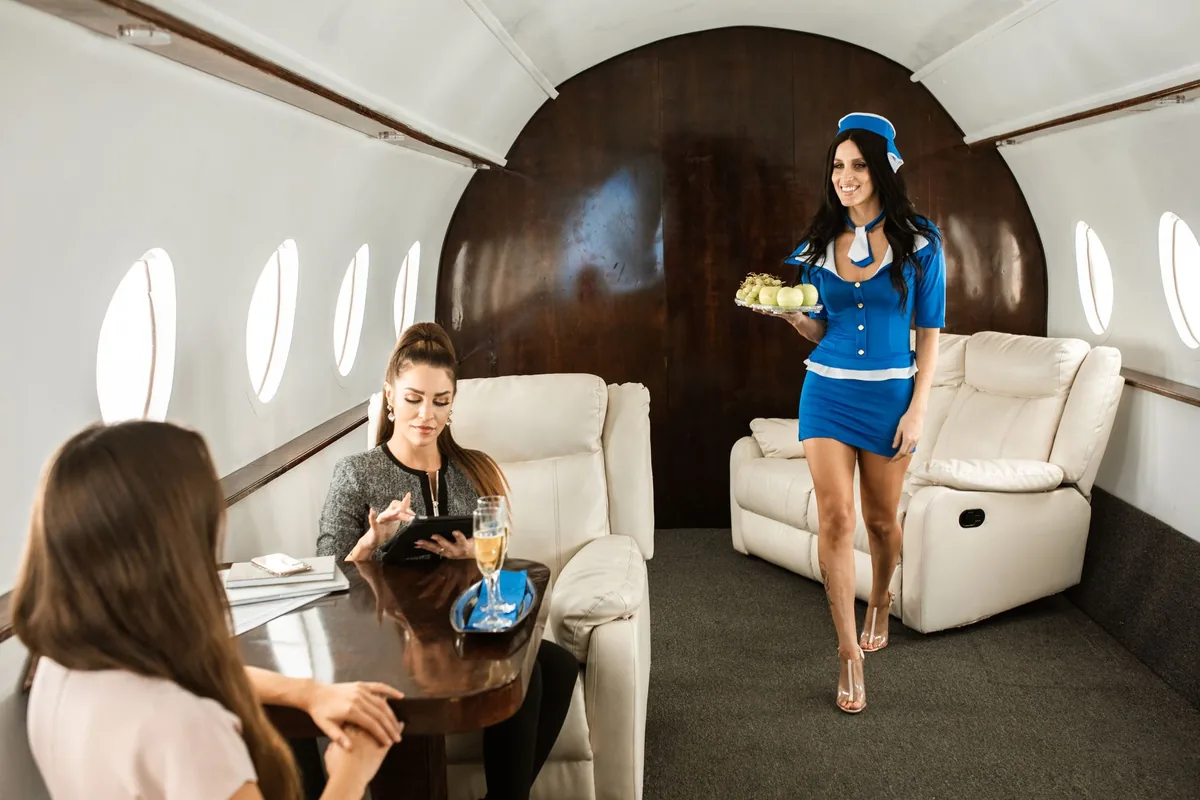
A parallel perspective emerged in travel transport. Reporting by Skift showed that Virgin Atlantic Chief Executive Corneel Koster reinforces distinct positioning to differentiate from larger airline systems [1]. Koster explained that while AI can remember data, human-designed touchpoints create enduring impressions that algorithms cannot duplicate [1]. As platforms increasingly mediate discovery, distinct character and clear customer focus determine whether a brand earns a place on the traveller's shortlist [[1], [3]].
How Are Travel Brands Balancing Tech Efficiency and Frontline Service?
Executives deploy software to absorb repetitive administrative burdens so teams can focus on direct guest care. Rather than substituting staff, automated tools operate in the background—analysing feedback in real time to spot service recovery issues, drafting review replies, or sharing guest preferences across departments [4]. For example, tools can alert food and beverage teams to nut allergies in advance or automatically assign quiet rooms away from elevators for late-arriving corporate travellers [4].

The table below contrasts how major hospitality and travel entities deploy technology alongside human service touchpoints across operations, sales, and loyalty.
| Company / Source | Automation & Hardware Initiatives | High-Touch Human Touchpoints | Stated Business Objective |
|---|---|---|---|
| Virgin Atlantic (Skift) [1] | AI Concierge app booking; Starlink fleet rollout across Airbus A350 aircraft | Cabin crew hospitality; Clubhouse greetings; bespoke drinks | Differentiate through brand warmth and increase premium cabin share by 30% |
| Pyramid Global Hospitality (eHotelier) [3] | Automated RFP proposal tools; simplified website intake forms | Direct corporate prospecting; consultative client problem-solving | Build planner trust long before formal proposal submissions occur |
| European & Global Hotels (Shiji / eHotelier) [4] | Automated guest preference flags; real-time review response drafting | Front desk welcome; personalized upgrades; food and beverage recognition | Deliver a +0.5 to +0.6 lift in property Global Review Index scores |
Why Do Basic Physical Realities Still Outweigh Tech Layering in Operations?
No level of software automation or interior styling can compensate for deficiencies in fundamental comforts such as cleanliness and functional room design. Analysis from eHotelier warned that developers often misallocate resources into decorative artwork, designer sofas that guests avoid, or heavy, awkward tableware while overlooking basic guest requirements [2]. A Michelin-star chef will not offset slow or inattentive service, just as design features cannot compensate for uncomfortable beds, unmaintained air conditioning vents, or bathrooms lacking a basic shelf for toiletries [2].
Core maintenance and room cleanliness remain the primary baseline expectation of every hotel stay, regardless of asset size or brand tier [2]. Front-of-house teams and room attendants serve as the one or two operational steps connecting ownership to the guest [2]. Ensuring those teams deliver quiet comfort, clean spaces, and genuine hospitality provides the predictability that drives repeat bookings across unpredictable market cycles [2].
Reported by
This article was written from the following reporting. Follow the links for the original coverage.
Frequently asked
+How do positive staff interactions affect hotel review metrics?
Data from the Q3 2025 Shiji Guest Experience Benchmark shows positive staff mentions boost the Global Review Index by 0.6 points in Europe and 0.5 points globally, serving as the second strongest positive driver of online guest sentiment.
+What role should AI play in hotel sales proposal processes?
Pyramid Global Hospitality recommends using automated tools to assemble the baseline rate and space details, freeing sales staff to spend the remaining time personalising proposals, prospecting, and building authentic, consultative relationships with event planners.
+Why is brand voice critical when competing on digital channels?
Clear brand positioning ensures properties stand out in search algorithms. Broad messaging aimed at every guest segment dilutes identity, whereas focused brands make it simpler for planners and automated tools to identify the right venue fit.
+What basic operational elements must hotels secure before adding technology?
Hotels must deliver comfortable beds, functional room furnishings, silent air conditioning, and immaculate cleanliness. Technology and decorative aesthetics cannot rescue a guest stay undermined by maintenance failures or poor sleep quality.
+How are airline leaders approaching AI differentiation compared to hotels?
Virgin Atlantic leverages AI concierges and Starlink connectivity for utility, but relies on inflight cabin crew, personalised greetings, and human warmth to drive repeat bookings and expand premium cabin capacity.
Keep reading
Our reporting

More in operations