Hilton 2027 Trends Report: Flexible Travel Demand
Hilton's 2027 trends study reveals guests are abandoning rigid holiday planning in favour of personal growth, micro-trips, and trusted staff guidance.
The short answer
Hilton’s 2027 Trends Report reveals guests are abandoning rigid trip planning in favor of nervous-system resets, short stays, and personal growth. Lodging operators face rising demand for solo-ish transit, hotel staff recommendations, and outdoor hydrothermal experiences.
The short version
- Hilton found 70% of travelers trust on-property hotel staff as trip planning resources over automated options.
- Motto by Hilton recorded more than 50% of global bookings from solo travelers across the previous year.
- Conrad Orlando logged a 60% year-over-year surge in monthly outdoor bath appointments at its Water Garden.
Travelers are abandoning rigid, picture-perfect vacation standards to pursue flexibility, nervous system resets, and self-directed itineraries, according to Hilton’s newly released 2027 Trends Report. The brand study establishes that guests increasingly rely on hotel staff guidance, pursue short-stay getaways, and combine independent solo transit with social gatherings at their final destinations [1].
Why are guests abandoning the concept of a flawless trip?
Guests are discarding unrealistic trip standards because the pursuit of absolute perfection generates unnecessary tension before and during transit [1]. Hotel Business reported that 54% of travelers experience pressure to achieve a perfect vacation, while 24% admit strain caused by attempting to accommodate group demands and satisfy fellow companions [1].
Rather than following rigid schedules, visitors are opting for self-directed pacing that accommodates personal restoration [1]. As Chris Nassetta, president and CEO of Hilton, observed, guests are no longer invested in someone else's definition of perfection and want travel structured entirely on their own terms [1].
How is solo travel evolving into connected stays?
Solo travel now frequently functions as an avenue for communal connection rather than total isolation [1]. Hilton discovered that 31% of travelers venture out alone specifically to connect with friends or family once they reach their destination, a habit the brand designates as solo-ish travel [1].
This shift shows concrete booking momentum across urban hospitality concepts [1]. Motto by Hilton registered that more than half of its worldwide reservations over the previous year came from solo guests [1].
Who do travelers trust for planning advice?
Travelers increasingly rely on human expertise over automated tools, looking directly to front-line lodging professionals and close family members [1]. A notable 70% of travelers express confidence in hotel staff as a reliable trip-planning resource [1].
Family ties also carry substantial weight depending on life stage [1]. Among consumers who place primary trust in family recommendations, 20% of non-parents cite their mother as their primary source of guidance, making them more than twice as likely as parents (8%) to consult mothers [1]. Loyalty affiliations further dictate trust: 50% of respondents trust tips from an individual holding elite loyalty status over advice from a non-member, while 29% report jealousy toward friends who maintain higher tier credentials than their own [1]. Hilton Honors observed double-digit growth in members securing elite tiers year over year following qualification adjustments introduced in January [1].
| Traveler Behavior Metric | Observed Percentage | Context or Demographic Group |
|---|---|---|
| Pressure to have a perfect trip | 54% | All surveyed travelers |
| Solo-ish meetup travel | 31% | Travelers journeying alone to meet friends or family |
| Trust in hotel staff recommendations | 70% | Travelers seeking planning advice |
| Trust in loyalty status holders | 50% | Travelers prioritizing peer status recommendations |
| Motivation from pre-trip anticipation | 76% | Travelers reporting a calendar trip gives purpose |
| Focus on nervous system resets | 65% | Travelers pursuing calming experiences |
| Outdoor air necessity | 79% | Travelers prioritizing relaxation |
What role do wellness and nature play in booking choices?
Restorative biological balance and immersion in natural elements have become primary drivers for lodging selection [1]. Hilton's findings state that 65% of guests seek out physical experiences designed to calm the body and reset the nervous system, while 76% assert that travel helps them reset in ways unavailable at home [1].
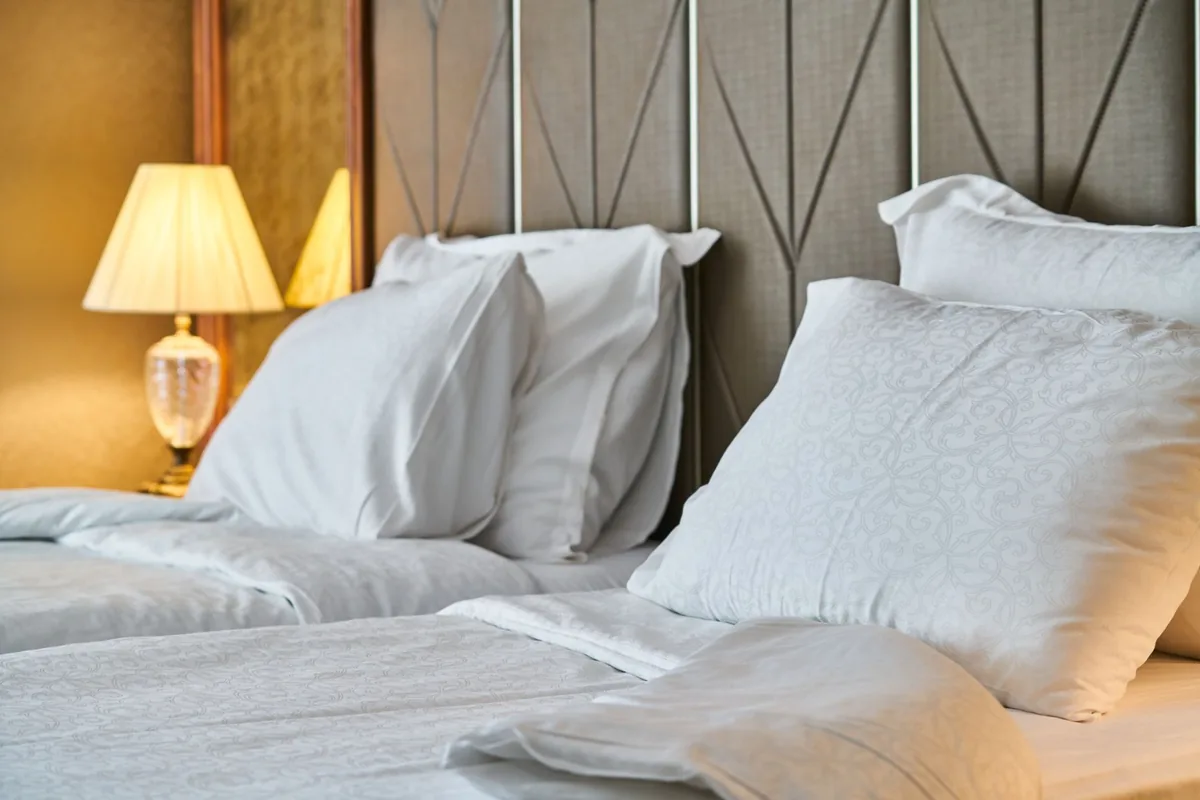
Outdoor environments serve as central wellness hubs for these guests [1]. A total of 79% consider fresh air and the outdoors critical to personal relaxation, with 54% spending higher amounts of time in nature while traveling than during daily life [1]. Commercial properties are seeing direct revenue impacts from this preference; Conrad Orlando recorded a 60% year-over-year rise in monthly outdoor bath treatments at its outdoor Water Garden hydrothermal facility [1].
How do regional travelers define short-stay micro-trips?
Time restrictions prompt consumers to favor compact, easily arranged visits that deliver varied activities in compressed timeframes [1]. The study notes 67% of travelers want itineraries that maximize experiences within limited windows, and 63% choose central properties surrounded by attractions [1].
However, the definition of what constitutes a brief getaway changes dramatically by geographical origin, as Hotel Business detailed [1]:
| Country / Origin Market | Typical Short-Trip Duration Definition | Reported Market Share |
|---|---|---|
| United States | Fewer than 3 to 4 days | 88% of travelers |
| Japan | Fewer than 2 days | 86% of travelers |
| South Korea | Fewer than 2 days | 59% of travelers |
| Saudi Arabia | 5 to 6 days or longer | 29% of travelers |
| Germany | 5 to 6 days or longer | 26% of travelers |
Why are skill vacations gaining traction among younger demographics?
Trips are increasingly treated as instruments for personal development and tangible skill acquisition [1]. Approximately 42% of survey respondents state that trips helped them uncover fresh passions or personal interests [1].
Generational divergence is noticeable within this segment [1]. Gen Z guests are nearly twice as likely as Baby Boomers to structure trips around picking up a new hobby or discipline they can maintain after returning home [1]. Furthermore, this psychological benefit operates well before arrival, as 76% of surveyed individuals report that merely having an upcoming stay booked provides a sense of daily purpose [1].
Reported by
This article was written from the following reporting. Follow the links for the original coverage.
- [1]Hilton Report Forecasts Shift to Flexible Travel— Hotel Business
Frequently asked
+What is solo-ish travel according to the Hilton report?
Solo-ish travel describes guests who travel independently to a destination specifically to meet up with friends or family, representing 31% of travelers surveyed by Hilton.
+How much do guests rely on hotel staff for advice?
According to the Hilton 2027 Trends Report, 70% of travelers trust on-property hotel team members as a primary resource for planning their trips and activities.
+How does short trip duration differ between the US and Asia?
In the United States, 88% define a short trip as fewer than 3 to 4 days. Conversely, 86% of Japanese travelers and 59% of South Koreans consider a short trip to be under 2 days.
+What proportion of travelers prioritize nature while away?
The report highlights that 79% of travelers view fresh air and the outdoors as essential for relaxation, while 54% spend more time outside during trips than at home.
+How has Hilton Honors membership tier progression shifted?
Following program revisions implemented in January, Hilton Honors noted double-digit year-over-year growth in members earning elite tier status faster than in previous periods.
Keep reading
Our reporting
More in operations