BMS Upgrades and Green Standards Trim Hotel Utility Overhead
Capital investments in automated controls, solar power, and verified green benchmarks deliver measurable utility cost cuts across three luxury developments.
The short answer
Hotel owners are lowering utility costs through automated building management upgrades and on-site solar systems. Disclosures from Sydney, Madrid, and Turks and Caicos outline energy savings of up to 70% alongside top green certifications.
The short version
- The Strand cut effective power rates to nearly one-third of utility prices by integrating solar panels and battery storage [[1]].
- InterContinental Sydney gained a 7% drop in energy use following an intelligent BMS upgrade, adding to 20% saved over ten years [[3]].
- The Madrid EDITION achieved Spain's highest hotel score under BREEAM In-Use certification at an 'Excellent' rating [[2]].
Hotel owners and asset managers are lowering property utility overhead and protecting bottom lines by combining automated building management systems, on-site energy generation, and green building certifications. Three separate property disclosures show operational energy bills reduced by up to two-thirds, building management system upgrades delivering an incremental 7% drop in power demand, and top-tier certifications validating resource efficiency [1] [2] [3].
How much operational expenditure do on-site solar systems cut?
Integrating solar infrastructure into initial architectural plans reduces electricity overhead to roughly one-third of utility grid prices in diesel-dependent power markets [1]. According to Realty Times, John Fair explained that at The Strand in Turks and Caicos, where grid power exceeds $0.40 per kilowatt-hour, rooftop solar panels are recessed behind two-foot parapets [1].
These residential arrays supply 50% to 70% of energy consumption for each villa, while accompanying battery storage provides overnight power and full backup during electrical outages [1]. Larger-scale installations of Tesla Powerwalls power the resort's shared community facilities almost completely on solar energy [1]. Eliminating reliance on expensive grid power protects margins from peak utility rate swings [1].
What efficiency gains come from modernising a Building Management System?
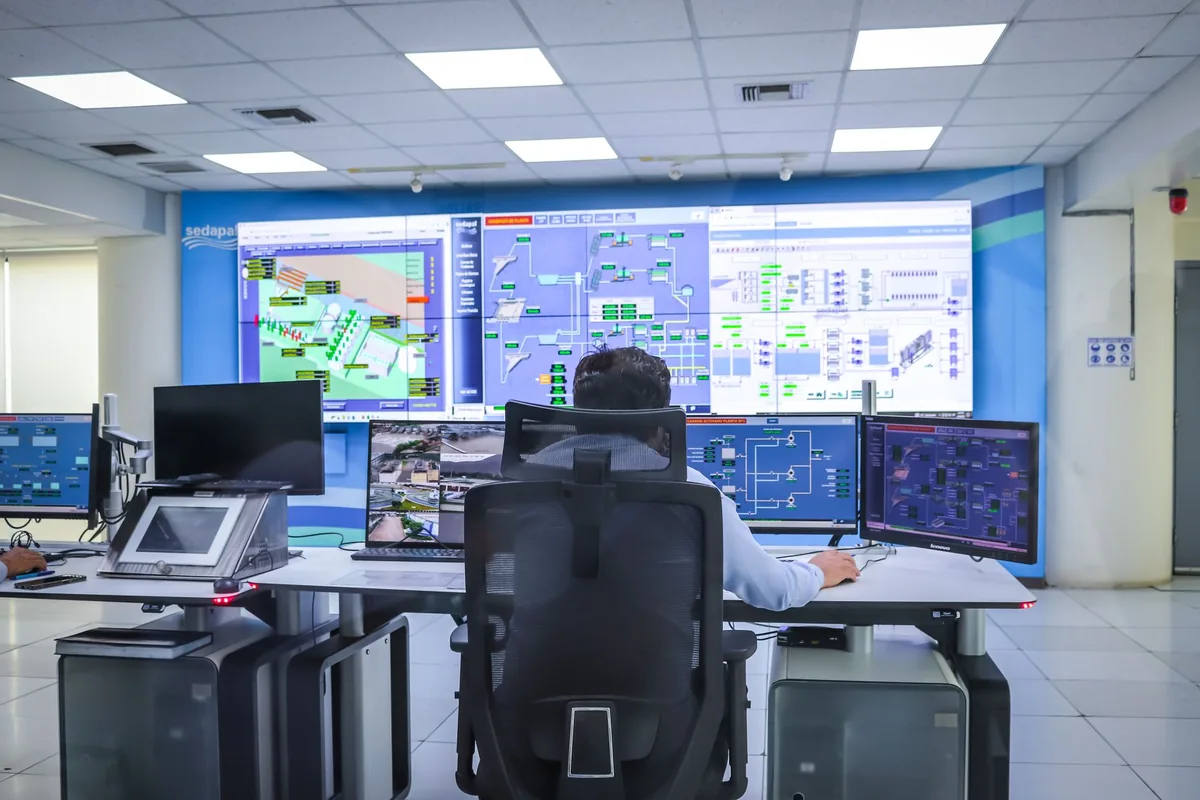
Upgrading an intelligent Building Management System (BMS) produced an immediate 7% reduction in energy consumption at InterContinental Sydney, adding to cumulative savings exceeding 20% over the preceding decade [3]. The hotel reported in its sustainability practice release that automated controls, energy-efficient LED lighting, and Guest Room Management Systems coordinate heating, cooling, and lighting dynamically according to occupancy [3].
Operators also track environmental performance using IHG Green Engage to supervise power, water, and emissions [3]. Real-time submeters monitor guestroom and public area water consumption, supporting broader asset plans that include future electrification of hot water heating [3].
Which certification benchmarks validate sustainable asset performance?
Third-party sustainability ratings confirm performance standards across regional and international luxury hotel assets [2] [3]. The Madrid EDITION earned a BREEAM In-Use certification at an "Excellent" level, which EDITION Hotels documented as the highest score ever recorded for a hotel in Spain [2]. The assessment recognized the urban property's smart systems, efficient water use, and urban biodiversity interventions [2].
Other operators benchmark operational efficiency against government and global hotel rating frameworks [3]. InterContinental Sydney secured a 4-Star NABERS Energy Rating while simultaneously advancing audits to secure Green Key certification [3].
| Property | Location | Efficiency Mechanism | Primary Performance Result |
|---|---|---|---|
| The Strand | Turks and Caicos | Concealed rooftop solar and Tesla Powerwalls | Supplies 50% to 70% of villa power; cuts power cost to nearly 1/3 of rates exceeding $0.40/kWh [1] |
| The Madrid EDITION | Madrid, Spain | Smart systems, water efficiency, eco-sourcing | Achieved BREEAM In-Use "Excellent" rating (Spain's highest hotel score) [2] |
| InterContinental Sydney | Sydney, Australia | Intelligent BMS, submeters, guestroom controls | 7% incremental energy reduction; 4-Star NABERS Energy Rating [3] |
How does early site planning lower resort landscaping and water costs?
Aligning native landscape planning before construction starts can decrease overall property water consumption by 30% or more [1]. Traditional resort concepts rely heavily on imported tropical landscaping that is unsuited to local climates, driving up irrigation budgets and plant replacement costs [1].
Realty Times reported that irrigation at The Strand accounts for 60% of total site water usage [1]. By teaming with the Butterfly Pavilion in Denver, Colorado, to map native plants, pollinators, and nesting areas, the resort cut water demand by 30% through native vegetation while securing certification as the first international Certified Pollinator Sanctuary [1].
What do single-use plastic eliminations contribute to operational overhead?
Properties in urban operating environments are redesigning waste processes to trim procurement expenses and diversion penalties [2] [3]. The Madrid EDITION cut single-use plastics across keycards, minibar items, straws, and bathroom amenities, replacing guest bathroom bottles with bulk refillable dispensers and compostable goods [2].
InterContinental Sydney similarly phased out single-use plastic cutlery and shifted to refillable amenity units and filtered water stations [3]. Hotel engineering teams run planned preventative maintenance schedules to optimize equipment life, while partnering with food rescue programs such as OzHarvest and ReLove to keep food waste and surplus goods out of landfills [3].
Reported by
This article was written from the following reporting. Follow the links for the original coverage.
- [1]Early Sustainability Design Cuts Hotel Energy Costs— realtytimes.com
- [2]Madrid EDITION Earns Top BREEAM Sustainability Rating— editionhotels.com
- [3]InterContinental Sydney Cuts Energy Use by 7%— sydney.intercontinental.com
Frequently asked
+What financial return do on-site solar systems provide in high-cost power regions?
In markets where electricity relies on diesel and exceeds $0.40 per kilowatt-hour, integrated solar systems and battery storage can lower effective power expenses to nearly one-third of utility rates while generating 50% to 70% of energy requirements, as demonstrated at The Strand in Turks and Caicos [[1]].
+How much energy does an intelligent BMS upgrade save in an operating hotel?
Upgrading to an intelligent Building Management System delivered a 7% reduction in energy usage at InterContinental Sydney, which compounded more than 20% in cumulative savings recorded over the preceding decade across guestroom controls and automated systems [[3]].
+Which green building certifications are luxury hotels achieving for operational efficiency?
The Madrid EDITION achieved BREEAM In-Use at an "Excellent" level, the highest score recorded for a hotel in Spain, while InterContinental Sydney holds a 4-Star NABERS Energy Rating and is actively pursuing Green Key certification [[2]] [[3]].
+How much water can native landscaping conserve for resort properties?
Transitioning from imported tropical plants to climate-adapted native plants can decrease water consumption by 30% or more, mitigating irrigation needs that otherwise account for up to 60% of total site water usage [[1]].
+How do hotels monitor resource tracking across operations?
Hotels utilize systems such as IHG Green Engage alongside real-time water submeters and automated guestroom controls to monitor power, carbon, and water consumption across public areas and accommodations [[3]].
Keep reading
Our reporting
More in operations