Hotel Owners Modernize Portfolios via Multi-Million Upgrades
Owners and operators roll out brand prototypes and major room overhauls across full-service and select-service properties nationwide.
The short answer
Hotel owners and operators across the country are rolling out multi-million-dollar renovations across mature full-service and select-service properties. These projects integrate modern brand prototypes, expanded fitness spaces, and transformed food and beverage venues to drive corporate and leisure revenue.
The short version
- Hilton Boston Back Bay completed a major overhaul featuring a 3,500-square-foot fitness center and smart room technology.
- Ivy Hospitality implemented Marriott's latest prototypes at two adjacent Indianapolis airport properties.
- Hyatt Regency Suites Atlanta Northwest upgraded all 202 suites and 3,000 square feet of meeting space under Auro Hotels.
Across the United States, hotel owners, asset managers, and management companies are executing multi-million-dollar property improvement plans across mature full-service and select-service properties. Rather than relying on simple cosmetic updates, operators are introducing complete brand prototype standards, reimagining food and beverage concepts, updating communal workspaces, and expanding dedicated wellness facilities to capture corporate, group, and leisure demand.
How are full-service urban assets being repositioned?
Full-service urban properties are undergoing comprehensive architectural and technological overhauls to compete directly with modern lifestyle supply. In Massachusetts, the 401-room Hilton Boston Back Bay completed an expansive, multimillion-dollar transformation managed by Highgate, as reported by Hotel Dive [4]. The landmark hotel, which originally opened in 1982 as the city's first purpose-built Hilton, refreshed all guestrooms with smart connectivity and modernized bathrooms, while premium 450-square-foot accommodations received luxury additions such as electronic drapes [4].
Beyond sleeping accommodations, full-service renewals emphasize active public spaces. At the Dalton Street property in Boston, the hotel debuted a transformed lobby featuring walnut millwork, patterned marble, and copper accent lighting, alongside an all-day restaurant concept named 40 Dalton Kitchen & Bar [4]. Similarly, Hotels Magazine reported that Auro Hotels finished a multi-million-dollar overhaul of the Hyatt Regency Suites Atlanta Northwest [1]. That project redesigned all 202 two-room suites with updated lighting, modern technology, new sectional seating, and redesigned wet bars topped with quartz counters [1].
What role do brand prototypes play in select-service overhauls?
Owners of select-service and extended-stay assets are aligning mature buildings with contemporary brand prototypes during major renovation cycles. In Indiana, Ivy Hospitality completed simultaneous renovations at two adjacent Marriott-branded properties situated near Indianapolis International Airport, according to Hotels Magazine [3]. General contractor Northco Construction Management executed both initiatives, bringing the flags' newest architectural designs into the airport submarket [3].
The dual-property project introduced Marriott's "Home Plus" package to the 96-suite Residence Inn Indianapolis Airport [3]. The layout incorporates studio, one-bedroom, and two-bedroom configurations that deliver separate spaces for working, living, and sleeping, paired with ergonomic workstations and full kitchens [3]. Immediately adjacent, the Fairfield Inn & Suites adopted the brand's farm-heritage design direction, installing a communal farmhouse table, curated farm artwork, and an interactive heritage wall in public areas [3].
How are operators modifying public and social spaces?
Communal spaces are being re-engineered to foster social interaction while supporting hybrid work patterns. Lodging Magazine reported that the Aloft by Marriott Houston by the Galleria completed an extensive renovation targeting every guest touchpoint [2]. The project introduced modern furnishings, contemporary design elements, refreshed guestrooms, and upgraded meeting and event spaces to revitalize its social hubs [2].
At the Hyatt Regency Suites Atlanta Northwest, public spaces were reconfigured around its signature dining destination, Modern Provisions, which features floor-to-ceiling glass looking out onto an outdoor garden and multi-tiered waterfall [1]. In Boston, Highgate and Hilton reoriented the ground-floor layout around communal movement, linking dining and social seating directly to dynamic street-level neighborhoods [4].
How are wellness and meeting facilities being adapted?
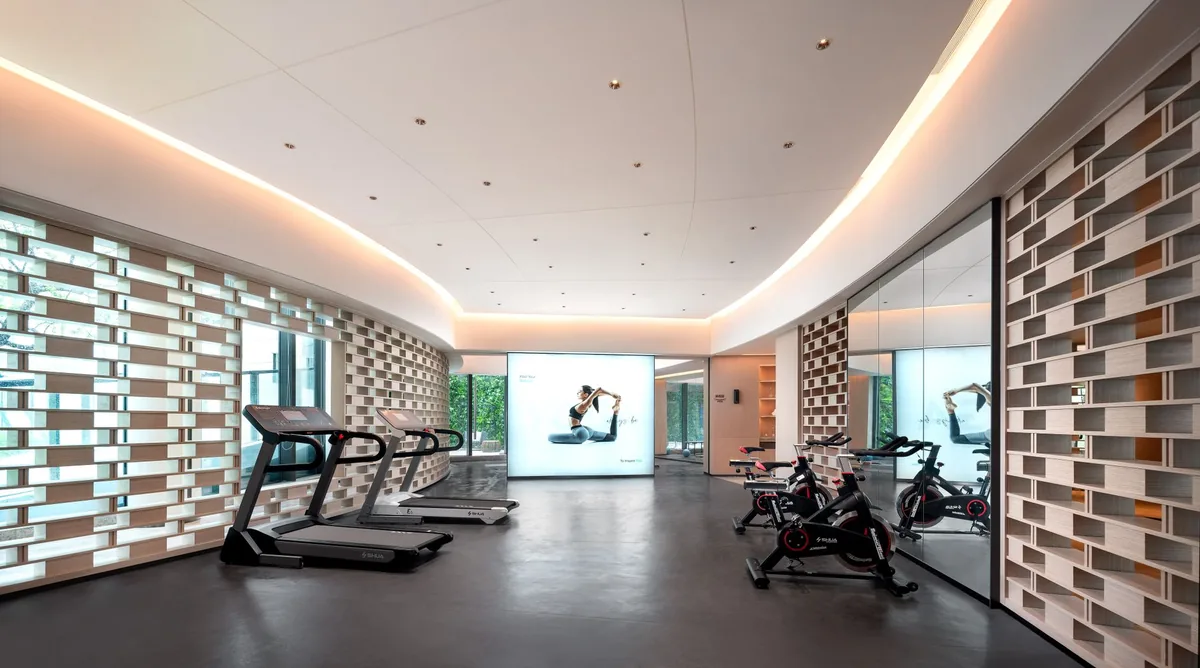
Modern capital expenditure programs allocate increased square footage to wellness and specialized corporate gathering facilities. According to Hotel Dive, the Hilton Boston Back Bay expanded its fitness center to 3,500 square feet, equipping the facility with connected Life Fitness machines, Peloton bikes, and an outdoor wellness deck [4].
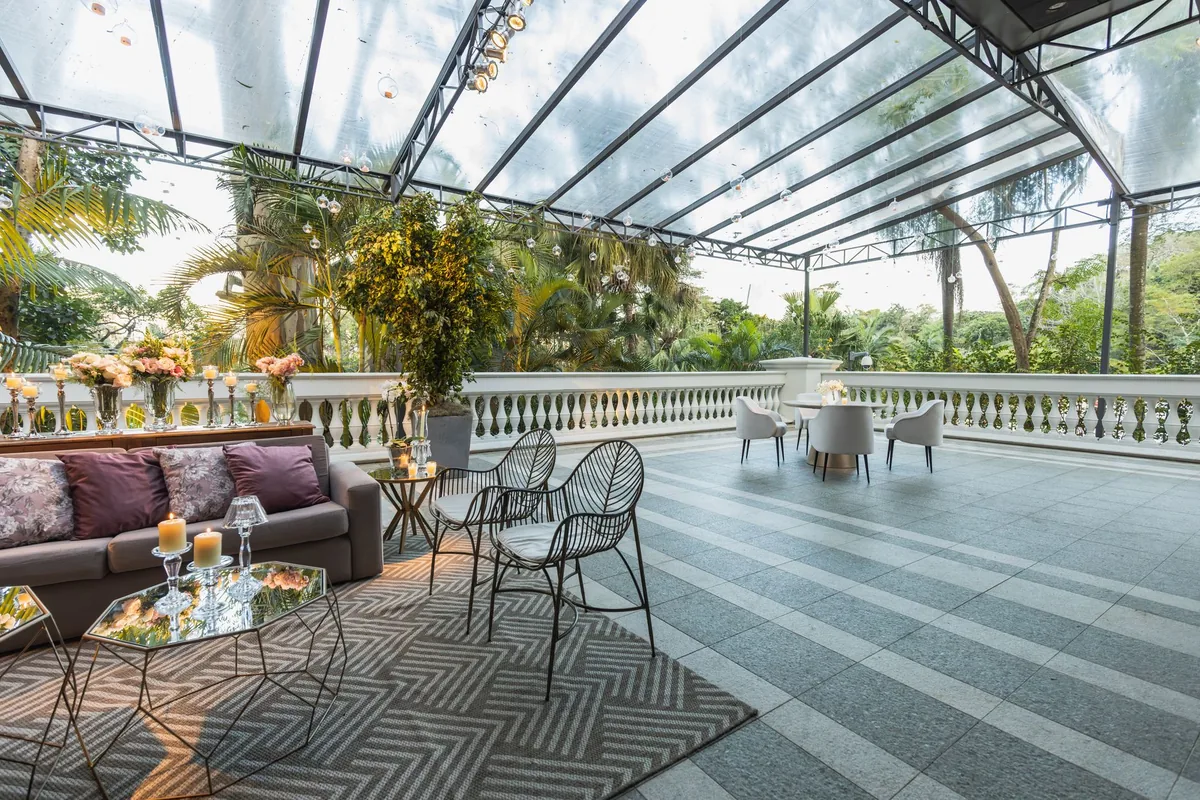
Meeting venues are similarly receiving significant structural upgrades to accommodate shifting corporate and social demand patterns [[1], [4]]. The Atlanta Northwest Hyatt property enhanced its 3,000 square feet of function space, which includes the 1,663-square-foot Atlanta/Marietta event space divisible into four sections, a dedicated executive boardroom, and an outdoor patio holding up to 150 guests [1]. Meanwhile, the Indianapolis airport properties incorporated 479 square feet of meeting space at the Residence Inn while enhancing supporting facilities with an outdoor fire pit, an indoor pool, and modern fitness spaces [3].
| Property | Location | Segment | Keys | Featured Upgrades |
|---|---|---|---|---|
| Hilton Boston Back Bay | Boston, MA | Full-Service | 401 | Smart rooms, 40 Dalton Kitchen & Bar, 3,500 sq ft gym with outdoor wellness deck |
| Hyatt Regency Suites Atlanta Northwest | Atlanta, GA | Full-Service All-Suite | 202 | Modern Provisions dining, quartz wet bars, 3,000 sq ft meeting space, pool & patio |
| Residence Inn Indianapolis Airport | Indianapolis, IN | Select / Extended-Stay | 96 | "Home Plus" design, full kitchens, 479 sq ft meeting space, outdoor fire pit |
| Fairfield Inn & Suites Indianapolis Airport | Indianapolis, IN | Select-Service | N/A | Fairfield Farm heritage design, communal farmhouse table, indoor pool |
| Aloft Houston by the Galleria | Houston, TX | Select-Service | N/A | Refreshed public areas, elevated bedding, updated event & meeting spaces |
What drives the return on investment for capital-heavy renovations?
Operators justify these extensive capital expenditures through enhanced positioning for corporate group bookings, premium transient business, and long-term guest retention. At the Cumberland-area Hyatt Regency Suites, general manager Eric Rossena noted that corporate and group business serves as the core foundation of property performance [1]. By upgrading technology, outdoor reception areas, and suites measuring from 650 square feet to 950 square feet, properties can defend their market share against newer entrants [1].
Similarly, the repositioning of mature assets near major economic hubs—such as Indianapolis's Fortune Circle and AmeriPlex Business Parks, or Boston's Hynes Convention Center and nearby university expansions—allows legacy properties to capture business from nearby commercial drivers while driving higher Average Daily Rates [[3], [4]].
Reported by
This article was written from the following reporting. Follow the links for the original coverage.
- [1]Hyatt Regency Atlanta Northwest Completes Major Renovation— Hotels Magazine
- [2]Aloft Houston by the Galleria Debuts Major Renovation— Lodging Magazine
- [3]Ivy Hospitality Debuts Marriott Prototypes in Indianapolis— Hotels Magazine
- [4]Hilton Boston Back Bay Completes Major Renovation— Hotel Dive
Compare the systems named here
Frequently asked
+Why are owners investing heavily in mature select-service properties?
Owners are upgrading mature select-service hotels with the latest brand prototypes, such as Marriott's 'Home Plus' and Fairfield Farm designs, to deliver modernized workspaces, upgraded public areas, and improved amenities that keep properties competitive against newer inventory.
+What design updates are full-service hotels prioritizing in room renovations?
Full-service overhauls prioritize upgraded guestroom technology, modernized bathrooms, ergonomic living and working furniture, quartz-countertop wet bars, smart connectivity features, and luxury touches such as automated electronic drapes in premium room categories.
+How are hotel fitness amenities changing during recent renovations?
Properties are significantly expanding fitness footprint and equipment, dedicating thousands of square feet to workout facilities that feature Peloton bikes, connected Life Fitness machinery, and dedicated outdoor wellness or patio workout areas.
+What changes are being made to hotel food and beverage concepts?
Renovations frequently introduce reimagined all-day restaurants and bars, such as 40 Dalton Kitchen & Bar in Boston and Modern Provisions in Atlanta, featuring floor-to-ceiling glass views, locally inspired design, and seamless connections to outdoor patio event spaces.
+How do room sizes differ across all-suite renovation projects?
In properties like the Hyatt Regency Suites Atlanta Northwest, standard two-room suites offer 650 square feet, while specialized Regency Suites and top-floor Presidential Suites provide 950 square feet of space with separate dining, parlor, and executive work areas.
Keep reading
Our reporting

More in operations