Hotel Hurricane Prep: Year-Round Action Plan
Hotels cut storm damage, downtime, and guest safety risks by conducting preventive maintenance on roofs, PTAC units, and generators year-round.
The short answer
Hotels can minimize storm damage and business disruption through continuous year-round maintenance on roofs, exterior seals, PTACs, and generators. Proactive building envelope inspections protect guest safety and speed up recovery following severe weather.
The short version
- Lodging Magazine highlights that year-round roof and equipment inspections prevent wind-driven water intrusion.
- PTAC units require outward sloping and fresh exterior caulking to stop storm water from entering guest rooms.
- Emergency generators need annual load tests and fuel quality verification to support life-safety systems.
Hotels protect guest safety and speed post-storm recovery by implementing year-round hurricane preparation, including regular roof inspections, securing exterior openings, maintaining PTAC units, and conducting generator load tests rather than waiting for forecasts [1]. This continuous maintenance protocol eliminates structural vulnerabilities, limits water intrusion, and ensures life-safety systems remain operational during severe weather power failures [1].
Why should hotel roof maintenance be a year-round priority?
The roof functions as a hotel's primary defense against severe wind and rain, making it the most critical barrier against water intrusion [1]. Lodging Magazine reported that property preventive maintenance plans must involve checking for staining, blistering, deterioration, and loose flashing [1]. Clearing drains and gutters prevents standing water accumulation, while clearing away vegetation and loose debris stops physical damage to the roof surface [1].

Rooftop equipment also presents severe hazards if left unchecked before storms approach [1]. HVAC units, vents, and exhaust systems require solid anchoring at their base or via heavy-duty straps [1]. Technicians must inspect straps and screws for rust or corrosion [1]. As Lodging Magazine highlighted, unanchored rooftop machinery can slide across the surface, tear roof membranes, or turn into airborne projectiles that damage surrounding properties [1]. Additionally, satellite dishes must attach directly to the building structure rather than sitting ballasted on the roof [1].

How do exterior openings allow wind-driven rain into hotel rooms?
Wind-driven rain exploits small structural gaps, penetrating window frames, doors, and exterior wall openings [1]. Hotel maintenance teams must inspect window seals on a recurring schedule because sealant materials degrade over time [1]. Technicians need to check exterior doors for perimeter gaps and apply fire- and waterproof sealants across wall penetrations [1]. Applying these waterproof barriers to interior wall openings prevents water from spreading across floors if the outer envelope fails [1].

| Building Area | Inspection Focus | Action Item |
|---|---|---|
| Roof Membrane | Staining, blistering, deterioration | Clear drains, gutters, and vegetation [1] |
| Rooftop Equipment | HVAC units, exhaust fans, vents | Check straps, screws, and rust; bolt satellite dishes [1] |
| Building Envelope | Windows, doors, wall penetrations | Inspect deteriorating seals; apply waterproof sealant [1] |
| Guest Room PTACs | Wall sleeves, exterior caulk, drains | Verify outward slope, clear drain lines, secure fasteners [1] |
| Emergency Power | Diesel generator, fuel supply | Perform annual load tests, check fuel quality [1] |
What specific checks do guest room PTAC units require?
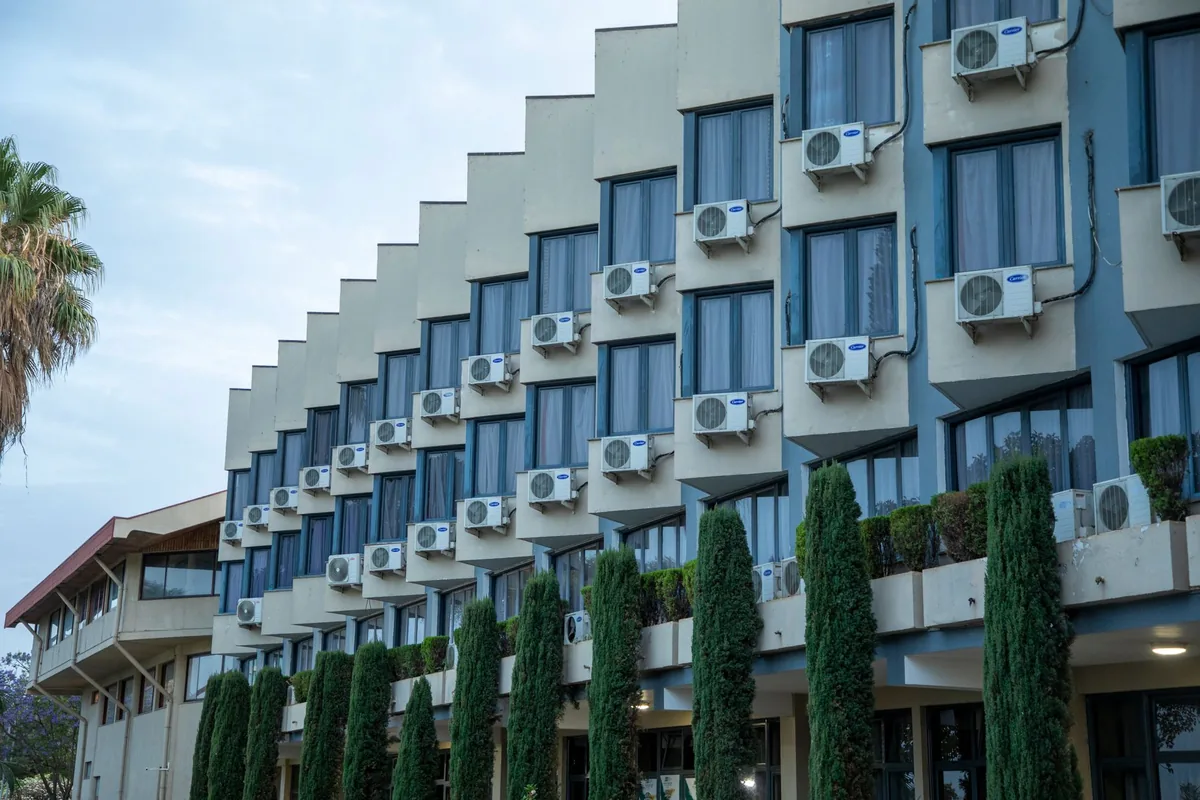
Packaged Terminal Air Conditioners create direct penetrations through the exterior building envelope that require rigorous inspection [1]. According to Lodging Magazine, teams must ensure each PTAC unit remains securely fastened to the wall sleeve without movement [1]. Weather stripping and caulking around the exterior perimeter require immediate replacement if cracked or missing [1]. Units must maintain a downward slope toward the building exterior to direct water away, alongside clean, functional drain lines to prevent internal overflow during driving rains [1].
How should hotels maintain emergency backup power systems?
Onsite emergency generators supply critical power for life-safety systems during storm-induced grid outages, running hallway illumination, maintenance lighting, and emergency protection systems [1]. Operators must schedule recurring operational checks, test diesel fuel quality to verify fuel readiness, and run an annual load test to confirm the generator performs under genuine operational demand [1].
Reported by
This article was written from the following reporting. Follow the links for the original coverage.
- [1]Hotels Cut Storm Risk with Year-Round Hurricane Prep— Lodging Magazine
Frequently asked
+Why is year-round roof maintenance necessary for hurricane prep?
The roof serves as the first line of defense against wind and rain. Ongoing inspections identify blistering, loose flashing, and blocked drains before storms hit, preventing severe leaks and structural damage [[1]].
+How should rooftop HVAC equipment be secured for storms?
HVAC systems, vents, and exhaust units must be securely fastened at the base or strapped down. Technicians must check mounting screws for rust and corrosion to prevent equipment from sliding or becoming airborne [[1]].
+What checks are required for hotel PTAC units before hurricane season?
Inspectors must confirm PTACs are firmly anchored, weather stripping and caulking are intact, drain lines are clear, and units are sloped outward to prevent wind-driven rain from entering guest rooms [[1]].
+What systems must hotel emergency generators support during storms?
Emergency generators provide backup power for life-safety functions, including hallway illumination, maintenance area lighting, and emergency protection systems [[1]].
+How often should hotel emergency generators undergo load testing?
Hotels should conduct regular generator operational testing alongside an annual load test and continuous fuel quality checks to ensure readiness during grid outages [[1]].
Keep reading
Our reporting

More in operations