Mobile POS Lifts In-Stay Guest Spend by Up to 30%
Deploying handheld devices and QR ordering eliminates manual transcription and unlocks double-digit revenue gains across hotel operations.
The short answer
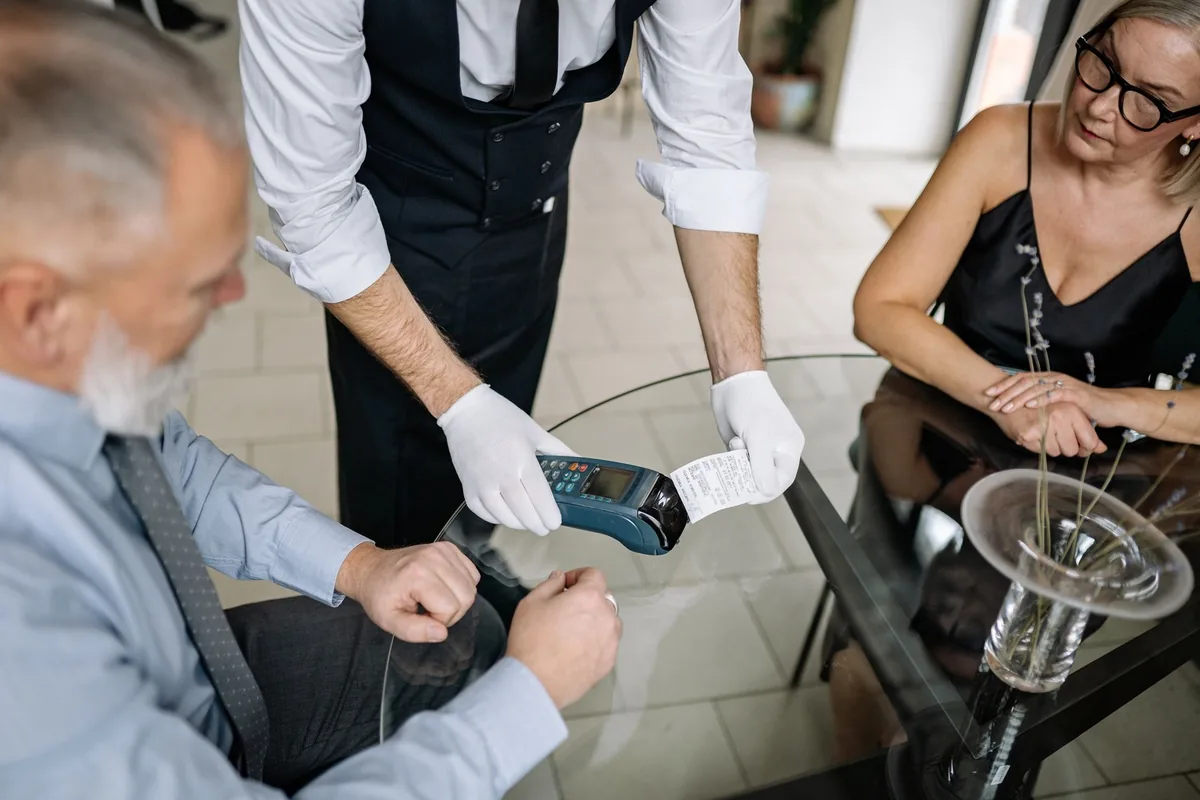
Deploying handheld POS hardware and mobile ordering channels increases hotel food and beverage revenue by up to 30%. Combining guest-led self-service with integrated staff hardware eliminates costly order transcription errors and lifts check sizes.
The short version
- Replacing phone-based room service with mobile channels increases in-stay food and beverage revenue by 15% to 30%.
- Self-check-in users purchase property upgrades at triple the rate of traditional front-desk arrivals, generating 70% higher upsell revenue.
- Eliminating manual order transcription into POS systems saves 350 to 500 labor hours per property each year.
Hotels expend massive budgets competing on acquisition channels, yet they consistently suppress spend once guests arrive inside the building. While commercial teams fight for fractions of occupancy, properties that replace traditional phone calls and stationary terminals with mobile ordering see in-stay revenue climb between 15% and 30% [2]. Two separate industry developments—a 150-executive survey conducted by Hotel and Restaurant Dive’s Studio with Toast and FreedomPay, and commercial findings presented by Stefan Renziehausen at ITB Asia—reveal that unlocking this spending relies on two distinct operational prongs: guest-facing mobile access and server-side handheld point-of-sale hardware [[1], [2]].
Frictionless channels uncap latent guest demand
Guests do not spend more because they are persuaded by better sales scripts; they spend more because properties stop suppressing existing appetite [2]. According to eHotelier, deploying mobile-first platforms removes the friction of waiting on hold or navigating physical menus, driving a 15% to 30% jump in room service revenue [2]. Platforms such as SABA Hospitality allow guests to order using their own phones via QR codes without forced app downloads or account registrations [2].
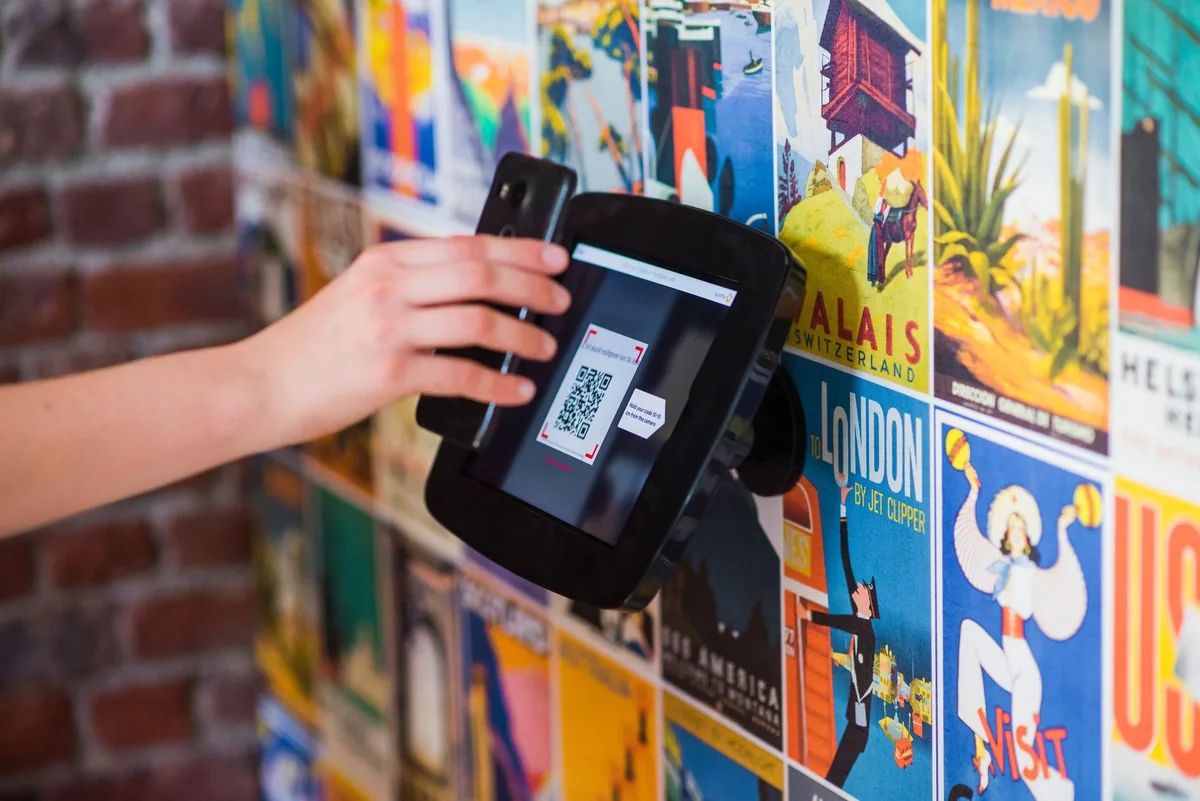
Consumer habits reinforce this shift. As eHotelier detailed, 70% of travelers express a preference to skip the front desk entirely, a number that climbs to 82% among Gen Z guests [2]. When guests opt for self-check-in, their likelihood of purchasing an upsell triples, and those transactions yield nearly 70% more revenue per check-in than standard front-desk interactions [2]. Handheld and mobile touchpoints convert the guest room, poolside loungers, and meeting spaces into active revenue channels [[1], [2]].
Staff handhelds expand order volume and check averages
Complementing consumer-facing ordering, equipping servers with mobile devices transforms on-property dining. Hotel Dive reported that 59% of hospitality executives attribute at least a 10% revenue gain to handheld POS deployments [1]. Within that cohort, 37% achieved revenue gains between 10% and 14%, while 22% captured increases of 15% or higher [1].
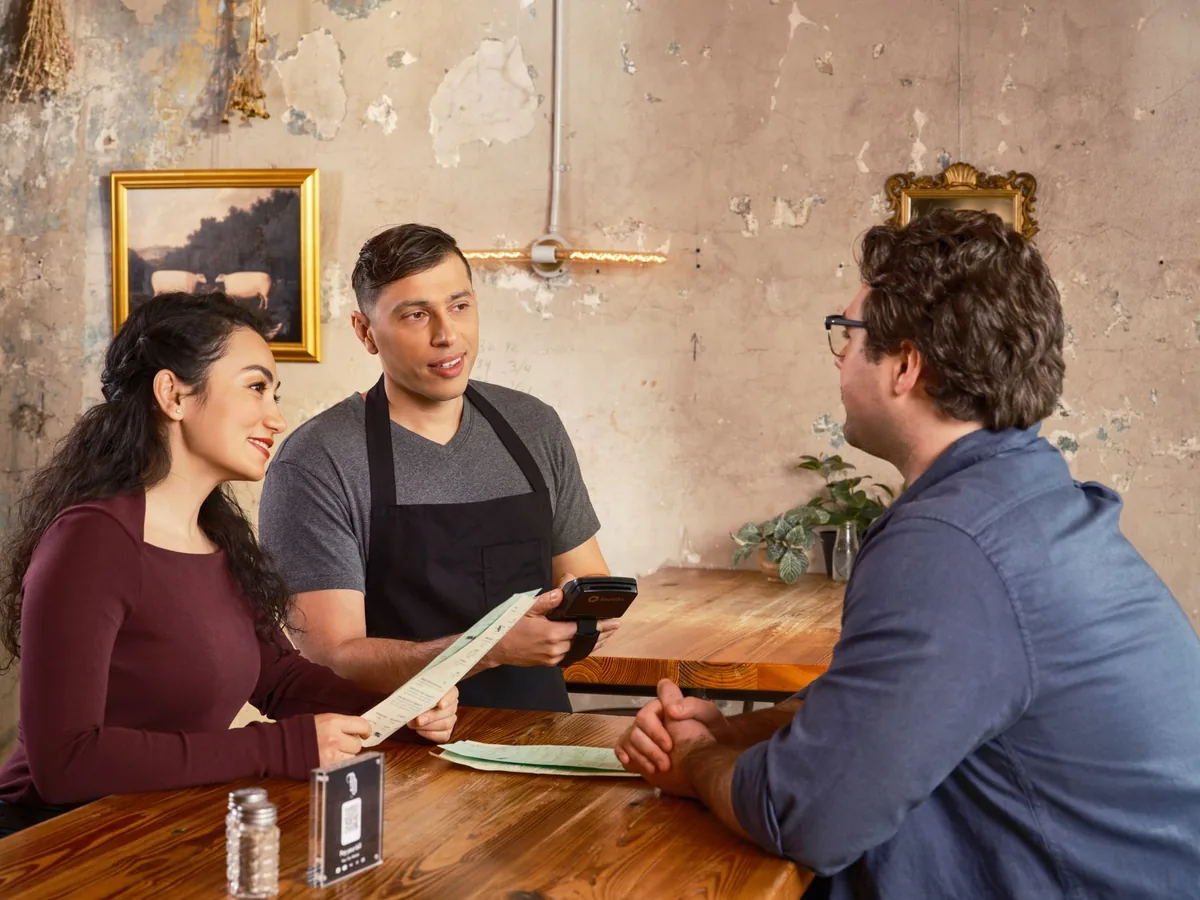
These financial returns stem from broad operational adoption. Among the hotel food and beverage leaders surveyed, 83% have scaled handheld POS hardware across most or all locations [1]. Complete integration into payments is standard: 100% process transactions on handhelds, 97% integrate guest billing and room charges, and 92% use the devices to apply promotions and packages [1]. Furthermore, 93% deploy them for poolside or in-room service, and 49% adjust menus in real time to present seasonal items and pull out-of-stock items before diners order [1].
Integration prevents the collapse of manual workflows
Accelerating order entry without direct backend integration destroys margins. A guest-facing ordering portal that relies on employees manually transcribing tickets into a central POS wastes between 350 and 500 staff hours annually at an average mid-size hotel, according to eHotelier [2]. Calculated at a standard wage of €20 per hour, this transcription gap costs operators €7,000 to €10,000 per year in labor, excluding service-recovery expenses caused by mistyped room numbers or dropped modifiers [2].
Bridging this gap requires connecting ordering systems straight into operational dispatch tools like FCS Job Dispatch, Hotelkit, HubOS, Unifocus/Knowcross, Optii, or Quore [2]. Hotel Dive highlighted that 74% of leaders credit handhelds with a transformative effect on operational performance, with 83% citing enhanced service speed, 59% reporting improved management of peak volume, and 43% utilizing devices for real-time task management [1].
The threshold where mobile ordering investments fail
For this commercial logic to fail, properties would need to demonstrate that self-service channels diminish total basket size or drive higher guest dissatisfaction. Specifically, if labor savings are offset by higher dispute rates, or if order error recovery costs outstrip the €7,000 to €10,000 annual transcription expense identified by eHotelier, the business case breaks down [2]. Similarly, should post-implementation data show revenue gains lingering below 10% across the 59% of operators reporting double-digit growth, the hardware expenditure would represent decorative expenditure rather than productive capital [[1], [2]].
Reported by
This article was written from the following reporting. Follow the links for the original coverage.
- [1]Handheld POS Tech Drives Double-Digit Hotel F&B Gains— Hotel Dive
- [2]Frictionless Tech Lifts In-Stay Hotel Revenue by 30%— eHotelier
Compare the systems named here
Frequently asked
+What revenue lift do hotels achieve with handheld POS devices?
According to survey data from Hotel Dive, 59% of hospitality executives experienced a revenue increase of at least 10% after deploying handheld POS technology, with 22% reporting gains of 15% or higher.
+How does mobile room service ordering compare to phone ordering?
Industry data reported by eHotelier shows that replacing phone-based ordering with guest-facing mobile systems lifts room service revenue by 15% to 30% by letting guests order instantly without wait times.
+What is the financial cost of manual order entry in hotels?
Manually re-entering orders from guest apps into a POS consumes 350 to 500 staff hours annually per mid-size hotel, resulting in €7,000 to €10,000 in wasted wages at €20 per hour.
+How do guest self-check-in systems impact upsell performance?
Guests utilizing self-check-in platforms are three times more likely to purchase an upsell, and those upsells generate nearly 70% more revenue per check-in than traditional front-desk processes.
+Which operational tools integrate with guest mobile ordering platforms?
Platforms connect with staff dispatch and management systems such as FCS Job Dispatch, Hotelkit, HubOS, Unifocus/Knowcross, Optii, and Quore to eliminate manual double entry.
+How widespread is handheld POS adoption in hotel food and beverage?
Research indicates that 83% of surveyed hotel F&B executives have rolled out handheld POS hardware across most or all of their operating properties.
Keep reading
Our reporting


More in operations