Africa Mid-Market Hotel Deficit Unlocks Growth
A severe shortage of mid-scale branded hotels across Africa opens massive expansion opportunities for institutional operators and investors.
The short answer
Africa's hotel pipeline faces an undersupply of mid-tier accommodations despite international arrivals climbing 8% to 81 million. Investors and operators who combine localized experiences with operational scale stand to capture rapid growth across the continent.

The short version
- W Hospitality Group pegged Africa's hotel development pipeline at 123,846 rooms in early 2026, heavily weighted toward luxury.
- Africa was the fastest-growing global tourism region in 2025, with arrivals growing 8% to 81 million.
- Millat Group CEO Hamza Farooqui identified a major white-space opportunity for operators combining global scale with African authenticity.
Africa faces a severe deficit in professionally managed mid-market hotels despite surging international arrivals and expanding domestic demand, creating prime expansion opportunities for operators who bridge global distribution with local authenticity. While pipeline development remains concentrated in luxury, the continent's growing middle class and younger global travelers actively demand reliable, value-driven accommodations [1].
Why is the African hotel pipeline failing mid-market demand?
African hotel development remains heavily skewed toward upscale and luxury properties, leaving mid-tier supply scarce across primary and secondary markets [1]. According to Lagos-based advisory firm W Hospitality Group, Africa’s hotel development pipeline reached 123,846 rooms as of early 2026, yet capital continues to favor luxury assets [1]. Skift reported that Wafeeq Pandey, Managing Director at Goldman Sachs South Africa, characterized the continent's mid-market as "absolutely underpenetrated" during an industry panel in Cape Town [1].
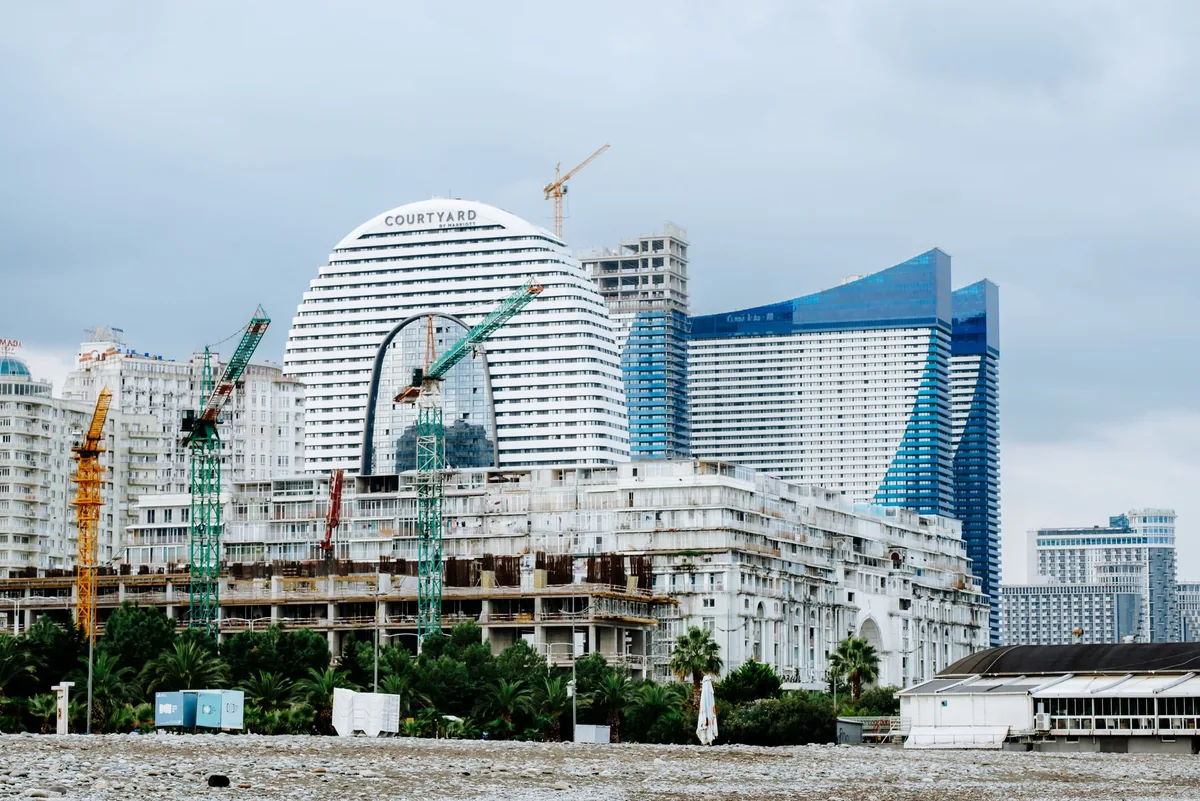
Fragmented ownership structures and inconsistent operational standards make rolling out standardized mid-tier brands difficult [1]. Much of Africa's existing room inventory remains in the hands of independent owners, limiting regional network effects and scale [1].
What demographic trends are driving Africa mid-market room demand?
Expanding domestic wealth alongside a young population provides an enormous consumer base for mid-market hospitality brands [1]. Estimates for Africa’s middle class range from 170 million to 350 million people, based on African Development Bank benchmarks [1]. With a total population exceeding 1.5 billion and a median age under 20, travel frequency is accelerating among younger demographics [1].

International travel patterns reinforce this domestic baseline [1]. Africa led global tourism expansion in 2025 as international arrivals climbed 8% to reach 81 million visitors [1]. Skift Research established that 63% of global travelers plan to raise travel spending over the coming year, even while 39% apply cost-saving strategies during trip selection [1].
| Metric | Figure | Source / Context |
|---|---|---|
| Total Africa Hotel Pipeline | 123,846 rooms | W Hospitality Group (early 2026) |
| 2025 International Arrivals | 81 million (+8% YoY) | Skift reporting |
| African Middle Class Size | 170m – 350m people | African Development Bank estimates |
| Total African Population | Over 1.5 billion | Demographic data cited by Skift |
| Global Travelers Raising Spend | 63% | Skift Research survey |
| Travelers Using Cost-Saving Tactics | 39% | Skift Research survey |
| AI-Aware Trip Planning Usage | 63% | Skift Research survey |
| Non-Brand-Driven Accommodations Choice | 55% | Skift Research survey |
How are booking behaviors and AI changing hotel distribution?
Evolving booking channels permit independent and regional hotel operators to bypass traditional distribution barriers [1]. Skift Research found that 63% of AI-aware travelers utilize generative tools during trip planning, while 55% state they do not rely strictly on legacy brand names when booking accommodations [1].

These artificial intelligence recommendation platforms dilute the booking advantage previously dominated by global online travel agencies and international hotel conglomerates [1]. Millat Group Founder and CEO Hamza Farooqui noted that younger guests prioritize localized authenticity over cookie-cutter Western corporate hotel designs [1].
How does the mid-tier segment support broader regional tourism dispersion?
Mid-tier travelers spread spending across wider geographical circuits rather than remaining inside isolated luxury enclaves [1]. David Frost, CEO of the Southern Africa Tourism Services Association (SATSA), pointed out that middle-income visitors drive self-drive itineraries that extend far beyond established gateways like Cape Town and Kruger National Park [1].
Unlocking this potential requires fixing fragmented regional infrastructure, including air connectivity hurdles and restrictive visa regimes [1]. Farooqui described this disjointed network across transportation, booking, and accommodations as a "broken architecture" that hospitality operators must solve to scale cross-border journeys [1].
Reported by
This article was written from the following reporting. Follow the links for the original coverage.
Frequently asked
+What is the size of the total African hotel development pipeline?
According to Lagos-based advisory firm W Hospitality Group, Africa's hotel development pipeline reached 123,846 rooms as of early 2026, though most of these rooms remain concentrated in luxury and upscale segments.
+How fast did international tourism expand in Africa during 2025?
Africa was the world's fastest-growing tourism region in 2025, recording an 8% increase in international visitor arrivals to reach 81 million travelers.
+How large is the domestic African middle-class consumer market?
Estimates for Africa's middle class range from 170 million to 350 million people, based on African Development Bank definitions, out of a continent-wide population exceeding 1.5 billion with a median age under 20.
+Why are travelers shifting away from legacy corporate hotel brands?
Skift Research found that 55% of travelers are not strictly brand-driven when booking accommodations, while 63% of AI-aware travelers use generative tools for planning, allowing local mid-tier properties to gain visibility against legacy global chains.
+What operational bottlenecks constrain mid-market hotel scaling in Africa?
Key growth constraints include fragmented independent property ownership, inconsistent operating standards, complex intra-African air connectivity, restrictive visa regimes, and disconnected booking and transportation systems.
Keep reading
Our reporting


More in finance