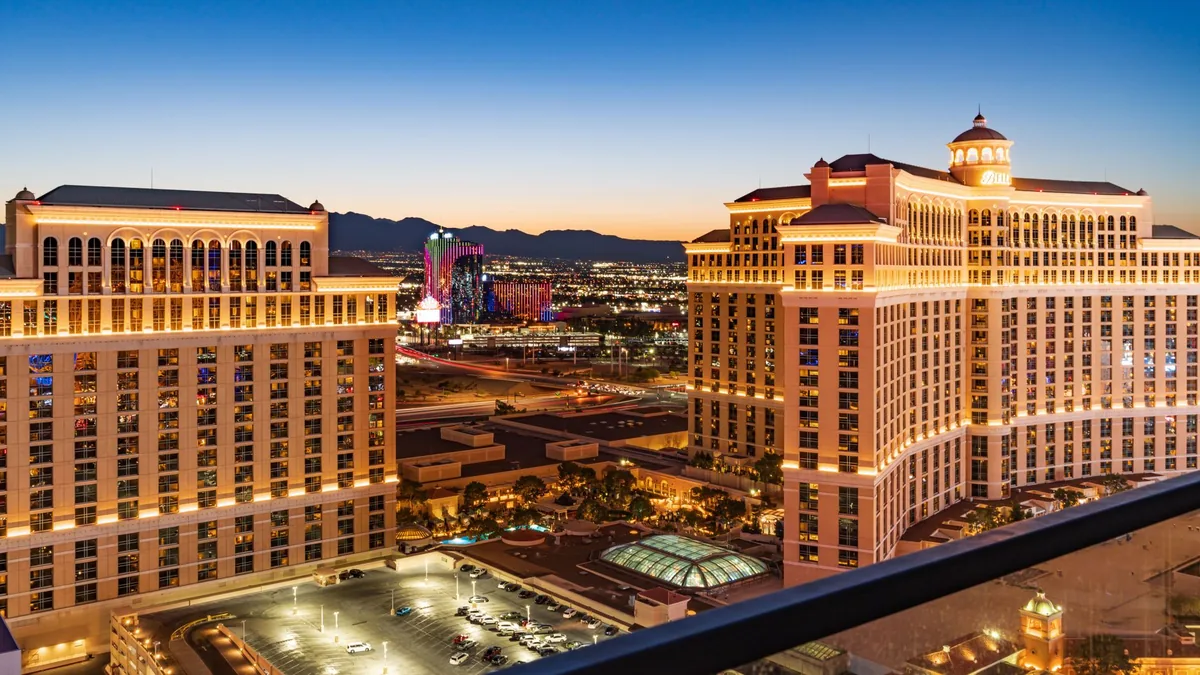
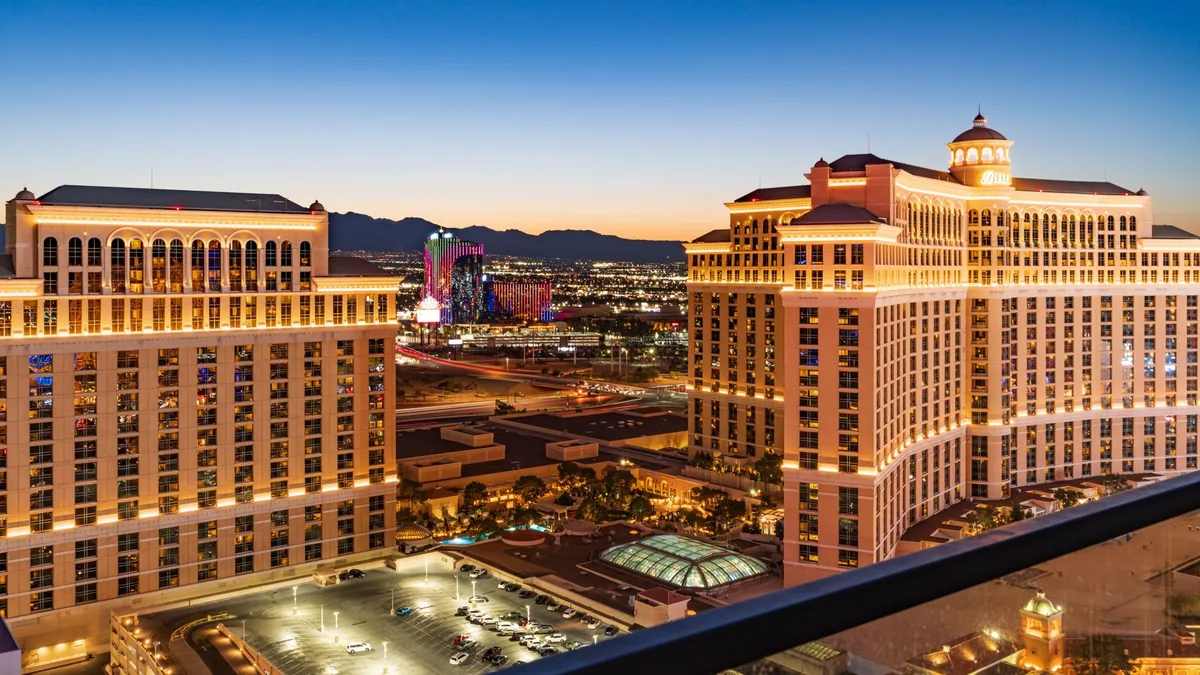
MGM Resorts International achieved record consolidated revenue of $4.5 billion in Q2 2026, driven by growth on the Las Vegas Strip and a 20 percent boost in its digital sector. Net income saw a sharp increase to $292 million compared to $49 million in the prior year quarter.
Key Takeaways
1Consolidated Q2 revenue rose 1% year-over-year to $4.5 billion.
2Las Vegas Strip Resorts revenue grew 3% to $2.2 billion with EBITDAR up 3%.
3MGM Digital revenue expanded by 20% year-over-year to $196 million.
The U.S. has finalized its visa bond program, requiring select foreign tourists and business travelers to deposit up to $20,000 to secure a visa. While the program successfully reduced overstays, visa issuances from targeted nations plummeted by 83%.
Key Takeaways
1Tourists from select high-risk nations must deposit $5,000 to $20,000 for B1/B2 visas.
2Bonds are fully refundable upon departure compliance via commercial airlines.
3Visa issuances to targeted countries fell 83% during the initial pilot phase.
Expedia Group has acquired Berlin-based AI trip-planning startup Layla to accelerate its deployment of specialized AI agents. Layla will continue operating independently while its team works across Expedia's brand portfolio.
Key Takeaways
1Expedia acquired Berlin-based AI trip-planner Layla for an undisclosed amount.
2Layla had previously raised $5.7 million from investors including First Minute Capital and M13.
3The startup will continue operating while its tech talent collaborates with Expedia, Hotels.com, and Vrbo.
Accor and Treebo Hospitality Ventures have mutually terminated negotiations for a master licensee partnership in India. The deal was intended to scale Accor's Ibis and Mercure brands into secondary and tertiary Indian cities.
Key Takeaways
1Accor and Treebo mutually decided to disengage after failing to reach definitive agreements.
2The partnership aimed to help Accor reach its ambitious target of 300 hotels in India by 2030.
3The split removes Accor's primary local partner for rapid expansion into tier-two and tier-three markets.
UK hotel operators are pushing back after being left out of the government's latest round of business rates relief, which favored pubs and clubs. Industry leaders argue the current tax structure unfairly penalizes top-performing hotels despite rising operational costs.
Key Takeaways
1Hotels were excluded from the UK government's recent business tax relief cuts.
2Whitbread CEO Dominic Paul warned the policy will not help most hospitality businesses.
3Industry experts argue revenue-based business rates disconnect tax liabilities from true profitability.
With 94% of hotels invisible in AI search results, hospitality leaders are rethinking commercial ownership and moving budgets into upper-funnel content to capture early travel demand. Success requires tighter cross-functional collaboration across revenue, marketing, and analytics teams.
Key Takeaways
1Research shows 94% of hotels are currently invisible in AI search results
2Hotels are shifting investment upstream into earned media and third-party storytelling
3Cross-functional alignment across marketing, revenue, and IT is becoming essential
Global corporate travel expenses will continue climbing in 2026, driven by higher airfares, increased hotel daily rates, and rising meeting costs. Hotel ADR is projected to hit $168 in 2026 before rate growth slows slightly in 2027.
Key Takeaways
1Global hotel ADR is forecast to increase 3.7% to $168 in 2026, with Latin America leading growth at 9.5%.
2Average airfares are projected to jump 4.7% to $756 in 2026 due to limited capacity and aircraft delivery delays.
3Meeting cost per attendee per day will rise 3% to $263 in 2026, pushed up by food, beverage, and production expenses.
Hyatt Hotels Corp. reported a 5.9% increase in Q2 RevPAR, driven primarily by luxury and upper-upscale performance despite Middle East conflicts and Mexico demand softness. The company maintained its full-year outlook and expanded its pipeline by 10% to 154,000 rooms.
Key Takeaways
1Comparable systemwide Q2 RevPAR grew 5.9%, led by luxury and upper-upscale segments.
2Development pipeline expanded 10% year-over-year to 154,000 rooms.
3Full-year 2026 outlook maintained with RevPAR growth projected between 3.5% and 4.5%.
U.S. hotel performance posted positive year-over-year gains for the week ending July 25, led by strong RevPAR and ADR growth. New York City recorded massive surges due to the World Cup final, while Las Vegas saw notable declines due to tough event comparisons.
Key Takeaways
1U.S. RevPAR increased 6.3% to $125.72, while ADR rose 4.9% to $173.47 and occupancy climbed 1.3% to 72.5%.
2New York City led major markets with a 35.0% RevPAR spike, boosted by a 179.6% gain on the night of the World Cup final.
3Las Vegas posted the steepest declines, with RevPAR falling 20.4% due to strong concert comparisons from the previous year.
Driftwood Capital's latest report highlights that hotel real estate credit outperforms corporate direct lending and office CRE, supported by low supply growth and brand workout incentives.
Key Takeaways
176% of maturing lodging CMBS loans were repaid on time from 2020 to 2025, beating office and mixed-use segments.
2Lodging delinquency sits at 6.5%, well below office CRE delinquency rates of 11.7%.
3Top-50 market supply growth has slowed significantly to 1.0-1.3%, restricting new competition.
Mexico is investing $115 million into specialized vessels, offshore barriers, and monitoring systems to combat record levels of sargassum washing up on Caribbean beaches. The influx has forced local hotels to absorb clean-up costs and discount room rates to attract guests.
Key Takeaways
1Government spending $115M on barriers, collection vessels, and monitoring to control seaweed.
2Record sargassum levels are harming coastal ecosystems and driving down hotel room rates.
3Tourism leaders are urging officials to prioritize long-term environmental solutions alongside short-term cleanup.
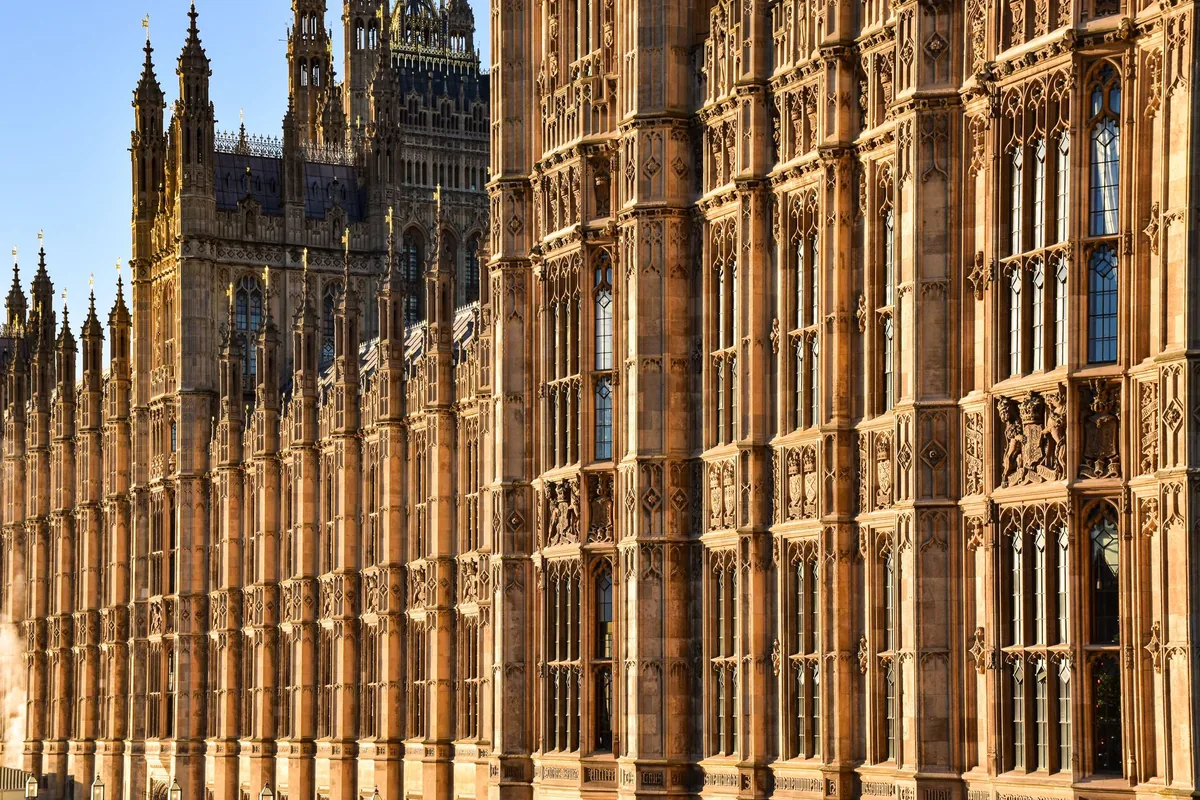
The All-Party Parliamentary Group for Hospitality and Tourism warns that a proposed 5% UK visitor levy could reduce tourism spending and employment without proper safeguards. The report urges a full impact assessment, a lower hospitality VAT rate of 10%, and ringfenced revenues if implemented.
Key Takeaways
1A proposed 5% visitor levy threatens jobs and tourism spending, particularly in rural and coastal areas.
2APPG calls for hospitality VAT to drop to 10% and strict ringfencing of levy revenues for local destination investment.
3Recommendations include a 12-month implementation period and a consistent national framework.
Analytics cookies.
We count visits either way — anonymously, with no IP stored. Accepting also lets
Google Analytics measure how the site is used. No advertising cookies, ever.
Privacy policy.
Get the briefing when it lands
One notification a day, the moment the edition publishes. No email needed.