Skift 5000 Index Tracks Top Travel Capital Allocators
Skift unveils an index tracking 5,000 corporate, financial, and operational decision-makers controlling where travel capital flows.
The short answer
Skift launched the Skift 5000 index to track approximately 5,000 decision-makers directing capital, capacity, and assets across the travel industry. The index tracks operational and financial executives whose resource allocations determine downstream travel supply.

The short version
- Skift introduced the Skift 5000 to track roughly 5,000 global executives controlling major travel capital decisions.
- Disclosed incumbent travel acquisitions surpassed startup venture funding by more than 20 to 1.
- Credit card issuers deployed nearly $6 billion into travel booking and payment platforms during early 2026.
Skift launched the Skift 5000 at the Skift Global Forum, introducing an index that tracks roughly 5,000 leaders with direct authority over where travel capital, capacity, and technology flow [1]. The tracking framework monitors corporate operators with budgets, public officials, and financiers rather than measuring consumer demand, treating capital deployment as a leading indicator for the hospitality and travel business [1].
What is the Skift 5000 index?
The Skift 5000 is an index identifying the global universe of decision-makers holding direct authority over capital, assets, operating systems, and capacity across travel [1]. Skift reported that the index tracks roughly 4,000 to 6,000 operational and financial roles, setting 5,000 as a working proxy due to personnel turnover [1]. Rather than operating as a ranking, paid directory, or traditional power list, the project maps institutional decision rights across nine distinct categories [1].

Skift identified these positions by evaluating companies, sovereign entities, financial lenders, and property owners that manage material capital [1]. Advisory and influencer roles lacking direct decision rights were excluded from the index [1]. Instead of limiting allocators to traditional financial investors, the framework includes operational executives with substantial budget authority, including marketing chiefs directing digital acquisition spend, airline network planners assigning aircraft to routes, and public ministers funding regional tourism infrastructure [1].
Why is capital allocation a leading indicator for travel?
Capital deployment decisions precede all traveler bookings, making capital allocation a leading indicator while consumer demand remains a lagging metric [1]. According to Skift, external travel metrics routinely concentrate on trailing consumption figures like room nights, visitor counts, load factors, and total spend [1]. However, these metrics merely register the downstream results of prior capital decisions [1].
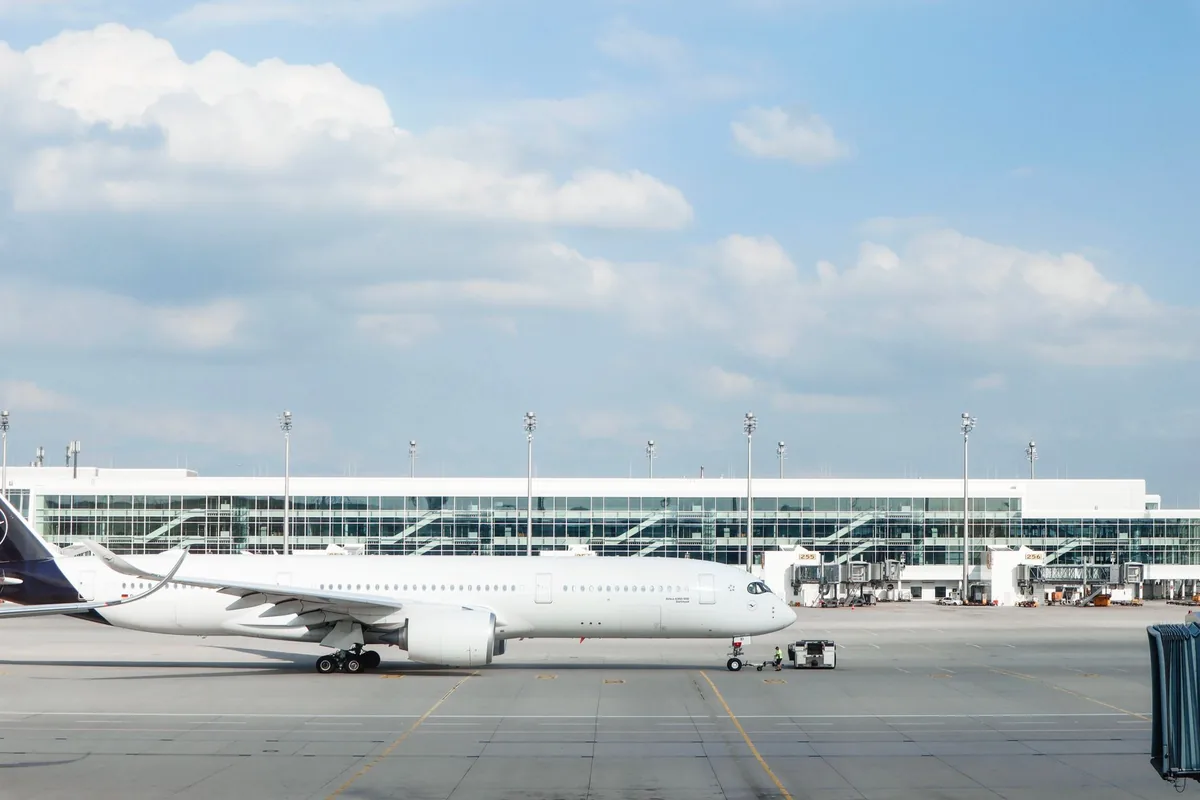
A guest can reserve a hotel room only after an owner finances construction, selects an operating brand, installs property technology, agrees to distribution terms, and releases inventory into the market [1]. Similarly, airline passengers cannot purchase tickets until an airline planner assigns an aircraft to that specific corridor, and cardholders cannot book through bank portals until financial institutions decide to build travel booking infrastructure rather than outsource it [1]. Tracking capital commitments provides early visibility into what travel inventory and trip costs will look like before bookings register [1].
How does corporate deal volume compare to venture investment?
Disclosed corporate acquisition spending in travel surpassed venture funding by more than $20 for every $1 raised by startups, with the actual spread remaining much wider [1]. Skift noted that venture funding receives outsized industry attention because fundraising rounds are transparent, public, and straightforward to track [1]. In contrast, capital passing through established incumbents involves far larger sums but remains harder to analyze [1].
More than half of all corporate travel acquisitions close without disclosing a purchase price, masking the scale of incumbent capital deployment [1]. Furthermore, massive expenditures inside established enterprises rarely receive distinct public reporting lines [1]. Companies seldom reveal the total expenses required to replace forty-year-old central reservation systems, distribution contract economics remain confidential, infrastructure investments sit divided across disparate public ministries, and carrier aircraft orders list published catalogue prices that differ from actual negotiated payments [1].

| Transaction or Allocation Event | Capital Value | Context and Deal Structure |
|---|---|---|
| Starwood Hotels & Resorts Acquisition (2016) | $13.6 billion | Marriott wins bidding war against Anbang [1] |
| Caesars Entertainment Buyout (2026) | $17.6 billion | Fertitta family agreement taking gaming operator private [1] |
| Brex Acquisition by Capital One (2026) | $5.15 billion | Credit card issuer expands proprietary booking assets [1] |
| Travel + Leisure Co. Business Acquisitions (2026) | $343 million | Purchase of two timeshare businesses [1] |
| Disclosed Corporate Acquisitions vs Startup Funding | >20 to 1 ratio | Capital deployed in disclosed deals versus venture raises [1] |
What capital events shaped the travel market in early 2026?
The first six months of 2026 revealed a shift toward consolidation, corporate privatization, and banking integration [1]. According to Skift, three travel companies agreed to exit public equity markets during the first half of the year alone [1]. These privatization moves included the Fertitta family agreeing to acquire Caesars in a transaction valuing the gaming enterprise at $17.6 billion [1].
Simultaneously, financial credit card companies directed nearly $6 billion into booking and payment channels [1]. That banking expansion was led by Capital One purchasing Brex for $5.15 billion to own customer payment channels [1]. Elsewhere in leisure hospitality, Travel + Leisure Co. agreed in July to spend $343 million purchasing two timeshare businesses [1]. Large incumbent operators also authorized multibillion-dollar share buyback plans in single board votes while funding parallel fleet, reservation software, and marketing programs [1].
Reported by
This article was written from the following reporting. Follow the links for the original coverage.
Frequently asked
+What is the Skift 5000?
The Skift 5000 is an index tracking roughly 4,000 to 6,000 global executives who hold direct authority over capital, capacity, assets, and technology in the travel industry, using 5,000 as a working proxy figure.
+How does Skift define a capital allocator?
Skift defines an allocator as any corporate operator or public official with direct authority to spend material budgets, including marketing heads, airline fleet planners, public tourism ministers, hotel owners, and corporate treasurers.
+Why does the index track capital allocation instead of demand?
Capital deployment acts as a leading indicator, whereas consumer demand is a lagging indicator. Flights, hotel inventory, and booking paths exist only after allocators finance physical construction, negotiate distribution terms, or deploy operating hardware.
+How large was corporate acquisition spending relative to venture funding?
Disclosed corporate acquisitions accounted for more than $20 for every $1 raised by travel startups, with the actual spread being higher because over half of corporate transactions concealed their deal values.
+What major travel acquisitions occurred in 2026?
The Fertitta family agreed to acquire Caesars for $17.6 billion, Capital One bought Brex for $5.15 billion, and Travel + Leisure Co. agreed to acquire two timeshare businesses for $343 million.
Keep reading
Our reporting

More in finance