Marriott Q2 2026: RevPAR Rises 3.4% as Pipeline Hits Record 629K Rooms
Marriott International reported strong Q2 2026 earnings, driven by 5% RevPAR growth in the U.S. and Canada and a record-breaking development pipeline.
The short answer
Marriott International posted a 3.4% global RevPAR increase in Q2 2026, bolstered by strong U.S. and Canada performance. The company also reached a record development pipeline of 629,000 rooms.
“Global RevPAR increased 3.4% in the second quarter, with continued ADR strength. In the U.S. & Canada, RevPAR rose 5%, driven by broad-based increases across chain scales and customer segments.”
The short version
- Marriott's U.S. and Canada RevPAR grew 5%, driven by a 9% increase in luxury properties.
- The global development pipeline reached a record 629,000 rooms, with 44% under construction.
- Adjusted EBITDA totaled $1.592 billion, a 13% increase from the second quarter of 2025.
Marriott International reported a 3.4 percent increase in worldwide revenue per available room for the second quarter of 2026, generating $1.592 billion in adjusted EBITDA. The company reached a record development pipeline of approximately 629,000 rooms and raised its full-year global RevPAR growth expectation to between 3 and 3.5 percent.
What drove the 3.4% increase in global RevPAR?
Marriott's second-quarter performance was anchored by strong results in the United States and Canada, where revenue per available room rose 5 percent year over year. According to Hotel Dive, this represents the highest quarterly increase for the region in 13 quarters, or just over three years. Luxury and resort properties led the gains, with luxury RevPAR climbing more than 9 percent in the second quarter. Marriott Chief Executive Officer Anthony Capuano noted during the earnings call that strength was seen across all chain scales. Within the United States and Canada, all customer segments experienced growth; leisure RevPAR increased by 7 percent, group RevPAR rose by 4 percent, and business transient RevPAR grew by 3 percent. Government RevPAR also benefited from easier year-over-year comparisons. Beyond domestic strength, the World Cup tournament in June and July provided a larger boost to global RevPAR than the company initially expected. Marriott Chief Financial Officer Jen Mason stated that this strong demand trend extended into July across chain scales and customer segments. Competitors Hilton and Hyatt also saw benefits from the tournament during the same period. Looking forward, the third quarter expects continued lift from the World Cup, while the fourth quarter expects a small negative impact from the November midterm elections. [1]

How did international regions perform against Middle East headwinds?
While North America posted strong numbers, international markets saw a slight 0.5 percent decline in RevPAR during the second quarter. Hotel Business reported that this drop was primarily caused by the ongoing conflict in the Middle East, which offset gains in other regions. In the Europe, Middle East, and Africa (EMEA) region, RevPAR fell by more than 5 percent. An increase in European performance was entirely outweighed by a 43 percent decline in the Middle East. Conversely, the Asia Pacific excluding China (APEC) region recorded a RevPAR increase of over 5 percent, supported by solid leisure demand and intra-regional travel. Greater China also posted positive results, with RevPAR increasing more than 3 percent. This growth in China was driven by strong performance in the luxury portfolio and specific markets including Hong Kong, Taiwan, and Hainan. [2]
What does Marriott's development pipeline look like?
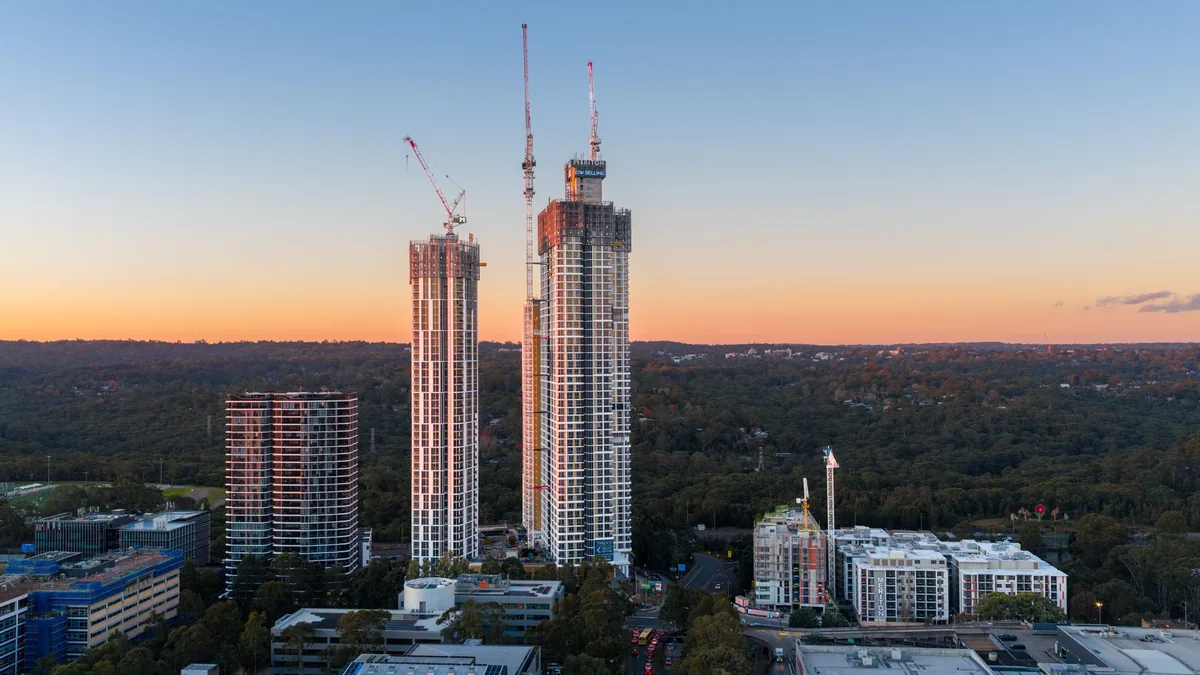
The company's global development pipeline reached a new record at the end of June, growing nearly 7 percent year over year to approximately 629,000 rooms across 4,186 properties. Lodging Magazine highlighted that conversions were an important growth driver, accounting for 34 percent of signings and 40 percent of openings throughout the first half of 2026. Of the total pipeline, 44 percent of the rooms are currently under construction, which includes hotels pending conversion to the Marriott system. The quarter-end pipeline features 1,757 properties with over 279,000 rooms actively under construction. Additionally, there are 253 properties with more than 34,000 rooms approved for development that are not yet subject to signed contracts. During the second quarter, Marriott added roughly 17,900 net rooms globally, which includes approximately 11,000 net rooms in international markets. The overall system size expanded by 4.5 percent year over year, bringing the total to more than 10,000 properties and nearly 1,814,000 rooms. [3]
How did fee revenues and net income fare?
Franchise and base management fees reached $1.366 billion in the second quarter, representing a 14 percent increase from the $1.200 billion recorded in the same quarter of 2025. This increase was driven by higher co-branded credit card fees, rooms growth, and higher RevPAR. Incentive management fees totaled $212 million, up from $200 million in the previous year, fueled by strong growth in the United States and Canada, though partially offset by declines in the EMEA region. Managed hotels in international markets contributed over half of the incentive fees earned during the quarter. Reported net income for the second quarter was $766 million, remaining flat compared to $763 million in the second quarter of 2025. Adjusted net income, however, rose to $844 million from $728 million in the year-ago period. Adjusted diluted earnings per share totaled $3.19, an increase from $2.65. The company also reported an adjusted EBITDA of $1.592 billion, a 13 percent increase from $1.415 billion in the second quarter of 2025. Marriott repurchased 3.0 million shares of common stock for $1.1 billion during the quarter, bringing the total returned to shareholders through dividends and share repurchases to approximately $2.6 billion year-to-date through July 29. [2]

What impacted operating expenses and owned revenue?
Owned, leased, and other revenue, net of owned, leased, and other expense, fell to $49 million in the second quarter, down from $78 million in the prior year. This decline primarily reflected a $27 million property-related litigation accrual, which carried a $20 million after-tax impact, alongside lower termination fees. Depreciation, amortization, and other expenses increased to $115 million, compared to $53 million in the year-ago quarter. This rise was driven by a $68 million impairment charge connected to the sale of a hotel in the United States and Canada, a charge excluded from adjusted results. General and administrative expenses reached $220 million, up from $210 million, reflecting higher compensation costs driven partly by timing. Interest expense also rose to $201 million from $191 million, due to higher debt balances, though this was partially offset by higher interest income. The provision for income taxes was $278 million, down from $291 million in the second quarter of 2025. Reported operating income totaled $1.229 billion, a slight decrease from $1.236 billion in the previous year, while adjusted operating income increased to $1.329 billion from $1.186 billion. [3]
How is technology shaping operations and owner incentives?
On the technology front, Marriott is advancing its multiyear transformation. The company launched an artificial intelligence-powered search tool for travelers called Ask Bonvoy in June. Capuano stated that the company is using artificial intelligence across the enterprise to deliver revenue to owners more efficiently, elevate the guest experience, and automate workflows for associates. The Marriott Bonvoy loyalty program grew to more than 295 million members by the end of the quarter. The company executed new long-term agreements for its co-branded credit card program in the United States with JPMorgan Chase and American Express, which Capuano noted will deliver incremental value to hotel owners, cardholders, and shareholders. Marriott also plans to introduce a new intent to recommend incentive in the United States and Canada. This program will provide a fee discount for hotels that achieve strong guest satisfaction scores. [1]
| Financial Metric | Q2 2026 | Q2 2025 |
|---|---|---|
| Adjusted EBITDA | $1.592 billion | $1.415 billion |
| Franchise & Base Management Fees | $1.366 billion | $1.200 billion |
| Adjusted Net Income | $844 million | $728 million |
| Reported Net Income | $766 million | $763 million |
| Adjusted Diluted EPS | $3.19 | $2.65 |
Reported by
This article was written from the following reporting. Follow the links for the original coverage.
- [1]Marriott Q2 Worldwide RevPAR Rises 3.4% on Strong US Demand— Hotel Dive
- [2]Marriott Pipeline Hits Record 629K Rooms in Q2— Hotel Business
- [3]Marriott RevPAR Up 3.4% as U.S. Growth Offsets Middle East Drag— Lodging Magazine
Frequently asked
+How much did Marriott's global RevPAR increase in Q2 2026?
Marriott's worldwide RevPAR increased by 3.4 percent year over year in the second quarter of 2026.
+What was Marriott's RevPAR growth in the U.S. and Canada?
RevPAR in the U.S. and Canada grew by 5 percent year over year in Q2 2026, the highest quarterly increase for the region in 13 quarters.
+How did international markets perform for Marriott?
International RevPAR declined by 0.5 percent overall. A 43 percent decline in the Middle East offset growth in Europe, APEC, and Greater China.
+What is the current size of Marriott's development pipeline?
At the end of June 2026, Marriott's global pipeline reached a record 4,186 properties with approximately 629,000 rooms.
+How many Marriott pipeline rooms are under construction?
Currently, 44 percent of the rooms in Marriott's pipeline are under construction, representing 1,757 properties and over 279,000 rooms.
+What is Marriott's full-year RevPAR expectation for 2026?
Marriott raised its full-year systemwide RevPAR outlook, expecting global growth between 3 percent and 3.5 percent for 2026.
Keep reading
Our reporting


More in finance