How Independent F&B Concepts Drive Hotel Asset Value
Hotels are pairing executive operations leadership with culturally specific dining concepts to lift RevPAR, ADR, and property valuations.
The short answer
Hotel groups are replacing generic restaurants with culturally specific concepts and executive oversight. These initiatives generate documented RevPAR gains of 18.6% while elevating property asset values.
“The model that works pairs corporate scale with insurgent creativity.”
The short version
- High-end dining quality influences 60% of luxury guests, generating an 18.6% RevPAR increase for culturally relevant hotel concepts.
- Charlestowne Hotels appointed 20-year hospitality veteran Tauseen Malik as SVP of Operations to scale its food and beverage platforms.
- Accor Pacific and Example launched Table For to merge institutional operational scale with independent culinary operators like Giovanni Pilu.
Hotel owners and operators are moving away from generic dining amenities to treat food and beverage as a core driver of total property value and room revenue. By pairing high-level operational oversight with culturally authentic dining concepts that attract local audiences, properties achieve direct top-line gains, including documented RevPAR lifts of 18.6% and increased room pricing power.
How does culinary positioning increase room rates and RevPAR?
Distinctive dining concepts elevate the perceived value of the guest rooms above them while insulating property revenues from seasonal fluctuations. Writing for HospitalityNet, Andrew El-Bayeh, CEO of creative agency Example, explained that 60% of high-end travellers prioritise dining quality when selecting accommodations [2]. This preference creates a 40% increase in positive guest reviews alongside direct average daily rate growth [2]. Properties featuring culturally relevant dining experiences achieve an 18.6% boost in RevPAR growth compared to those with generic food outlets [2].
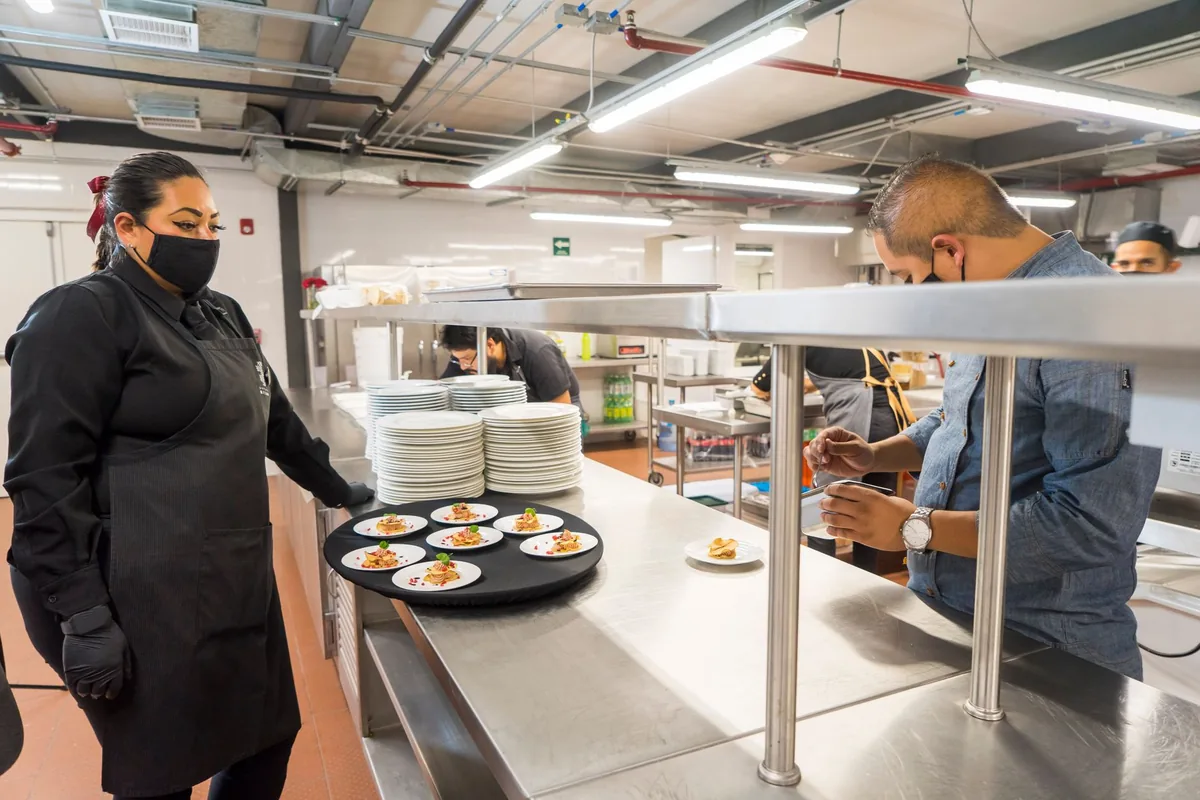
Furthermore, dining destinations that attract local neighborhood patrons stabilize cash flow against broader volatility in transient leisure and business travel [2]. This transition from traditional return on investment to return on experience transforms on-site outlets from operational cost centers into primary marketing vehicles [2].
What role does executive operational leadership play in portfolio F&B?
Scaling sophisticated food and beverage concepts across independent and lifestyle properties requires dedicated operational oversight at the management company level. As reported by eHotelier, Charlestowne Hotels appointed Tauseen Malik as Senior Vice President of Operations to direct performance optimization and guide food and beverage programs across its expanding national footprint [1]. Malik brings over two decades of global hospitality experience across independent, luxury, and lifestyle properties [1].

Prior to joining Charlestowne Hotels, Malik served as Regional Vice President of Operations for the Lifestyle Division at HHM Hotels [1]. In that role, he worked alongside culinary and commercial teams across full-service East Coast assets to activate dining concepts and support new property openings [1]. His operational focus at Charlestowne centers on aligning cross-functional teams, executing large-scale repositionings, and growing net operating income across complex, design-focused hospitality environments [1]. Separately, Lodging Magazine reported on Charlestowne Hotels broadening its food and beverage portfolio with properties such as The Brasserie at Deer Path Inn [3].
How are operators executing independent dining concepts?
Hospitality groups are abandoning committee-driven, in-house restaurant templates in favor of partnerships with independent culinary operators who command existing community followings. Through Table For, a creative studio developed in collaboration with Accor Pacific, institutional hotel operators combine corporate scale with creative direction [2]. According to HospitalityNet, this model eliminates cold-start risk for new hotel venues by importing established customer loyalty directly into the property [2].
For example, the launch of Flaminia alongside Giovanni Pilu at the Pullman Quay Grand Sydney leveraged the chef's established brand to guarantee immediate patronage upon opening [2]. Similar concept strategies have succeeded across international gateway markets by committing to deep narrative specificity rather than broad-appeal hotel dining [2].
| Property / Venue | Market | Concept & Narrative Direction | Operational Model |
|---|---|---|---|
| Flaminia (Pullman Quay Grand) | Sydney | Regional Italian cuisine partnered with Giovanni Pilu | Creative partnership with institutional brand |
| Dear Jackie (Broadwick Soho) | London | 1950s Italian dolce vita merged with 1970s Soho underground | Design-led narrative restaurant |
| Side Hustle (NoMad London) | London | Cantina energy juxtaposed with historic British architecture | Boutique lifestyle activation |
| Krasota (Address Downtown) | Dubai | 20-seat gastro-theatre with 360-degree digital storytelling | Immersive experiential dining |
| Bar Allora | Sydney | Post-war Milanese optimism and 1950s espresso culture | Concept-driven third space |
| El Vista | Sydney | 1960s Acapulco jet-set glamour | Narrative-focused lifestyle venue |
Why is concept specificity replacing anonymous all-day dining?
Guests readily bypass generic hotel lobbies in favor of venues with distinct cultural identities and focused points of view. Designing venues with intentional social elements—such as visible show kitchens, communal seating, and specialized service rituals—creates authentic personal interactions that standardized hospitality models fail to deliver [2].
El-Bayeh noted in HospitalityNet that modern travelers actively reject neutral spaces, making cultural specificity critical to avoiding long-term irrelevance [2]. As artificial intelligence engines evolve from basic keyword search into personalized itinerary curators, venues with clear culinary narratives will be favored when generating automated dining and lodging recommendations [2].
Reported by
This article was written from the following reporting. Follow the links for the original coverage.
- [1]Tauseen Malik Becomes SVP of Operations at Charlestowne— eHotelier
- [2]The Anchor Effect: Driving Hotel Value Through Dining— HospitalityNet
- [3]Charlestowne Hotels Expands Food and Beverage Portfolio— Lodging Magazine
Frequently asked
+How does high-quality F&B impact hotel room performance metrics?
Culturally relevant hotel dining drives an 18.6% boost in RevPAR growth and helps increase average daily rates. Research shows 60% of luxury travelers select hotels based on dining quality, which corresponds with a 40% rise in positive online guest reviews.
+Why are hotels partnering with independent restaurant operators?
Partnering with established independent chefs and creative operators eliminates the cold-start risk of launching an unknown restaurant. It brings an existing local customer base, cultural credibility, and authentic narrative design while leveraging the physical scale and infrastructure of institutional hotel brands.
+What executive leadership is needed to scale lifestyle F&B programs?
Management groups require experienced operations leaders to align culinary concepts with commercial strategy and property owners. For example, Charlestowne Hotels appointed Tauseen Malik as Senior Vice President of Operations to oversee F&B expansion and optimize net operating income across lifestyle and independent properties.
+How does local restaurant patronage protect hotel asset stability?
Hotel dining destinations that actively attract local non-hotel guests build a dependable, recurring revenue stream. This revenue helps protect the property's cash flow against fluctuations in transient business travel, geopolitical events, and off-peak tourism seasonality.
+What is the return on experience metric in hotel dining?
Return on experience reframes food and beverage from an operational amenity or cost center into an asset value driver. It measures how unique emotional connections, distinct cultural storytelling, and earned media translate directly into higher room rates, repeat bookings, and portfolio valuation.
Keep reading
Our reporting

More in operations