Hotel Owners Restructure Ahead of $875B Debt Wall
Facing higher coupons, NOI drift, and delayed CapEx, hotel sponsors deploy bank debt, bridge loans, and preferred equity to secure recapitalizations.
The short answer
Commercial real estate faces an $875 billion debt maturity wall that includes 30 percent of all hotel loans. Hotel owners are resolving proceeds shortfalls by combining bank debt, bridge financing, and preferred equity.
The short version
- Lodging Magazine reported 30 percent of all hotel loans are maturing this year as part of an $875 billion commercial real estate maturity volume.
- Clearview Hotel Capital demonstrated the value of sustained capital investment by securing a $57 million Simmons Bank refinancing for Philadelphia's Sofitel.
- Kailas Cos. deployed $120 million in bridge debt and preferred equity from APF and TMGOC Ventures to fund a dual-brand hotel conversion in New Orleans.
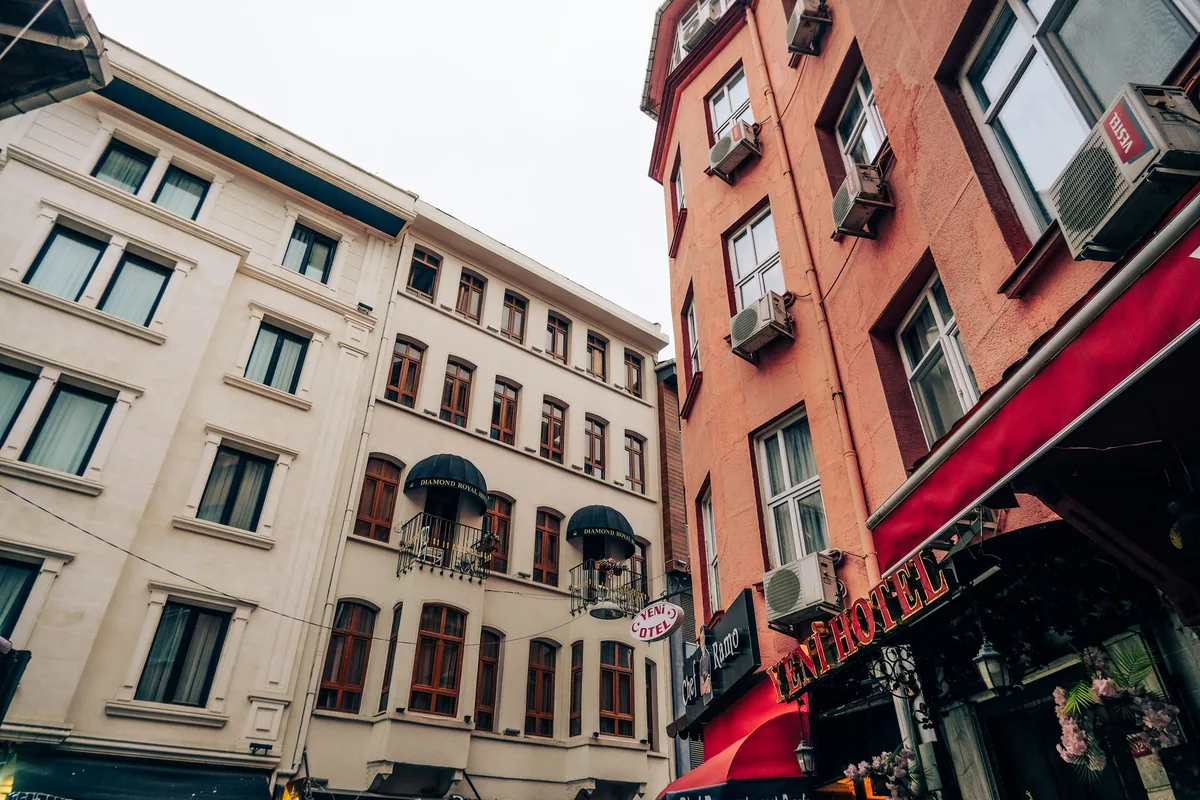
Hotel owners and asset managers are addressing an impending loan maturity wall by conducting early portfolio audits, injecting equity to pay down balances, and restructuring capital stacks using bank refinances, bridge loans, and preferred equity. With debt yields scrutinized against higher interest rates, successful sponsors are pairing debt executions directly with funded property improvement plans (PIPs) or adaptive conversions. [1]
What makes the current loan maturity wall different for hotels?
The current debt maturity cycle is defined by an industry-wide reset rather than isolated operational distress. According to Lodging Magazine, the Mortgage Bankers Association calculates that $875 billion of commercial and multifamily mortgages mature this year, representing 17 percent of all outstanding commercial property debt. [1] Hotels face an even tighter squeeze, with 30 percent of all hotel loans maturing—the largest percentage of any property category. [1]
This wave sorts assets based on past operational choices and balance-sheet discipline rather than broad market catastrophe. A typical ten-year fixed-rate commercial mortgage written in 2016 carried an interest rate near 4.5 percent. [1] Refinancing that debt today requires pricing in the high 6s to low 7s, reflecting a 10-year Treasury yield north of 4 percent combined with credit spreads of 250 to 300 basis points for prime assets. [1] On a $20 million balance amortized over 30 years, that jump pushes annual debt service from $1.22 million to $1.6 million. [1]
Why are lenders rejecting deals that carry strong historical occupancy?
Lenders are rejecting performing hotels because net operating income (NOI) has drifted downward against operating expenses while overdue property improvement plans have created hidden underwriting liabilities. Although average daily rates rebounded following the pandemic trough, compounding operational costs eroded property margins. [1] Lodging Magazine reported that labor costs adjusted permanently upward, municipal tax reassessments increased, and insurance premiums climbed between 5 percent and 15 percent for standard assets, reaching 25 percent to 50 percent in coastal, catastrophe-prone regions. [1]
As a consequence, a property that originally delivered a 12 percent debt yield can drift down to 8.5 percent today, even with stable occupancy and identical brand management. [1] Simultaneously, brand-mandated renovations that were deferred during the past five years are now coming due. When sizing a new takeout loan, lenders treat unaddressed PIPs as immediate deductions from value: a property presenting a 10 percent debt yield alongside an unexecuted $4 million PIP is underwritten as an 8 percent yield bearing execution risk. [1]
How can an asset manager calculate their exact debt yield exposure?
Asset managers can calculate their true exposure by dividing trailing-12-month net operating income by the actual final payoff balance rather than the original loan proceeds. [1] This underwriting calculation separates properties into distinct operational tiers:
Hotels registering a true debt yield below 9 percent enter a critical risk zone where sponsors must initiate discussions with servicers or outside equity providers before maturity deadlines arrive. [1] Assets landing between 9 percent and 10 percent can clear debt markets only by initiating marketing processes early. [1] Assets generating debt yields above 10 percent retain regular takeout access, provided the owner accounts for verified, brand-approved CapEx expenditures rather than unapproved estimates. [1] If the total funding shortfall—incorporating the loan proceeds gap, PIP costs, and operating reserves—surpasses 15 percent to 20 percent of total property value, the asset requires a complete capital stack recapitalization rather than a standard debt rollover. [1]
| Metric or Transaction Detail | Sofitel Philadelphia at Rittenhouse Square | Downtown New Orleans Dual-Brand Conversion |
|---|---|---|
| Borrower / Sponsor | Clearview Hotel Capital JV | Kailas Cos. |
| Financing Amount | $57 million | $120 million |
| Lender / Capital Partner(s) | Simmons Bank | Access Point Financial & TMGOC Ventures |
| Intermediary / Broker | JLL Hotels & Hospitality | Ackman-Ziff |
| Structure Type | Senior Bank Refinance | Bridge Loan & Preferred Equity |
| Property Profile | 306 keys (luxury) | 250-key Fairmont & 216-key Element (dual-brand) |
| CapEx / Renovation Record | $26M invested since 2011 ($6M since Aug 2022) | 1970 office tower conversion started Jan 2024 |
How did Clearview Hotel Capital clear refinancing on the Sofitel Philadelphia?
Clearview Hotel Capital secured a $57 million senior bank refinance from Simmons Bank for the 306-key Sofitel Philadelphia at Rittenhouse Square by documenting ongoing capital investments and preserving premium asset standards, Hotel Business reported. [2] JLL's Hotels & Hospitality group arranged the transaction on behalf of the borrower joint venture. [2]
Originally constructed in 1966 as the Philadelphia Stock Exchange and opened by Accor in 2000, the 13-story building stands as the only Accor-branded property in Philadelphia. [2] The ownership group countered lender hesitation over deferred maintenance by pointing to $26 million in capital improvements completed at the property since 2011. [2] That program included a $10 million guestroom renovation completed under prior ownership in 2019, followed by $6 million invested by Clearview's venture since acquiring the asset in August 2022. [2] Recent upgrades encompassed meeting room renovations executed in April 2023, along with comprehensive lobby and bar updates completed in May 2024. [2]
How are sponsors using bridge debt and preferred equity for complex restructurings?
When standard bank takeout loans cannot bridge financing requirements, sponsors are combining bridge facilities with preferred equity to execute complex business plans. In New Orleans, Kailas Cos. closed $120 million in co-originated bridge lending and preferred equity from Access Point Financial (APF) and TMGOC Ventures, according to Asian Hospitality. [3] Brokered by Russ Schildcrout of Ackman-Ziff, the structured capital recapitalizes the transformation of a 1970 Skidmore, Owings & Merrill-designed, 31-story office building acquired in 2014. [3]
Construction launched in January 2024 to convert the former corporate tower into a mixed-use hospitality property containing the 250-key Fairmont New Orleans, the 216-key Element by Marriott New Orleans Downtown, Emeril’s Delmonico restaurant, and 150,000 square feet of office space. [3] As Dana Tsakanikas, chief investment officer at APF, noted regarding Kailas Cos., the borrower brought an established 36-year operating history managing more than two million square feet of Louisiana commercial space. [3]
What tools resolve capital gaps when senior debt proceeds shrink?
Borrowers are matching specific debt and equity structures to the precise operational challenge affecting their balance sheet. Lodging Magazine detailed that properties experiencing temporary NOI drift paired with clear revenue turnaround paths are turning to bridge-to-permanent facilities, which size debt against stabilized post-renovation performance rather than trailing numbers. [1]
For hotels confronting extensive PIP requirements, owners are using renovation-inclusive senior mortgages structured with future draw escrows, or layering preferred equity behind a smaller primary loan to prevent cash capital calls. [1] If the financing gap cannot be closed through structured debt or fresh capital, owners are entering negotiated asset sales or discounted payoffs six months prior to loan maturity to prevent foreclosure proceedings. [1]
Reported by
This article was written from the following reporting. Follow the links for the original coverage.
- [1]$875B Loan Maturity Wall Forces Hotel Owner Sort— Lodging Magazine
- [2]Sofitel Philadelphia Secures $57M Refinance via JLL— Hotel Business
- [3]Kailas Lands $120M for New Orleans Hotel Conversion— asianhospitality.com
Frequently asked
+What proportion of US hotel mortgages face maturity this year?
According to the Mortgage Bankers Association, 30 percent of all outstanding hotel loans mature this year, marking the highest concentration among all commercial property types out of an aggregate $875 billion commercial and multifamily maturity volume. Lodging Magazine reported that this wave forces a sorting of assets based on operational margins and capital discipline.
+How much have commercial debt service costs increased since 2016?
A typical 10-year mortgage secured in 2016 carried an interest rate around 4.5 percent. Refinancing that balance today commands rates between the high 6 percent and low 7 percent range. On a $20 million loan balance amortized over 30 years, annual debt service payments rise from $1.22 million to $1.6 million.
+How does deferred CapEx impact hotel loan underwriting?
Lenders subtract unaddressed property improvement plans (PIPs) directly from an asset's valuation when sizing proceeds. For instance, a hotel generating a baseline 10 percent debt yield that carries a $4 million uncompleted PIP is evaluated by lenders as an 8 percent debt yield deal, creating major shortfalls in new loan proceeds.
+What financing structures are filling hotel loan sizing gaps?
Asset managers are utilizing bridge-to-permanent loans sized against future stabilized revenue, renovation-inclusive refinancings with escrowed construction draws, and preferred equity placed above reduced senior mortgages. In severe instances where shortfalls exceed 20 percent of asset value, owners pursue discounted payoffs or negotiated asset sales.
+What terms did Clearview Hotel Capital secure for the Sofitel Philadelphia?
Clearview Hotel Capital secured a $57 million refinance loan from Simmons Bank, arranged by JLL Hotels & Hospitality. The 306-key luxury hotel cleared bank underwriting supported by $26 million in ongoing property upgrades since 2011, including $6 million invested by the current ownership group between August 2022 and May 2024.
+How was the Fairmont and Element dual-brand hotel in New Orleans capitalized?
Kailas Cos. obtained a $120 million financing package co-originated by Access Point Financial and TMGOC Ventures, arranged by Ackman-Ziff. The capital stack combines bridge debt and preferred equity to finance the adaptive reuse of a 31-story commercial office building into a Fairmont hotel, an Element hotel, restaurant space, and offices.
Keep reading
Our reporting

More in finance