Hotel IT Stacks Evolve Across PMS, Kiosks, and AI Search
Hotels rethink core technology as properties roll out integrated guest hardware, automate B2B rates, and prepare for traveler-side AI search.
The short answer
Hotels are overhauling IT infrastructures by adopting integrated guest arrival kiosks, automated corporate rate distribution tools, and rigorous PMS disaster recovery practices. At the same time, commercial teams are adapting online discovery strategies to meet conversational AI search platforms.
“Together, Trevo and SABA give our guests a single, seamless journey – from a self-service welcome at the check-in kiosk to ordering breakfast in their room and chatting with our AI concierge in their own language. It is hospitality, made effortless.”
The short version
- Grand Prince Hotel Osaka Bay achieved an 85% self-service kiosk adoption rate using an integrated Trevo and SABA Hospitality stack.
- Accor is automating its annual corporate rate negotiation process using artificial intelligence to prevent corporate booking leakage.
- Property management system recovery plans require verified offsite backups and regular staff drills to prevent operational crises.
Hotels are modernizing their technology stacks by replacing disconnected front-desk steps with synchronized guest hardware, automating negotiated corporate rate distribution, and hardening property management system disaster recovery protocols [[1], [2], [4]]. At the same time, operators are shifting direct discovery strategies toward multi-platform content and artificial intelligence engines as guest search behavior departs from traditional keyword queries [[3], [5]].
How are hotels unifying check-in and on-property guest services?
Properties are combining lobby arrival kiosks with mobile in-stay platforms to streamline front-desk operations and capture higher ancillary spend [2]. eHotelier reported that Grand Prince Hotel Osaka Bay introduced a joint technology deployment using Trevo kiosks for arrivals and SABA Hospitality software for in-stay interactions [2]. The system features three lobby kiosks operating bilingual check-in flows in Japanese and English alongside live PMS data synchronization for real-time folio updates [2].
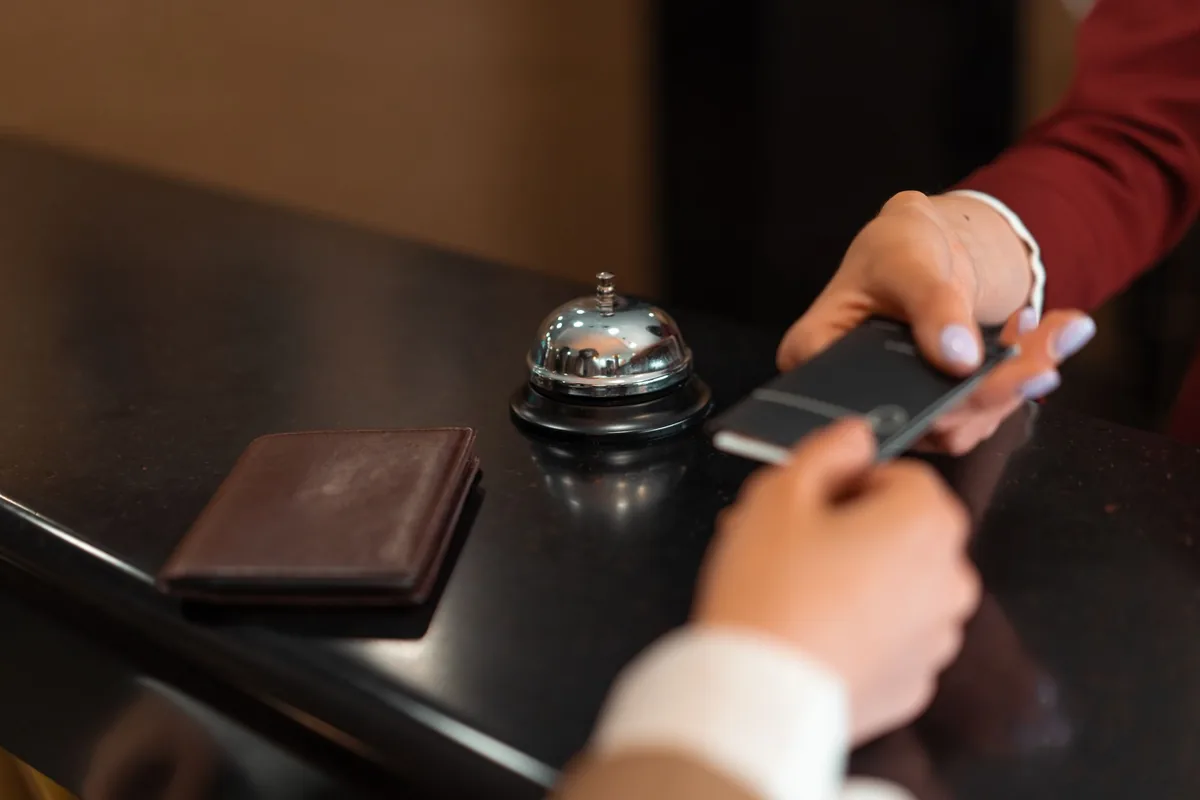
On-property digital engagement runs without requiring guests to download an application [2]. Guests access an interactive hub on their personal devices containing digital compendiums, restaurant and bar menus, spa reservations, and mobile food ordering that routes directly to kitchen point-of-sale systems [2]. An artificial intelligence assistant named Prince answers direct guest inquiries around the clock in multiple languages, reducing call volume to reception and concierge desks [2].
| Technology Layer | Provider / System | Operational Function | Reported Property Impact |
|---|---|---|---|
| Arrival Layer | Trevo | Self-service check-in, bilingual ID verification, live PMS folio sync | 85% kiosk utilization rate at Grand Prince Hotel Osaka Bay [2] |
| In-Stay Digital Services | SABA Hospitality | Mobile F&B ordering, digital compendium, AI chatbot concierge | Higher check sizes via automated upsell; reduced call volume [2] |
| Corporate Rate Automation | Accor Internal AI | Automated rate negotiation, price recommendation, inventory delivery | Eliminates lost corporate rates and booking tool leakage [1] |
| Short-Term Rental PMS | Guesty | Property management, portfolio scaling, automated guest messaging | Operational automation for boutique operator LiveSuites [6] |

Why are enterprise hotel groups automating corporate rate distribution?
Hotel brands are turning to end-to-end automation to ensure negotiated corporate tariffs correctly appear in corporate booking tools and stop booking leakage [1]. Skift reported that corporate travel buyers and hotel chains spend months negotiating discounted rates, yet employees frequently bypass mandated booking tools because negotiated rates fail to display at checkout [1]. Research from Spotnana, Direct Travel, Marriott, and GBTA shows that finding cheaper prices elsewhere serves as the primary reason business travelers circumvent corporate booking channels [1].
Accor is automating its annual corporate rate negotiations from end to end [1]. The hotel group uses artificial intelligence to collect property-level data across its portfolio and generate pricing recommendations for corporate accounts, ensuring contracted rates load properly onto client booking screens [1]. In the boutique lodging arena, ShortTermRentalz reported that operator LiveSuites deployed Guesty's property management platform to automate communications and support portfolio expansion [6].
How should IT teams protect core PMS data from system failures?
A property management system outage directly impacts daily hotel operations, making regular offline backup validation and operational outage drills essential [4]. eHotelier reported that PMS outages cripple operations because the database holds credit card processing connections, room availability, gift cards, posting codes, and financial reporting [4].

Hospitality technology teams must separate routine backup creation from true recovery readiness [4]. Backups can silently fail or halt recording for weeks if unmonitored [4]. Hoteliers are urged to maintain redundant, offsite data copies and evaluate hosted cloud environments where the provider manages server infrastructure, database security, and system patches [4]. Properties must also maintain clear end-of-day paper reports and practice offline operating routines so staff can run check-ins during unplanned system outages [4].
How is AI changing guest discovery and search distribution?
Guest discovery is shifting from traditional search engine rankings to conversational artificial intelligence assistants and social discovery platforms [3]. According to eHotelier, prospective guests now research trips across Instagram Reels, TikTok videos, Google Maps reviews, and conversational AI tools such as ChatGPT before visiting a brand site [3]. Rather than providing a list of links, conversational engines synthesize public business listings, press articles, and online reviews to answer multi-variable prompts regarding amenities, location, and service quality [3].
This shift requires close alignment across hotel departments [3]. Online discoverability is shaped by operational review scores, housekeeping consistency, revenue management pricing, and sales packages, which together feed the source information scanned by artificial intelligence search tools [3]. Additionally, Skift reported that personal artificial intelligence agents designed to act solely on behalf of the traveler represent a fundamental shift in travel distribution, moving power away from supplier-controlled booking funnels [5].
Reported by
This article was written from the following reporting. Follow the links for the original coverage.
- [1]Accor Automates Corporate Rate Fix to Stop Booking Leakage— Skift
- [2]Grand Prince Osaka Bay Deploys Trevo and SABA Tech Stack— eHotelier
- [3]Hotels Face Multi-Platform Shift in AI Search Era— eHotelier
- [4]Hotels Face Operational Crises Without PMS Data Recovery Plans— eHotelier
- [5]Meta Manifesto Signals Shift Toward Traveler-Owned AI— Skift
- [6]LiveSuites Expands Property Portfolio Using Guesty PMS— shorttermrentalz.com
Frequently asked
+What front-desk results did Grand Prince Hotel Osaka Bay achieve with kiosks?
Grand Prince Hotel Osaka Bay achieved an 85% kiosk utilization rate after deploying three Trevo self-service kiosks alongside SABA Hospitality mobile ordering and AI concierge tools, reducing front-desk queues and phone call volume.
+Why do negotiated corporate hotel rates disappear from booking tools?
Corporate rates frequently fail to load correctly into corporate booking tools due to manual negotiation and distribution hurdles, causing corporate travelers to experience booking leakage and seek cheaper public rates elsewhere.
+Why is an unmonitored PMS backup insufficient for hotel disaster recovery?
Backups can fail to record for days or weeks without notification. Without active monitoring, offsite redundancy, and regular restoration drills, hotels risk losing financial records, reservations, and posting codes during an outage.
+How does hosted PMS infrastructure differ from on-premise systems?
A hosted PMS shifts server hardware management, database protection, system patches, and security over to the hosting provider, relieving on-property hotel IT staff from direct infrastructure maintenance.
+How does conversational AI search change hotel marketing strategies?
Conversational AI answers specific guest queries by synthesizing data from across the web, making discovery dependent on accurate cross-platform listings, verified reviews, and consistent multi-channel information rather than isolated keyword optimization.
Keep reading
Our reporting
More in technology