CAMO Raises $4M to Scale Virtual In-Room Dining
CAMO secures $4 million in seed funding to expand white-label room service across U.S. hotels without kitchen buildouts, capital spending, or extra staffing.
The short answer
CAMO Hospitality has secured $4 million in seed funding to expand its branded virtual room service across the U.S. The model allows properties to capture guest meal delivery spend without kitchen buildouts, capital expenditure, or extra staff.

The short version
- CAMO raised a $4 million seed round backed by Globalive, Pacific Reach, Hansji Corporation, and hotel owners.
- Properties on the platform generate $1,000 to $5,000 in monthly net profit without kitchen capital expenses or extra staffing.
- The platform operates across 60 properties in six U.S. markets following more than 200 percent year-over-year revenue growth.
CAMO Hospitality has closed a $4 million seed funding round to scale its virtual in-room dining technology across the United States, allowing properties to offer hotel-branded room service without kitchen buildouts, capital expenditures, or extra on-property labor [[1], [2]]. The company operates in more than 60 hotels across six markets, pairing off-site fulfillment kitchens with white-label software to capture guest food delivery spending [[1], [2]].
How does CAMO eliminate hotel kitchen capital expenditures?
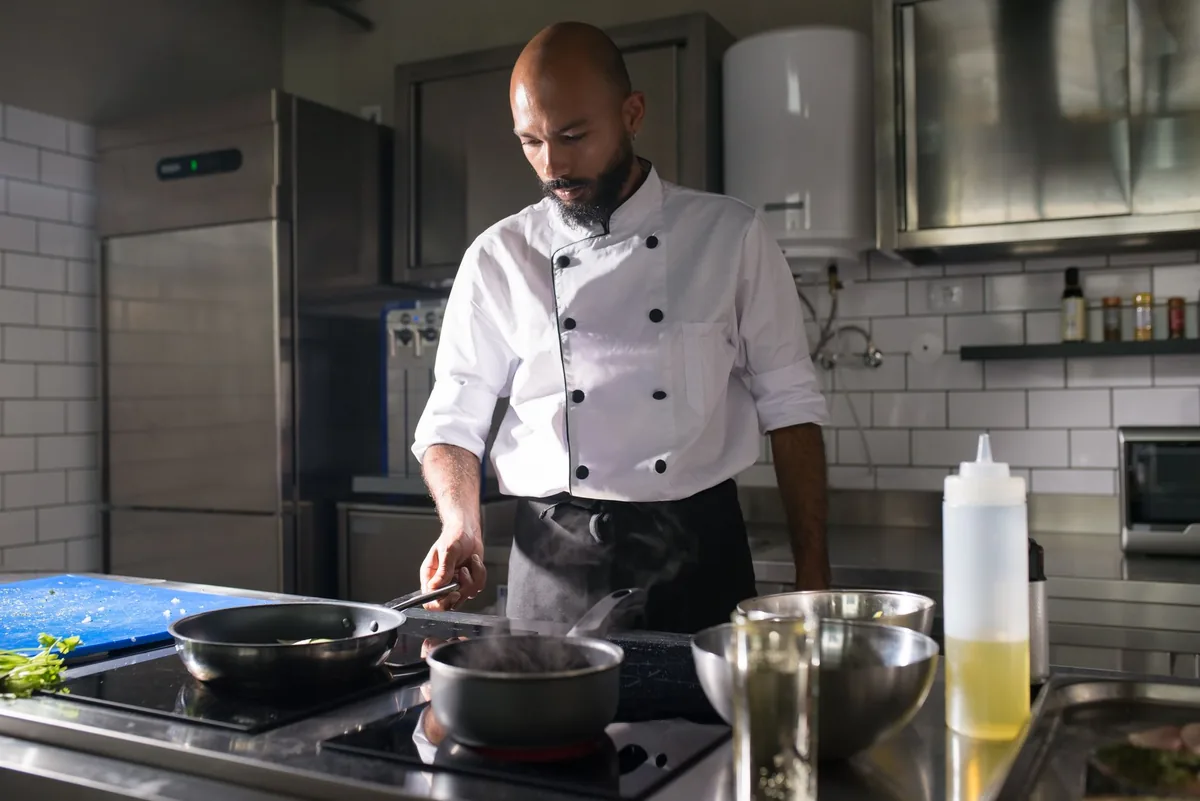
CAMO replaces traditional on-site food production by contracting external commercial kitchens and managing the entire logistics loop off-property [[1], [2]]. As reported by Lodging Magazine, approximately nine out of 10 hotels do not provide traditional room service, largely due to high operating costs and operational complexity [2]. CAMO manages ordering software, kitchen cooking, fulfillment, local delivery logistics, and guest service under the individual hotel’s name [[1], [2]].
Hotels avoid purchasing cooking equipment, retrofitting ventilation lines, or maintaining line cooks and service staff on payroll [[1], [2]]. Instead, the platform processes orders and delivers meals to rooms in an average time of approximately 22 minutes [2]. Because operations run behind the scenes under the hotel's brand, guests perceive the delivery as an amenity provided directly by the property [[1], [2]].
What unit economics and revenue share do participating hotels see?
Participating properties earn between $1,000 and $5,000 in monthly net profit via CAMO’s revenue-sharing model, according to Lodging Magazine [2]. The system generates an average ticket size of approximately $45 per order [2].
Unlike sales lost to third-party delivery apps like DoorDash or Uber Eats, these orders flow back through the property [2]. Lodging Magazine noted that operators frequently reallocate their monthly revenue-share payments toward non-budgeted operational needs, such as guest recovery credits, team member recognition incentives, and local sales initiatives [2].
| Operational Metric | CAMO Benchmark Figure | Industry Context / Source |
|---|---|---|
| Average Order Value | ~$45 | Lodging Magazine [2] |
| Monthly Net Profit per Hotel | $1,000 to $5,000 | Lodging Magazine [2] |
| Average Delivery Time | ~22 minutes | Lodging Magazine [2] |
| Annual U.S. Hotel Delivery Spend | >$5 billion | Lodging Magazine [2] |
| Year-over-Year Revenue Growth | >200% | Asian Hospitality [1], Hotel Business [4] |
| Current Footprint | 60+ hotels across 6 markets | Asian Hospitality [1], Hotel Business [4] |

Who backed the seed round and advisory board?
The $4 million seed financing round attracted capital from hospitality operators and telecommunications investors [[1], [4]]. As reported by Hotel Business, the investor group includes Anthony Lacavera, founder and chairman of Globalive; Rajan Hansji, CEO of Hansji Corporation; Azim Jamal, CEO of Pacific Reach; Parsa Rohani, co-founder of Neudesic and Timu; Evan Weiss, co-founder of LWHA; and a group of hotel owners currently operating with CAMO [[1], [4]].
CAMO also appointed external advisers across payments, consumer foodservice, and hospitality technology [[2], [4]]. The new advisory board additions include Paul Tuscano, former KFC chief digital officer and Marriott International executive; Mike Cohen, former executive at Square and Meta; and Alex Canter, founder of Ordermark and Nextbite [[2], [4]].

Why are hotel brands moving to capture in-room commerce?
CAMO estimates that hotel guests spend over $5 billion each year on restaurant delivery to U.S. hotel rooms [2]. Under normal operations, that spend bypasses the hotel ledger completely [2].
Outside marketplaces take the ordering relationship away from the hotel, leaving managers without guest data or quality control [[2], [4]]. Through CAMO's management portal, operators track order-level transaction details, observing what items guests select, purchase timing, and consumption habits throughout the stay [2]. Asian Hospitality also referenced a YouGov study indicating that value and midscale hotel brands are gaining ground as travelers reassess lodging expenses amid rising living costs, driving properties to seek high-margin revenue alternatives [[1], [3]].
How will CAMO deploy the new capital?
CAMO plans to allocate the seed capital to support multi-property brand pilots, expand into new geographic markets, and advance its proprietary tech stack [[1], [2]]. Hotel Business reported that founder and CEO Kevin Rohani spent years self-funding the company to ensure operational profitability before accepting outside capital [4].
The business initially launched by using an owner's existing commercial kitchen to supply food to surrounding hotels, remaining under the radar until it reached 50 to 100 properties [4]. Now experiencing greater than 200 percent year-over-year revenue expansion, CAMO is shifting from one-off property negotiations toward brand-level and regional portfolio agreements with major management groups [[1], [4]]. Over the long term, Rohani intends to expand the software beyond food delivery into wellness offerings, transport booking, local experiences, and other on-demand room services [[2], [4]].
Reported by
This article was written from the following reporting. Follow the links for the original coverage.
- [1]CAMO Raises $4M Seed Round for In-Room Dining Tech— asianhospitality.com
- [2]CAMO Raises $4 Million to Expand Virtual Room Service— Lodging Magazine
- [3]CAMO Secures $4M Seed Round to Expand Room Service Tech— asianhospitality.com
- [4]CAMO Raises $4M to Expand Branded Room Service— Hotel Business
Frequently asked
+How much profit does a hotel make with CAMO?
According to reporting from Lodging Magazine, most hotels using CAMO generate between $1,000 and $5,000 in net monthly profit through its revenue-sharing model, with guest checks averaging roughly $45 per order.
+Does CAMO require on-property kitchen renovations or staff?
No. CAMO operates entirely without kitchen buildouts, capital expenditures, or extra hotel headcount. The platform relies on off-site partner kitchens and manages fulfillment, delivery logistics, and guest customer support under the hotel's brand.
+How fast is delivery for guests using the platform?
The platform records an average delivery turnaround time of approximately 22 minutes from order placement to delivery at the guest's hotel room door.
+What data do hoteliers receive from CAMO?
Operators access order-level analytics via the CAMO portal. This data details specific items purchased, exact ordering times, and changes in guest dining behavior over the course of their stay.
+What other guest services will the platform add beyond dining?
Founder Kevin Rohani stated that CAMO plans to expand its in-room commerce platform beyond food fulfillment into on-demand wellness services, transportation booking, and local experiences.
Keep reading
Our reporting

More in technology