Marriott CEO Anthony Capuano announced that artificial intelligence is making its primary impact on how travelers discover and book hotels online. The brand is aggressively feeding its content to Google and OpenAI to dominate emerging AI-driven search platforms.
Key Takeaways
1Marriott identifies hotel distribution and search discovery as the primary area impacted by AI.
2The hotel chain actively supplies content to OpenAI and Google to secure prominent visibility.
3Data shows Marriott properties currently appear more consistently in AI search results than competitors.
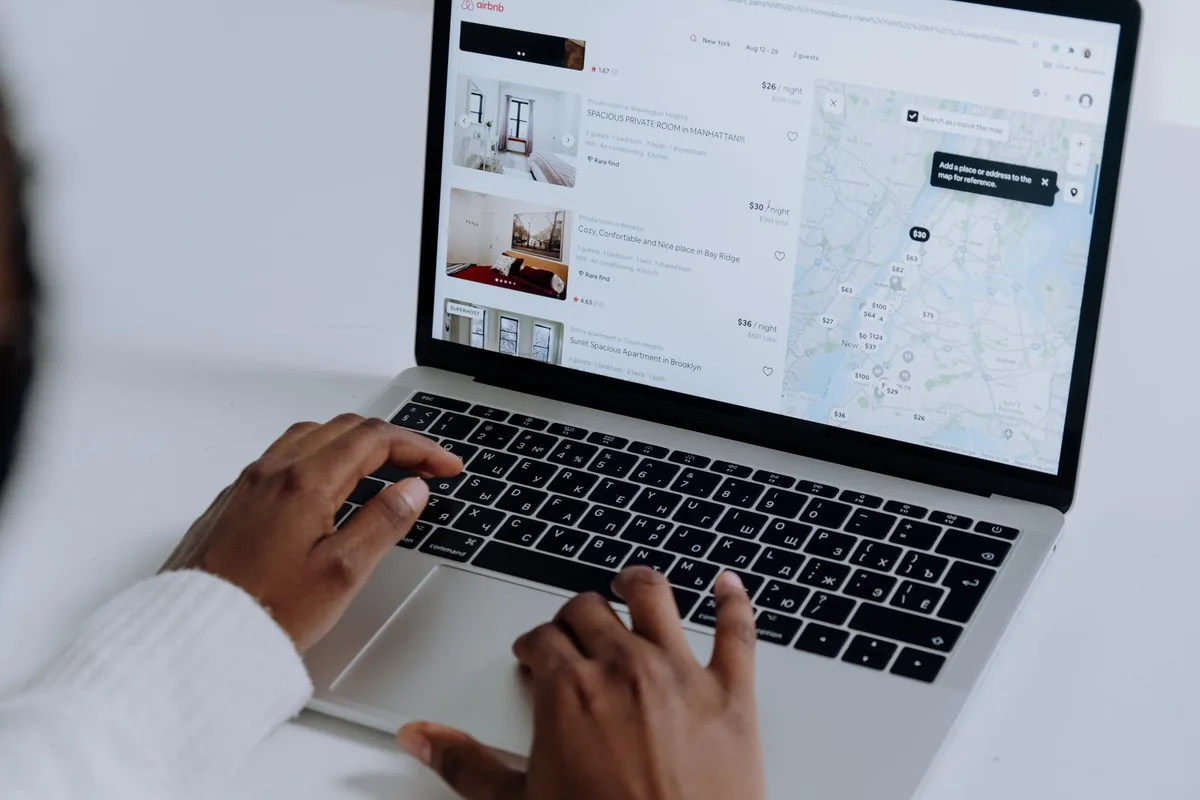
The European Commission has introduced the Affordable Housing Act, providing cities with a legal framework to curb short-term rentals like Airbnb in housing-stressed areas. The proposal aims to tackle soaring housing costs, which have increased by more than 60% across the bloc since 2013.
Key Takeaways
1New EU legislation establishes a legal roadmap for cities to restrict short-term rentals
General-purpose AI agents are evolving to handle travel bookings and itinerary management directly, posing a disruption risk to traditional OTAs and travel intermediaries. Hospitality brands may soon interface directly with personal assistants rather than specialized travel platforms.
Key Takeaways
1Mainstream AI agents like ChatGPT and Claude are integrating travel tasks directly into daily workflows
2Intermediaries face margin pressure as general AIs bypass traditional search and booking funnels
3Hotels may need to adapt distribution strategies to be discoverable by personal AI bots rather than human searchers
A study of 2.2 million European hotel guests reveals that direct bookers return at nearly four times the rate of OTA guests while generating 35% higher first-stay revenue. The data highlights a steep retention liability for properties overly dependent on third-party channels.
Key Takeaways
1Direct-booking guests have a 5.1% return rate compared to just 1.3% for OTA guests.
2First-stay revenue is 35% higher for direct guests (€379 vs. €280) before factoring in commission costs.
3Direct-acquired guests account for 68% of repeat stays despite representing only 35% of initial bookings.
The U.S. Department of Justice has filed a civil fraud complaint against hotel operators Pankaj and Rajan Sheth for allegedly securing over $100 million in loans through shell companies and straw owners. The lawsuit claims the family concealed past bankruptcies, defaults, and property conditions to obtain federally backed debt.
Key Takeaways
1DOJ filed a 332-page civil complaint accusing the Sheth family of securing over $100M in loans via deceptive practices
2Operators allegedly used shell entities and straw owners to hide repeat defaults, court judgments, and bankruptcies
3Hotels tied to the schemes reportedly suffered from underfunding, severe understaffing, and local code violations
Hospitality leaders are eyeing key fall trends following a strong summer, driven by luxury segment investments, brand conversions, and dining-led bookings. Investor interest remains heavily concentrated on high-end properties alongside record U.S. construction activity.
Key Takeaways
1Investors are targeting luxury assets as conversions and upscale builds drive a record U.S. construction pipeline.
2Food and beverage programs increasingly drive bookings, with 60% of guests choosing hotels specifically for their restaurants.
3RevPAR gains and portfolio expansions from summer set a positive baseline heading into the fall season.
Braemar Hotels & Resorts' largest shareholder, Al Shams Investments, plans to nominate a full slate of independent directors ahead of the REIT's internal management transition. The move comes as Braemar seeks to become self-managed, split from Ashford Inc., and trim its luxury portfolio.
Key Takeaways
1Al Shams will nominate a competing director slate by the Sept. 14 deadline.
2Braemar is shifting to a self-managed REIT and downsizing to 6-8 luxury properties.
3The REIT recently sold the Pier House Resort & Spa for $190M to deleverage.
Google has removed its dedicated vacation rental search module across the European Economic Area to comply with the EU's Digital Markets Act. Direct listings will lose search visibility within the EEA, though properties remain discoverable on Google Maps and for non-EEA travelers.
Key Takeaways
1Vacation rental search module eliminated on Google Search across the European Economic Area.
2Direct property suppliers lose filtering features, live pricing, and category search tools in new layouts.
3Inventory remains active on Google Maps, Google Hotels, and for users searching from outside Europe.
Major hospitality brands and management groups have announced key executive appointments across investment, regional operations, and property leadership. Notable moves include executive shifts at Hilton, Loews Hotels, PM Hotel Group, and Driftwood Capital.
Key Takeaways
1Hilton tapped former Ares Management MD Kolin Pound as area president for Caribbean and Latin America.
2Driftwood Capital named David Resnick and David Steiner as co-CIOs to unify equity and credit investment platforms.
3Key property and portfolio leadership roles were filled by Loews, Kimpton, The Standard, and Hyatt.
Hospitality leaders at a London roundtable urged hotels to bridge disconnected tech stacks to deliver genuine, relevant personalisation. Executives stressed using AI behind the scenes to automate routine tasks, freeing staff to build authentic guest connections.
Key Takeaways
1Fragmented tech stacks and isolated data profiles leave pre-arrival as hospitality's weakest touchpoint.
2Hoteliers advocate using AI for operational tasks like reporting and email triage to maximize face-to-face guest time.
3High staff turnover makes unified guest profile systems essential for retaining service history and stay preferences.
Wyndham Hotels & Resorts has gained approval to develop a 250-room Dolce hotel alongside a new 50,000-square-foot conference center in Ridgeland, Mississippi. The $120 million public-private project marks the upscale brand's debut in the state.
Key Takeaways
1Madison County approved the $120M Prado Vista project featuring a Dolce hotel and conference facility
2The privately financed 250-room hotel pairs with a 50,000-square-foot center holding up to 1,800 guests
3Public-private agreement directs $18.9 million back to the county to accelerate construction debt repayment
Klook has upgraded its Kreator Shops tool across 88 markets, enabling 30,000 influencers to sell complete travel itineraries directly to their followers. The feature consolidates hotels, dining, and activities into single bookable storefronts rather than standalone affiliate links.
Key Takeaways
1Kreator Shops rolled out to over 30,000 creators across 88 global markets
2Followers can book hotels, transportation, dining, and attractions in one storefront
3Strategy shifts creator marketing from viral single-product links to multi-day itineraries
Analytics cookies.
We count visits either way — anonymously, with no IP stored. Accepting also lets
Google Analytics measure how the site is used. No advertising cookies, ever.
Privacy policy.
Get the briefing when it lands
One notification a day, the moment the edition publishes. No email needed.